Introduction
The Indian residential real estate market in 2026 is witnessing a decisive shift in buyer behaviour. Home purchase decisions are no longer driven only by affordability or location. Instead, buyers are evaluating homes through a broader lens that includes lifestyle flexibility, long term usability, work patterns, family structure, and future resale potential. At the centre of this evolving conversation lies one critical question that dominates buyer enquiries, developer planning, and investor discussions alike: 2BHK vs 3BHK, which configuration do homebuyers actually prefer in 2026?
For decades, the 2BHK apartment served as the default choice for urban India. It represented a practical balance between cost and comfort. However, the post pandemic years, coupled with changing employment models and rising aspirations, have altered how buyers define value. In 2026, space is no longer viewed as a luxury add on. It is increasingly considered a necessity.
This article takes a comprehensive and neutral look at the 2BHK vs 3BHK debate from a buyer, investor, and market perspective. Drawing from observed market behaviour across Indian cities, evolving end user expectations, and real estate industry trends, it explains what buyers prefer today, why those preferences are changing, and how this decision impacts long term ownership value.
Understanding the Fundamental Difference Between 2BHK and 3BHK Homes
At a structural level, the difference between a 2BHK and a 3BHK is straightforward. A 2BHK consists of two bedrooms, a living and dining area, a kitchen, and typically two bathrooms. A 3BHK adds an additional bedroom and often includes an extra bathroom or utility space. However, in 2026, the distinction goes far beyond room count.
Buyers today are assessing how each room will be used on a daily basis and how that usage may evolve over time. A bedroom is no longer just a sleeping space. It may function as a home office, study area, guest room, or private retreat. In this context, the 2BHK vs 3BHK decision becomes a question of adaptability rather than size alone.
Developers have also refined layouts significantly. Modern 2BHK apartments are more efficient, while 3BHK homes are being designed with compact planning to avoid unnecessary area wastage. As a result, buyers are comparing functionality rather than just square footage.
Key Factors Driving Buyer Preferences in 2026
The Impact of Hybrid Work and Home Based Productivity
One of the most influential factors shaping the 2BHK vs 3BHK preference in 2026 is the permanence of hybrid and remote work models. A significant portion of the workforce now spends multiple days a week working from home. This has fundamentally changed how buyers perceive space requirements.
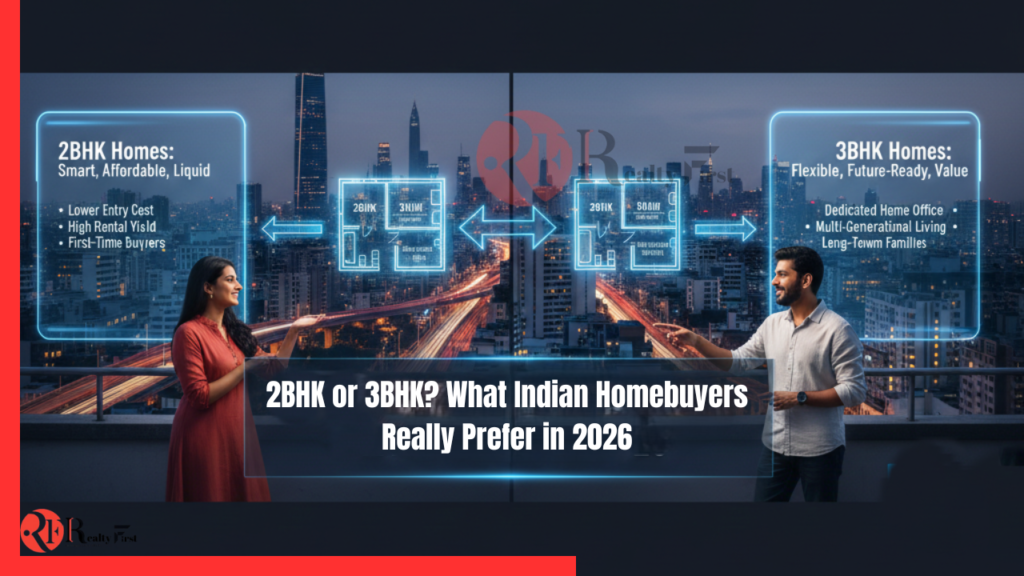
In many households, a 2BHK layout forces compromises, where a bedroom doubles as a workspace, often affecting privacy and productivity. Buyers who experienced extended work from home periods increasingly prefer 3BHK homes, where one room can be dedicated exclusively to professional use without disrupting family life.
This trend is particularly visible among mid career professionals, entrepreneurs, consultants, and dual income households, who view a dedicated work room as a long term necessity rather than a temporary adjustment.
Rise of Multi Generational and Flexible Living
Another major influence in the 2BHK vs 3BHK discussion is the return of multi generational living. Economic considerations, healthcare needs, and emotional factors are encouraging families to live together again. In such arrangements, space allocation becomes a matter of dignity and comfort.
A 3BHK allows families to accommodate parents or visiting relatives without overcrowding the home. Buyers increasingly consider this flexibility essential, especially when purchasing a home intended for long term ownership.
This shift has made the 3BHK configuration particularly attractive among end users planning to stay in the property for ten years or more.
Why 2BHK Homes Continue to Attract Buyers
Despite the growing popularity of larger homes, the 2BHK vs 3BHK debate remains balanced because 2BHK apartments continue to serve a strong and relevant buyer segment.
First time homebuyers often prefer 2BHK homes due to lower entry costs and manageable loan obligations. In high density urban markets, a 2BHK enables buyers to access prime locations with better infrastructure and connectivity.
From an investment standpoint, 2BHK units offer higher liquidity. Rental demand for 2BHK apartments remains consistently strong across employment hubs, educational zones, and metro corridors. Investors seeking stable rental yields and lower vacancy risk often prioritise 2BHK homes.
In 2026, 2BHK apartments are no longer seen as transitional homes. Instead, they are viewed as efficient, well planned living spaces for individuals and small families who value location, convenience, and financial prudence.
Why 3BHK Homes Are Gaining Preference Among End Users
The most noticeable shift in buyer sentiment within the 2BHK vs 3BHK conversation is the growing acceptance of 3BHK homes as a practical choice rather than an aspirational one.
Buyers today are thinking in terms of lifecycle ownership. They prefer homes that can adapt to changing personal and professional circumstances without requiring frequent upgrades. A 3BHK offers that flexibility, whether it is accommodating children as they grow, supporting work from home needs, or providing space for hobbies and wellness.
Additionally, rising household incomes and improved access to long tenure home loans have made 3BHK homes more financially accessible than before. Developers have responded by offering competitively priced 3BHK units in peripheral but well connected locations, narrowing the affordability gap between 2BHK and 3BHK.
Affordability and Price Comparison in 2026
Affordability remains a central consideration in the 2BHK vs 3BHK decision. On average, a 3BHK apartment still commands a premium of 20 to 35 percent over a comparable 2BHK in the same project. However, buyer perception of affordability has evolved.
Instead of focusing solely on initial purchase price, buyers are evaluating total cost of ownership, long term usability, and future appreciation. Many buyers are willing to accept a slightly higher EMI if it means avoiding relocation or upgrading costs later.
That said, budget sensitivity varies widely across cities and buyer profiles. For financially conservative buyers or those prioritising investment diversification, a 2BHK remains a rational and responsible choice.
Lifestyle Considerations Influencing the Decision
In 2026, home buying is deeply connected to lifestyle preferences. The 2BHK vs 3BHK choice often reflects how buyers envision their daily lives.
Buyers who value minimalism, ease of maintenance, and efficient living often feel more comfortable in a 2BHK. Smaller homes require less upkeep and encourage disciplined space usage.
On the other hand, buyers who prioritise privacy, work life balance, and personal space often gravitate toward 3BHK homes. The ability to separate work, rest, and social activities within the same home significantly enhances quality of life.
This lifestyle driven approach has made buyer decisions more intentional and less influenced by traditional norms.
Investment Outlook: 2BHK vs 3BHK in 2026
From an investment perspective, the 2BHK vs 3BHK debate presents two distinct strategies. 2BHK apartments continue to deliver steady rental demand, making them ideal for investors focused on consistent cash flow.
3BHK apartments, while sometimes slower to lease, often attract higher quality tenants and command premium rents. They also demonstrate stronger capital appreciation, particularly in integrated townships and premium residential developments.
In 2026, informed investors evaluate micro market dynamics carefully and align property configuration with their risk appetite and return expectations.
City Specific Trends Shaping Buyer Preferences
Buyer preference between 2BHK vs 3BHK varies significantly across Indian cities. In metro markets with high land costs, 2BHK homes dominate central locations, while 3BHK demand is rising in suburban corridors with improved connectivity.
In tier two cities, where price differentials are lower, 3BHK homes are increasingly becoming the default choice for end users. Buyers in these markets prioritise space, long term ownership, and family comfort.
Understanding local market behaviour is essential before making a configuration decision.
Resale Value and Long Term Exit Potential
Resale considerations play a crucial role in the 2BHK vs 3BHK decision. Traditionally, 2BHK homes enjoyed faster resale due to a larger buyer pool. This remains true in many markets.
However, in 2026, well located 3BHK homes in quality projects are witnessing growing resale demand. Buyers upgrading within the same locality often prefer moving into larger homes, creating a healthy secondary market for 3BHK units.
Choosing the right configuration today can significantly impact exit flexibility and value realisation in the future.
Conclusion
The 2BHK vs 3BHK debate in 2026 reflects the broader transformation of India’s residential real estate market. Buyers are no longer driven by fixed formulas. They are making informed, lifestyle aligned decisions based on long term value rather than short term savings.
A 2BHK offers efficiency, affordability, and liquidity. A 3BHK offers flexibility, comfort, and future readiness. The right choice depends on individual priorities, financial planning, and life stage.
As buyer expectations continue to evolve, homes that adapt to changing needs will define the next phase of residential demand. In 2026, informed choices matter more than ever.