Mumbai: KREEVA, the luxury real estate arm of Kanodia Group, has announced its entry into the multi-generational housing segment with a new residential development planned in Gurugram.
The company has entered into a joint development agreement with a landowner to develop a group housing project located off Southern Peripheral Road, in line with its asset-light and partnership-driven growth strategy.
Also Read: Duville Estates Inaugurates New Corporate Office in Pune’s Kalyani Nagar
The project will span approximately 3 acres and is planned with a built-up area of around 5.5 lakh sq. ft. With an estimated investment of ₹350–400 crore, the development is expected to comprise nearly 200 residences designed to cater to homebuyers across age groups within an integrated residential ecosystem. The project is expected to commence towards the end of Q1 FY27.
Speaking on the development, Dr. Gautam Kanodia, Founder, KREEVA and Kanodia Group, said, “At KREEVA, we believe the way people live is evolving rapidly. Today’s consumers are seeking environments that offer not just comfort but a deeper sense of connection, independence, and overall well-being. We see a growing need for spaces where families can stay connected across generations, while still maintaining their own individuality and lifestyle preferences. Our approach is to create ecosystems that respond to these evolving expectations—where design, wellness, and community come together in a seamless and meaningful way. This development reflects our belief that the future of housing lies in creating environments that are intuitive, inclusive, and built around how people truly want to live.”
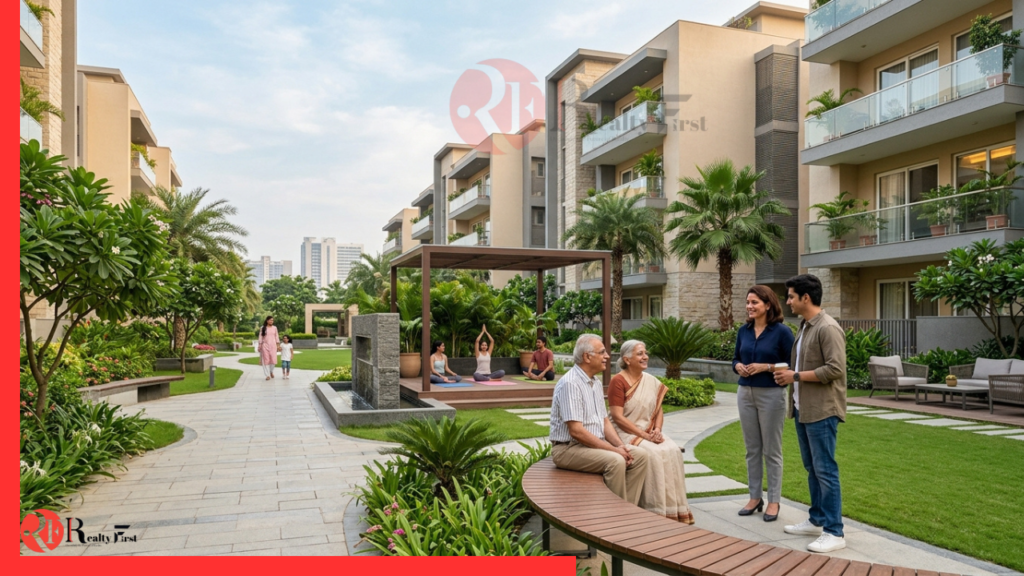
The development aims to integrate healthcare access, community engagement, and lifestyle-driven amenities, reflecting a broader shift in India’s residential sector where senior living and multi-generational housing are emerging as a distinct segment.
Also Read: The Evolution of Commercial Real Estate Post-Pandemic
The Southern Peripheral Road micro-market in Gurugram continues to see steady residential demand, supported by connectivity, proximity to business districts, and improving social infrastructure. The location is considered suitable for housing formats that emphasize accessibility, safety, and quality of life.