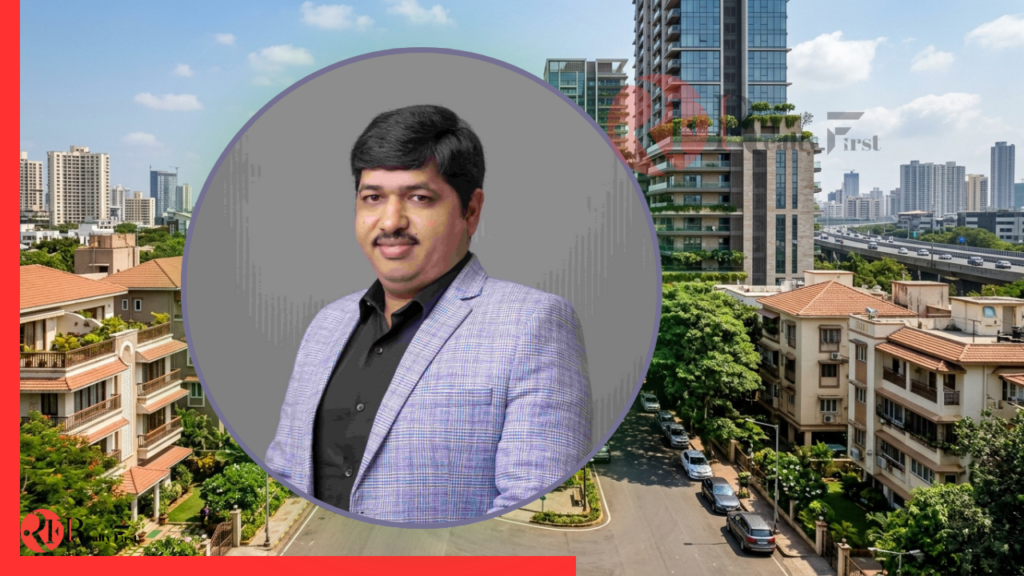
By Mr. Prashant Khandelwal, Joint Secretary of CREDAI MCHI and Director & CEO of Agami Realty
Mumbai’s residential real estate market has undergone a significant transformation over the past five years, with redevelopment emerging as one of the city’s most important growth engines. The shift is particularly pronounced across the Western suburbs, where a chronic shortage of developable land has steadily reduced opportunities for greenfield projects. As a result, redevelopment has become central to meeting the city’s housing demand while reshaping its urban landscape.
The scale of this transition is reflected in data from Knight Frank India, which shows that Mumbai currently has 1,094 redevelopment agreements, unlocking nearly 432 acres of land for redevelopment. More than 70% of these agreements are concentrated in the Western suburbs, highlighting the area’s growing importance in the city’s next phase of residential expansion.
At the same time, the luxury housing market is witnessing a change in buyer preferences. Premium homebuyers are increasingly placing greater value on lifestyle than on established pin codes. Privacy, exclusivity, wellness-oriented amenities, walkable neighbourhoods, strong community networks, familiarity and cultural continuity are becoming defining characteristics of aspirational residential destinations. The purchase decision is no longer driven solely by apartment size but by the overall quality of the neighbourhood and the lifestyle it offers.
A Neighbourhood Built on Enduring Urban Planning
Mumbai’s evolution as an island city has resulted in many older neighbourhoods developing organically, often leading to congested layouts and limited urban planning. Kalanagar, however, represents a distinctly different model of residential development.
Designed as a planned residential enclave, Kalanagar features wider internal roads, generous setbacks and a community-focused urban layout. These planning principles have become increasingly valuable as Mumbai grapples with rising population density. Equally important, they create favourable conditions for redevelopment projects that can modernise the built environment without compromising the neighbourhood’s established residential character.
Strategic Connectivity Strengthens Long-Term Appeal
Kalanagar also benefits from its location within Mumbai’s Western suburban corridor. Residents enjoy direct connectivity to major transport networks, including the Western Express Highway, the airport corridor, Bandra-Worli Sea Link access routes and the upcoming Metro interchanges. This connectivity provides seamless access to both South Mumbai and the city’s major suburban business districts.
The neighbourhood’s strategic importance is further reinforced by its proximity to Bandra Kurla Complex (BKC), now Mumbai’s largest business and financial district. Additionally, Bandra East is set to house the upcoming Bombay High Court Complex, making the area increasingly attractive for professionals working across finance, banking, consulting, legal services and related sectors.
A Residential Community Shaped by Culture and Legacy
Kalanagar’s identity extends beyond infrastructure and connectivity. Its enduring appeal lies in the cultural and community ecosystem that has evolved over decades.
One of its most significant institutions is the MIG Cricket Club, among Mumbai’s oldest and most respected suburban cricket clubs. Established in 1968 by sports enthusiasts from the MIG Colony and surrounding residential communities, the club was envisioned as a community-led sporting institution. Since becoming affiliated with the Mumbai Cricket Association (MCA) in 1974, it has grown into one of the city’s recognised cricketing centres.
The neighbourhood also carries a rich artistic legacy. Conceived by artist and educator VN Adarkar, Kalanagar became home to several of Maharashtra’s distinguished artists, contributing to its reputation as one of Mumbai’s important cultural residential communities. Today, as authenticity increasingly defines luxury living, the area’s cooperative housing culture and the continued presence of multi-generational families reinforce its distinctive identity.
Redevelopment Opportunity Rooted in Existing Urban Strengths
Kalanagar now presents a compelling redevelopment opportunity for developers seeking to create low-density luxury residential projects centred on wellness and community living.
Many of the existing developments occupy only a portion of the development potential permitted under current regulations. The neighbourhood’s defining characteristics—including expansive internal open spaces, generous visual setbacks, established sports grounds, community-oriented layouts and comparatively lower building density—align closely with the preferences of today’s luxury homebuyers.
Redevelopment offers an opportunity to combine contemporary residences with the advantages of an already mature urban ecosystem. Residents can benefit from a prime location, well-established social infrastructure, strong connectivity, walkable surroundings and abundant green cover, while preserving the neighbourhood’s distinctly residential environment.
Also Read: Monsoon Home Maintenance: Why Preventive Planning Matters More Than Costly Repairs
Looking Ahead
As Mumbai enters its next chapter of luxury residential development, neighbourhoods such as Kalanagar are well positioned to benefit from carefully planned redevelopment.
In many respects, Kalanagar represents what may be described as a new form of embedded urban luxury, where long-term value extends beyond individual residences to encompass the neighbourhood’s social fabric, cultural heritage and established ecosystem that have evolved over several decades.