Mumbai: The launch of the Mumbai Metropolitan Region Development Authority’s (MMRDA) “BKC Weekly Public Transport Day” initiative has renewed discussions around sustainable urban mobility and the challenges associated with last-mile connectivity in Mumbai’s commercial districts.
While the initiative aims to encourage commuters to shift from private vehicles to public transport, the initial response from office-goers in Bandra-Kurla Complex (BKC) has highlighted ongoing concerns regarding feeder services, accessibility, and convenience between transit stations and workplaces.
Also Read: Volney Records Approximately 85,000 Sq. Ft. of Commercial Real Estate Transactions in FY26
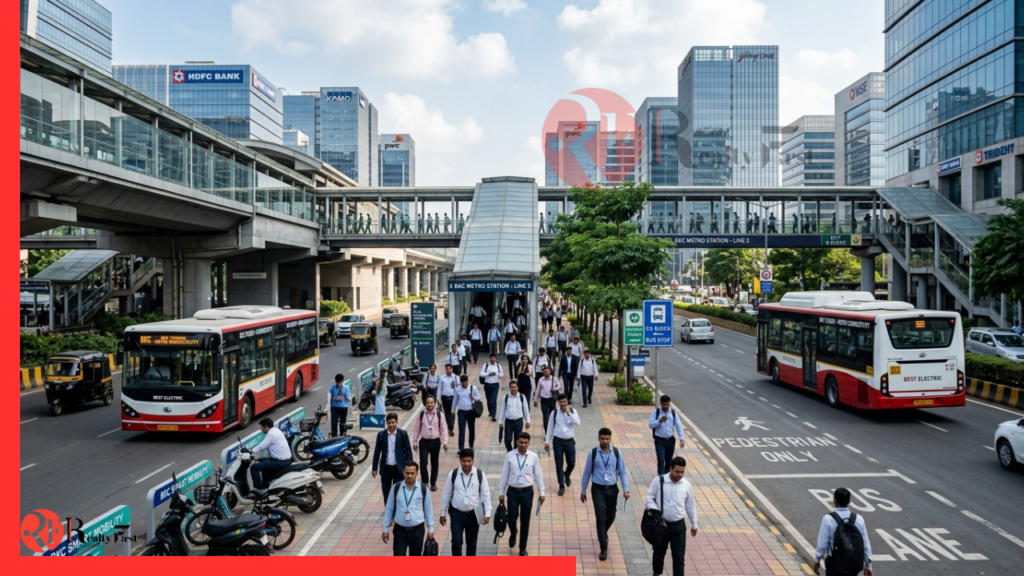
BKC, one of Mumbai’s largest commercial hubs, attracts nearly two lakh commuters every day. Despite significant investments in metro, rail and road infrastructure, many commuters continue to face challenges in completing the final leg of their journey from transport nodes to office destinations.
Reports emerging from the first Public Transport Day indicated that several commuters experienced difficulties due to limited last-mile transportation options, long walking distances and insufficient feeder connectivity.
Sharing his experience, one of the daily commuters to BKC said, “The initiative is a step in the right direction, but last-mile connectivity remains a challenge. Reaching the office from the station can be time-consuming, especially during peak hours. Better feeder services and seamless connectivity will encourage more people to choose public transport over private vehicles.”
Industry experts believe that addressing these challenges will require a combination of technology-enabled mobility infrastructure, improved parking management systems and stronger multimodal integration.
Commenting on the issue, Mr. Ashish Majithia, Founder & CEO, Nextkraft Parking Technologies said, “The success of any public transport initiative ultimately depends on how efficiently commuters can complete the first and last leg of their journey. While Mumbai has made remarkable progress in expanding metro and rail networks, last-mile connectivity continues to be the missing link. Smart mobility ecosystems must integrate parking, feeder transportation, pedestrian infrastructure, and digital mobility solutions into a single commuter experience. Automated parking systems near transit hubs can also play a significant role by enabling park-and-ride models that encourage people to leave their vehicles at designated locations and complete their journey through public transport.”
Urban mobility experts note that transit-oriented development requires more than investments in mass transit infrastructure and depends heavily on integration with localized mobility systems.
Sharing his perspective, Mr. Navin Rajagopalan, Director, City Lifts India Limited said, “As Mumbai’s commercial districts continue to densify, mobility infrastructure must evolve beyond roads and transit lines. Vertical mobility, pedestrian circulation, and access between transport nodes and workplaces are becoming critical now. Smart elevators, escalators, skywalk integrations, and efficient people-movement systems can substantially improve commuter experiences within high-density business districts such as BKC. The future isn’t just about moving people across the city but it’s about designing an uninterrupted journey from station to workplace work as one seamless system.”
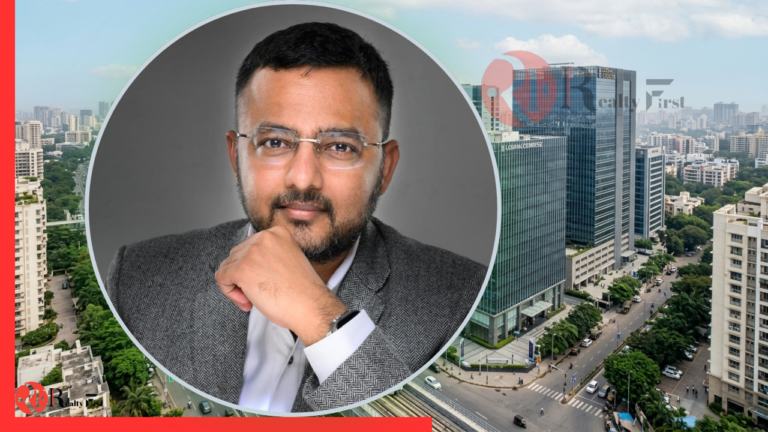
Mr. Khetsi Barot, Managing Director, The Guardians Real Estate Advisory, whose office is located in BKC said, “BKC has evolved into one of India’s most important business districts, attracting thousands of professionals and visitors every day. Initiatives such as the Weekly Public Transport Day are important as they encourage greater adoption of public mobility solutions and help reduce congestion in a high-density commercial hub. However, the response to such initiatives also highlights the importance of strengthening last-mile connectivity, which remains a key factor influencing commuting choices. For public transport usage to increase meaningfully, the journey must be seamless from start to finish. Better integration between metro stations, bus networks, pedestrian infrastructure, and last-mile transport options will be crucial in enhancing commuter convenience. A well-connected business district not only improves accessibility and employee experience but also contributes to higher productivity, sustainability, and the long-term competitiveness of the city.”
Experts believe that upcoming infrastructure initiatives, including enhanced metro connectivity and proposed advanced mobility systems in BKC, could help address existing challenges. However, they maintain that integrated planning focused on commuter convenience, accessibility and last-mile efficiency will be essential for long-term success.
Also Read: Home Loan Balance Transfer Guide: How to Reduce Your EMI and Save Money on Interest
As Mumbai continues to pursue a more sustainable and transit-oriented mobility framework, discussions emerging from BKC’s Public Transport Day have highlighted the importance of strengthening last-mile connectivity to improve public transport adoption.