By Rakesh Raghuvanshi, CEO of Sekel Tech
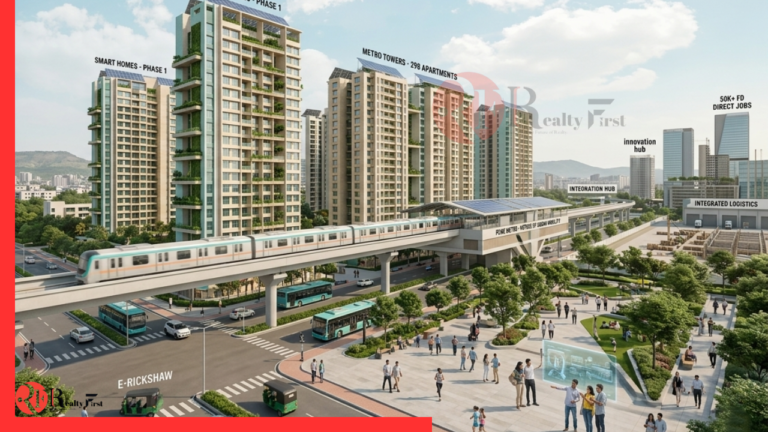
Urban expansion has traditionally been driven by large-scale infrastructure projects such as highways, metro corridors and transport networks. While these remain essential catalysts for real estate development, the factors shaping the next generation of residential growth corridors are becoming increasingly local. According to Rakesh Raghuvanshi, CEO of Sekel Tech, the future of residential development will depend as much on neighbourhood ecosystems as on regional connectivity.
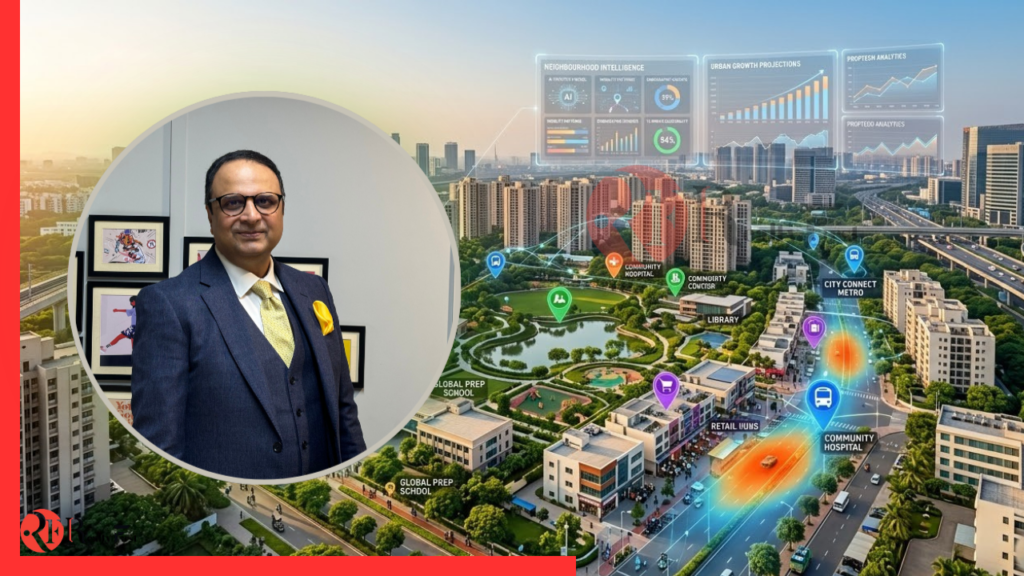
Raghuvanshi argues that technology is reshaping how developers, urban planners and homebuyers identify emerging residential destinations. Instead of relying solely on transport infrastructure as an indicator of future appreciation, digital mapping, location intelligence, geospatial analytics, consumer behaviour data and artificial intelligence are enabling stakeholders to evaluate the long-term potential of hyperlocal communities before they fully mature.
For years, improved connectivity has remained the primary benchmark for forecasting residential growth. However, Raghuvanshi believes that connectivity alone no longer explains why some residential corridors evolve into thriving communities while others fail to realise their potential.
The emphasis, he says, is steadily shifting towards neighbourhood quality. Factors such as access to schools, hospitals, retail centres, parks, public transport and other everyday amenities are emerging as equally important drivers of residential demand. Increasingly, buyers are assessing not just how quickly they can reach different parts of a city, but how conveniently they can meet their daily needs within their own locality.
Technology is making these assessments significantly more data-driven. Through digital mapping, geospatial intelligence and AI-powered analytics, thousands of data points can now be evaluated simultaneously to understand how mobility, demographics, social infrastructure and consumer activity collectively influence the long-term liveability and value of a neighbourhood.
One of the most significant advances, according to Raghuvanshi, is the ability to objectively measure the maturity of a hyperlocal ecosystem. Traditionally, neighbourhood quality was assessed through local knowledge, market perception and historical property prices. Today, it can be evaluated using measurable indicators such as access to healthcare and educational institutions, retail density, public transport availability, walkability, green spaces, and the balance between residential, commercial and recreational development. Together, these indicators offer a more comprehensive understanding of whether an emerging location is developing into a sustainable residential community.
Consumer behaviour has also become an important source of intelligence. Digital signals generated through commuting patterns, retail footfall, service usage and neighbourhood preferences provide insight into how residents interact with a locality rather than how it appears on a map. These behavioural trends often reveal emerging demand well before conventional real estate indicators begin to reflect market shifts, allowing developers and investors to identify opportunities at an earlier stage.
As a result, the definition of accessibility itself is evolving. Rather than being measured only by distance or commuting time, accessibility increasingly reflects how efficiently residents can reach essential services, quality schools, healthcare facilities, retail destinations and open public spaces. According to Raghuvanshi, these everyday conveniences are playing a growing role in influencing purchasing decisions and supporting long-term property appreciation.
This evolution has also transformed location intelligence from a marketing tool into a strategic planning resource. Developers are using data-driven insights to identify neighbourhoods where demographic trends are favourable, social infrastructure is strengthening and housing demand is likely to accelerate. Such analysis enables them to anticipate which areas are gradually evolving into complete residential ecosystems.
Urban planners stand to benefit in a similar way. Hyperlocal data can help identify infrastructure gaps, prioritise investments and promote more balanced urban expansion. Rather than encouraging fragmented housing clusters, planning can increasingly focus on developing integrated communities supported by education, healthcare, retail and public spaces.
Raghuvanshi also points to the growing relevance of the 15-minute neighbourhood concept, where residents can access essential services within a short walk, cycling distance or public transport journey. As cities become denser and land availability becomes more constrained, this planning model offers a practical approach to improving quality of life while reducing congestion and dependence on private vehicles.
Artificial intelligence is further enhancing the predictive capabilities of urban planning. By analysing demographic trends, mobility patterns, infrastructure usage, consumer behaviour and hyperlocal amenities together, AI can identify subtle indicators of future residential demand before traditional market signals emerge. According to Raghuvanshi, the next high-growth residential corridor may not necessarily be the one receiving the largest transport investment, but rather the location where neighbourhood infrastructure is quietly reaching the maturity needed to support sustained community growth.
He believes this changing perspective has important implications for both investors and homebuyers. The strongest long-term opportunities are increasingly emerging in locations where robust transport connectivity is complemented by quality schools, healthcare facilities, retail infrastructure, open spaces and strong community amenities. Such neighbourhoods are more likely to sustain residential demand and deliver long-term value appreciation.
Also Read: Beyond Housing: Integrated MEP Planning Will Define the Success of Dharavi’s Redevelopment
In Raghuvanshi’s view, the future of residential development will be defined by the strength of neighbourhood ecosystems as much as by the infrastructure that connects cities. As location intelligence, artificial intelligence and hyperlocal data continue to evolve, decisions around where to build, invest and live are expected to become increasingly informed by a deeper understanding of how neighbourhoods function. Ultimately, he argues, the most successful residential corridors of the future will be those that combine accessibility with well-developed community infrastructure to create lasting value.