Introduction
Whenever a government announces an airport expansion, local conversations shift almost overnight. Homebuyers begin asking whether this is the right time to invest. Investors start scanning property listings near the runway. Developers quietly acquire land parcels before prices move. The relationship between airport expansion and nearby property value has always fascinated real estate analysts because it combines infrastructure growth, employment generation, connectivity upgrades, and long term urban transformation.
In 2026, this topic is more relevant than ever. India and many global markets are investing heavily in airport infrastructure to support economic growth, tourism, cargo logistics, and business travel. For property investors, airport expansion and nearby property value are closely linked to rental demand, capital appreciation, and commercial real estate development. However, the impact is not always straightforward. While some micro markets witness sharp price appreciation, others experience slower growth due to planning delays or oversupply.
In this detailed guide, you will understand how airport expansion influences nearby property value, what factors determine price growth, how investors can identify high potential zones, and what risks must be evaluated before investing in airport corridor real estate. This article blends market insight, expert analysis, and real world examples to help you make informed decisions.
How Airport Expansion Impacts Nearby Property Value
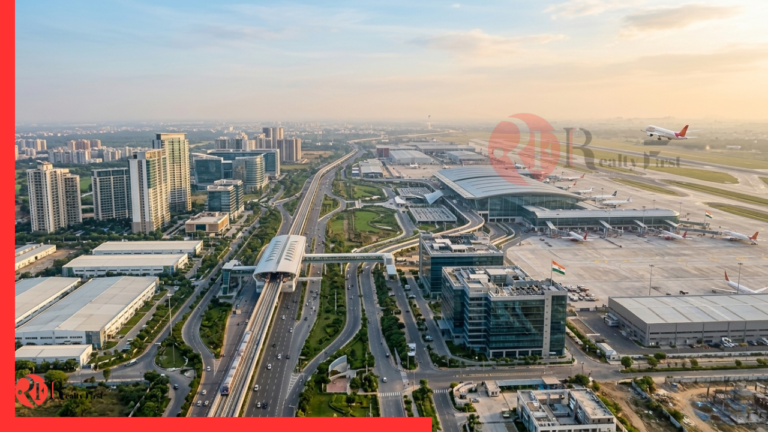
Airport expansion and nearby property value share a direct relationship because infrastructure acts as a catalyst for urban growth. When an airport expands, it increases passenger capacity, cargo handling capability, and airline connectivity. This creates employment opportunities not only within the airport ecosystem but also in hotels, logistics parks, business hubs, and retail developments surrounding it.
Over time, the area around an airport evolves into an economic cluster. Corporates prefer setting up offices close to international connectivity. Hospitality brands launch premium hotels. Warehousing companies invest in logistics hubs. As employment rises, residential demand follows. This chain reaction gradually strengthens nearby property value, particularly in well planned zones.
However, the degree of impact depends on the scale of expansion. A minor terminal renovation may not influence property prices significantly. On the other hand, a new runway, cargo terminal, or international upgrade can transform a semi urban region into a thriving real estate hotspot within a few years. This is why investors closely monitor airport master plans before entering emerging markets.
Also Read: Fortune Primero Receives RERA Approval for 15-Acre ‘Seven Sarjapur’ on Sarjapur–Attibele Corridor
The Infrastructure Multiplier Effect
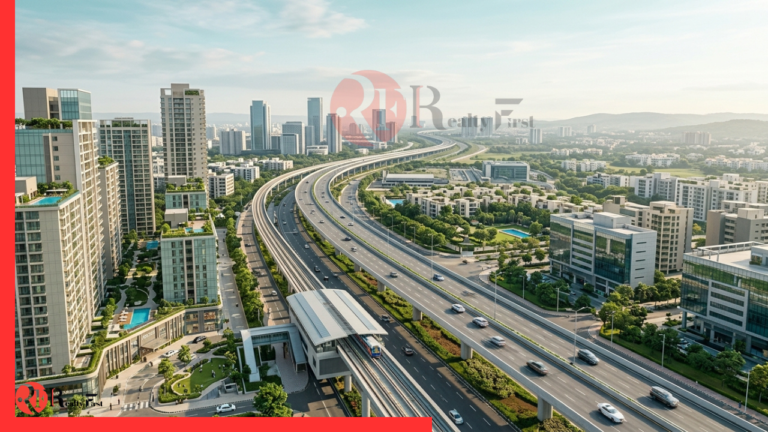
Airport expansion does not operate in isolation. It usually triggers a wave of complementary infrastructure projects. Governments improve road connectivity, metro corridors, flyovers, and expressways to ensure smooth passenger movement. This broader infrastructure push plays a critical role in strengthening nearby property value.
For example, when a new expressway connects the city center to an expanded airport, commute time reduces dramatically. Professionals who once hesitated to live near the airport due to distance concerns now consider it a viable option. Improved connectivity directly enhances residential property demand.
Moreover, infrastructure development boosts commercial real estate investment. IT parks, business districts, and convention centers often emerge in airport corridors. This creates a self sustaining ecosystem where residential and commercial growth reinforce each other. As a result, airport expansion and nearby property value often move upward together when supported by strong infrastructure planning.
Residential Real Estate Around Expanding Airports
In residential real estate, the impact of airport expansion and nearby property value depends largely on zoning regulations and noise management planning. Areas directly under flight paths may experience slower appreciation if noise mitigation is inadequate. However, well planned zones slightly away from the runway typically perform strongly.
Young professionals working in aviation, logistics, hospitality, and corporate offices prefer living close to their workplace. This increases rental demand. Investors who purchase apartments during the early stages of airport expansion often benefit from rising rental yields once the project becomes operational.
Consider the pattern seen in several Indian cities where airport expansion was followed by township developments. Developers launched gated communities, premium apartments, and mixed use projects near airport corridors. Within five to eight years, property prices appreciated steadily due to consistent demand from working professionals and business travelers seeking short stay rental options.
Commercial Property and Airport Expansion
Commercial property often benefits more aggressively from airport expansion compared to residential segments. Office spaces, business parks, logistics hubs, and warehousing facilities flourish when international connectivity improves. Airport expansion and nearby property value show strong correlation in commercial zones because businesses prioritize accessibility.
Cargo terminals and air freight upgrades significantly boost demand for industrial property and warehousing units. Investors targeting high rental income frequently explore logistics parks near expanding airports. These assets often deliver stable returns due to long term lease agreements with corporate tenants.
Additionally, hospitality real estate experiences substantial growth. Hotels, serviced apartments, and conference centers thrive in airport corridors. Business travelers prefer accommodation near airports to reduce commute time. This increases occupancy rates and strengthens commercial property valuation.
Factors That Determine Property Appreciation Near Airports
Although airport expansion and nearby property value are interconnected, several factors influence actual price appreciation. First, regulatory clarity plays a major role. Clear land titles, transparent zoning laws, and well defined development plans attract institutional investors.
Second, connectivity quality determines long term growth. If metro rail, expressways, and arterial roads support the airport zone, residential and commercial demand strengthens. Third, employment generation is critical. A high capacity airport without corresponding business activity may not deliver strong property appreciation.
Finally, supply management affects price stability. If developers flood the market with excessive inventory during the early phase of airport expansion, short term price stagnation may occur. Smart investors evaluate absorption rates and demand supply balance before committing capital.
The Role of Economic Growth and Urban Planning
Airport expansion is often aligned with broader economic goals. Governments invest in aviation infrastructure to enhance trade, tourism, and foreign direct investment. When these macroeconomic factors align positively, nearby property value benefits substantially.
Urban planning also shapes outcomes. Planned aerotropolis models integrate residential zones, commercial hubs, retail districts, and entertainment centers around airports. In such cases, airport expansion and nearby property value show sustained long term appreciation rather than speculative spikes.
For example, globally recognized airport cities demonstrate how integrated planning leads to structured real estate growth. When authorities coordinate transport networks, commercial zoning, and environmental planning, property markets near airports become attractive to long term investors.
Risks Associated with Investing Near Expanding Airports
While airport expansion and nearby property value present strong opportunities, investors must assess potential risks carefully. Noise pollution remains a major concern. Properties located directly under takeoff and landing paths may face resale challenges if sound insulation standards are weak.
Regulatory delays can also impact price growth. Large infrastructure projects sometimes face land acquisition issues or funding constraints. Investors who enter too early without evaluating project timelines may experience slower returns.
Environmental considerations are another factor. Wetland zones or protected areas near airports may restrict construction activity. Conducting due diligence and consulting local planning authorities can prevent unexpected complications.
Long Term Investment Perspective
Airport expansion and nearby property value should be evaluated with a long term horizon. Short term speculation rarely delivers sustainable returns. Instead, investors who align their strategy with infrastructure completion timelines often achieve better results.
For example, purchasing residential property during the early construction stage may involve moderate appreciation initially. However, once the expanded airport becomes fully operational and employment activity rises, rental demand strengthens. Over a period of seven to ten years, capital appreciation becomes more visible.
Institutional investors often follow this model. They invest in land parcels or commercial spaces during infrastructure development and hold assets until surrounding ecosystems mature. Individual investors can adopt a similar patient approach to maximize returns.
Real World Case Insight
In several Indian metropolitan regions, airport corridor development transformed peripheral land into premium property zones. Initially, skeptics questioned whether buyers would shift away from traditional city centers. However, once expressways, metro links, and business parks were completed, demand surged.
Property values in certain airport micro markets doubled over a decade due to consistent employment growth and infrastructure upgrades. The lesson here is that airport expansion and nearby property value depend on ecosystem maturity rather than immediate hype.
How to Identify High Potential Airport Investment Zones
Investors evaluating airport expansion and nearby property value should focus on three critical indicators. First, examine government infrastructure plans beyond the airport itself. Second, analyze employment projections and commercial leasing activity. Third, study historical price trends in comparable airport corridors.
Consulting real estate consultants and reviewing market research reports can provide clarity. Additionally, visiting the location physically helps understand ground realities such as construction quality, neighborhood amenities, and accessibility.
Conclusion
Airport expansion and nearby property value share a powerful and evolving relationship. When executed with strong planning, infrastructure integration, and economic vision, airport projects transform surrounding regions into vibrant real estate corridors. Residential demand rises as employment increases. Commercial investments strengthen as global connectivity improves. However, careful research, long term thinking, and strategic timing remain essential for investors.
If you are considering property investment near an expanding airport, evaluate infrastructure plans, demand trends, and regulatory clarity before making a decision. In the right market, airport expansion can be more than an infrastructure upgrade. It can be a gateway to long term real estate growth.