By Ashish S. Majithia
India’s urban infrastructure is undergoing significant transformation, driven by the growing adoption of technology across residential, commercial and public spaces. From smart homes and intelligent buildings to app-based mobility solutions and digital access systems, technology is increasingly shaping the way cities operate. Within this transformation, parking infrastructure has emerged as an area witnessing notable innovation.
Automated Parking Systems (APS) are gaining prominence as cities grapple with increasing vehicle ownership, limited land availability and growing expectations around convenience and efficiency. What was once considered a premium feature is gradually becoming an important component of modern urban infrastructure.
Historically, parking has been treated primarily as a functional element within real estate developments. However, evolving urban planning priorities are placing greater emphasis on parking as a contributor to mobility management, traffic flow and overall user experience. This shift has brought automated parking systems into sharper focus.
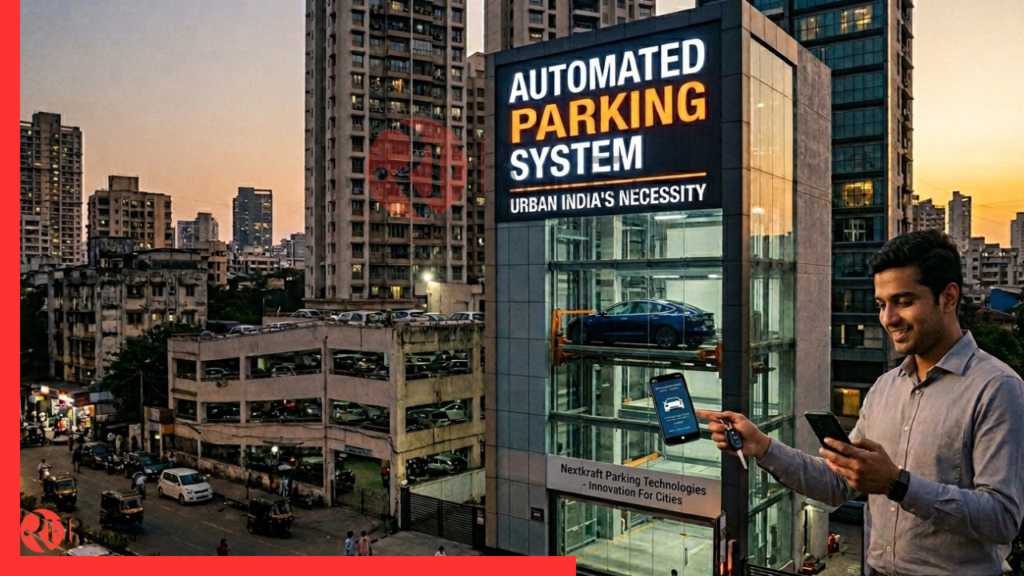
Automated parking systems eliminate the need for drivers to manually navigate parking levels or search for available spaces. Instead, vehicles are transported to designated parking slots through robotic or mechanical systems that use lifts, pallets and conveyor mechanisms.
A key factor supporting adoption is the increasing pressure on urban land resources. In metropolitan markets such as Mumbai, Bengaluru, Pune, Delhi and Hyderabad, developers are continually exploring ways to maximize available space. Automated parking systems offer higher parking density than traditional parking structures, making them suitable for premium residential developments, commercial projects, shopping centres and healthcare facilities.
The growing emphasis on smart cities and sustainable infrastructure is also contributing to wider adoption. Automated parking systems can help reduce internal vehicle movement, lower emissions associated with idling vehicles and support energy-efficiency objectives within developments. As a result, several green building projects are incorporating automated parking infrastructure as part of their sustainability strategies.
Technology integration is another important factor driving growth. Contemporary automated parking systems can be integrated with mobile applications, access control platforms, license plate recognition technologies and real-time monitoring systems. These features support faster vehicle retrieval, contactless access and improved user convenience.
The luxury residential segment is also contributing to adoption trends. Within premium housing developments, automated parking systems are increasingly being positioned as lifestyle-oriented amenities alongside concierge services and smart home technologies. Developers are using these systems to address demand for convenience, technology integration and enhanced user experience.
Commercial real estate is another segment witnessing increased implementation. Office developers are investing in automated parking solutions to improve tenant experience, optimize basement utilization and reduce traffic bottlenecks during peak operating periods.
As Indian cities continue to expand and urbanize, conventional parking infrastructure may face increasing limitations in meeting future requirements. Automated parking systems are emerging as a solution that addresses space utilization challenges while supporting broader mobility and infrastructure objectives. Their growing adoption reflects the changing role of parking within the future design and operation of urban environments.