New Delhi: For much of the past two decades, residential demand across the National Capital Region (NCR) was largely influenced by proximity to Delhi. Buyers often balanced longer commute times against affordability, while developers priced projects accordingly. That dynamic is now undergoing a significant transformation as infrastructure development reshapes the region’s housing landscape.
Across NCR, areas once considered peripheral are witnessing strong residential demand, supported by improved connectivity through expressways, metro expansion, and airport infrastructure. Industry stakeholders point to the completion of major transportation projects and the emergence of new economic hubs as key factors influencing buyer behaviour.
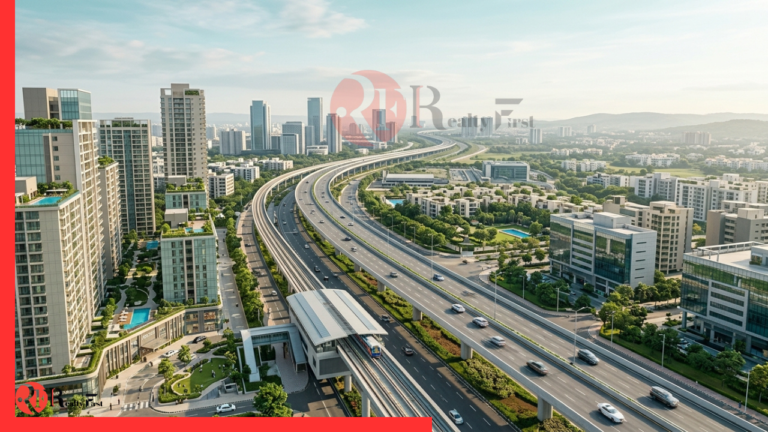
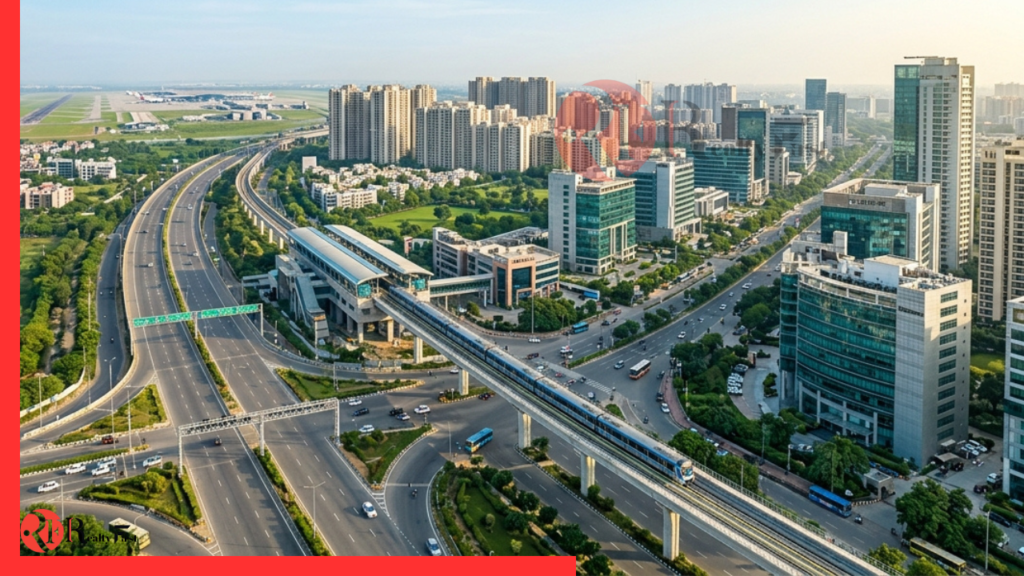
The completion of the 29-kilometre Dwarka Expressway, continued expansion of the Delhi Metro network, and the development of the Noida International Airport at Jewar have collectively enhanced regional connectivity. Infrastructure projects that previously existed largely on paper are now operational and integrated into daily commuting patterns across the region.
According to ANAROCK Research, average residential prices along the Dwarka Expressway corridor increased by 83% over the last decade. The corridor recorded a 58% year-on-year increase during Q4 2024. In the Noida-Greater Noida region, average housing prices in Greater Noida rose from Rs 3,340 per square foot in Q1 2020 to Rs 6,600 per square foot by Q1 2025, representing a 98% increase. Noida recorded the second-highest increase at 92%.
The report further highlighted a significant reduction in inventory levels across NCR. Unsold inventory declined by 51% during the five-year period, while inventory overhang reduced from 88 months to 17 months by Q1 2025.
Commenting on changing buyer priorities, Yash Miglani, Managing Director, Migsun Group, said, “Today’s homebuyer does not compromise on connectivity and what has changed is that they no longer have to. What we are seeing specifically across Noida and Greater Noida is that the infrastructure investments made over the past decade are now fully visible on the ground, in the form of completed expressways, operational metro stations, and a functioning multimodal network. The fact that buyers are no longer asking whether the infrastructure will arrive, but which project best positions them within it, tells you everything about how far this region has come.”
The Noida-Greater Noida Expressway corridor illustrates this transition. Historically viewed as a developing market, the corridor has evolved into one of NCR’s most connected residential destinations. Connectivity through the Aqua Line Metro, integration with the Delhi Metro network, and direct access to the Yamuna Expressway have strengthened its appeal among both homebuyers and investors.
Market participants note that buyer profiles have also evolved. While earlier demand was largely driven by investors seeking capital appreciation, the market is increasingly attracting end-users making long-term residential decisions. Large integrated developments, green spaces, institutional infrastructure, and proximity to future economic centres such as the proposed film city and data centre hubs have further contributed to demand.
Kushagr Ansal, Director, Ansal Housing, said, “The Gurugram market has evolved steadily over the past three years, supported by ongoing infrastructure development and improved connectivity. Key corridors are witnessing growing interest from buyers who recognise the long-term value created by enhanced road networks, metro expansion, and proximity to major business districts. The buyers in this market today are informed and confident, with a clear inclination towards mid-to-large ticket sizes, reflecting sustained trust in both project delivery and the city’s infrastructure-led growth.”
A similar trend is visible along the Dwarka Expressway corridor in Gurugram. Following the operationalisation of the expressway connecting Dwarka in Delhi to Kherki Daula in Gurugram, travel times have reduced significantly, including access to Indira Gandhi International Airport.
The corridor has witnessed strong capital appreciation and growing residential activity. Demand is increasingly coming from professionals, families, and senior executives seeking a combination of connectivity, modern infrastructure, and relative value compared to more established urban locations.
Harvinder Singh Sikka, Chairperson, Sikka Group, said, “What we are witnessing across NCR is not a speculative cycle but a structural rerating of micro-markets that now have genuine infrastructure underpinning. Buyers today evaluate connectivity with precision — metro access, expressway proximity, and commute times have become non-negotiable parameters in the purchase decision. The corridors that have delivered on these parameters are seeing sustained end-user demand, not merely investor interest, and that distinction matters enormously for the long-term health of the market.”
Industry stakeholders believe the ongoing transformation extends beyond a traditional real estate cycle. Infrastructure improvements are influencing where people choose to live, work, and invest, while expanding the geographic footprint of residential demand across NCR.
Also Read: India’s Real Estate Sector May Need Rs 50 Lakh Crore Capital Over Next Decade, Says ANAROCK Capital
As expressways improve regional accessibility, metro networks expand urban connectivity, and the Noida International Airport strengthens the economic potential of emerging corridors, residential demand across NCR continues to be shaped by infrastructure-led growth. Market participants increasingly view connectivity as one of the most important determinants of long-term residential value, influencing both buyer decisions and investment activity across the region.