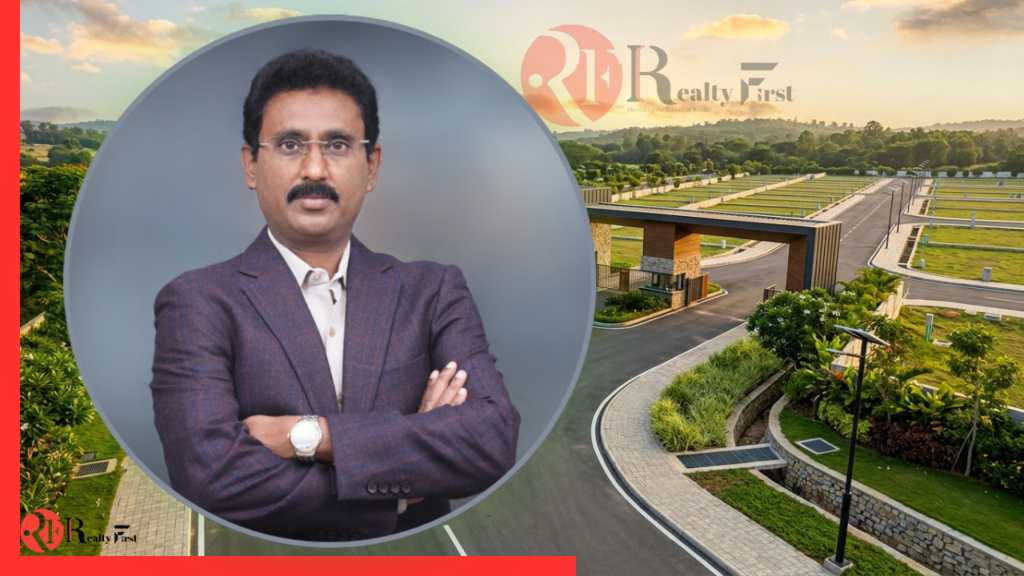
By E. Lakshminarayana Reddy, Founder & CEO, EARA Group
For many Indian families, purchasing land represents far more than a financial commitment. It is often viewed as a long-term investment that reflects aspirations of stability, legacy and wealth creation across generations. Yet, in rapidly expanding urban centres such as Bengaluru, the decision to invest in land is frequently accompanied by questions around legal certainty, project credibility and execution timelines.
Having spent more than 18 years in Bengaluru’s real estate ecosystem—working closely with homebuyers as a channel partner and contributing to the delivery of over 400 residential units—I have witnessed how trust continues to influence every stage of a buyer’s investment journey.
As buyer awareness has evolved, so too have the parameters that define a sound investment. While location continues to remain a fundamental consideration, long-term value is increasingly determined by three equally important factors: trust, transparency and sustainability.
Also Read: Why Andheri West Is Emerging as Mumbai’s Most Complete Western Suburb Growth Story
Trust Begins Well Before Development Starts
In real estate, trust is established long before construction activity begins. It starts with identifying the right parcel of land, completing legal due diligence, verifying ownership titles and obtaining the required regulatory approvals.
For many years, however, parts of the industry have followed a launch-first, approve-later approach, where projects are introduced to the market before securing critical approvals. While this strategy may help accelerate initial sales, it can also shift uncertainty and potential risk onto buyers. Modern land investments require a different perspective—one that places regulatory compliance at the centre of the development process rather than treating it as a subsequent step.
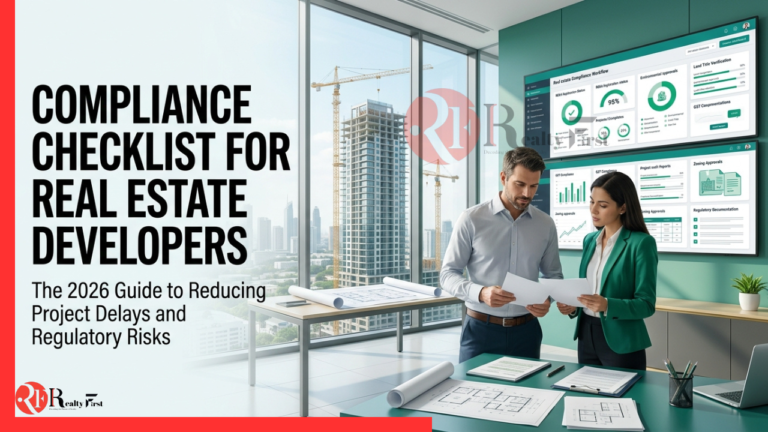
A compliance-first approach ensures that legal verification, ownership clarity and statutory approvals are completed before any customer engagement begins. When buyers are presented with projects backed by transparent documentation and regulatory discipline, confidence naturally replaces hesitation.
Today, trust cannot be built solely through marketing communication. It is earned through well-defined processes, careful planning and accountability at every stage of development.
Transparency Is Reflected Through Execution
Transparency in land development extends far beyond brochures, presentations and commitments. Buyers today increasingly evaluate projects based on visible progress and infrastructure readiness.
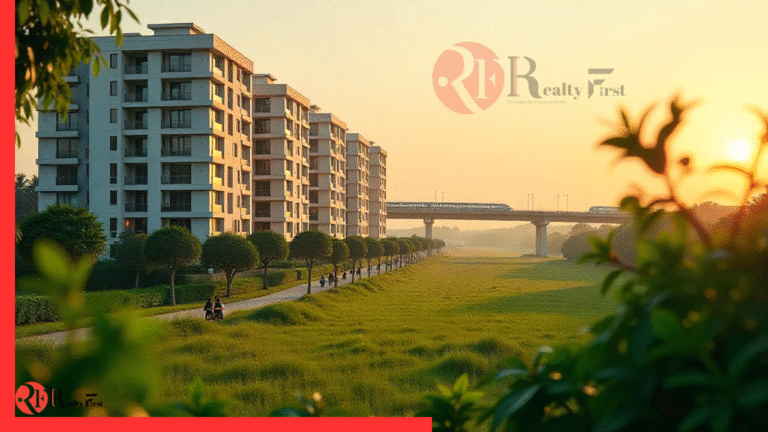
The market is steadily moving away from speculative launches towards developments where essential infrastructure is already in place, including asphalted roads, underground electrical systems, drainage networks and digital connectivity.
This shift reflects a broader change in buyer expectations. Infrastructure readiness demonstrates a developer’s commitment to execution, planning and timely delivery. Construction-ready developments also provide greater certainty for plot owners, allowing them to begin planning and building with confidence rather than waiting indefinitely for basic groundwork to be completed.
Ultimately, transparency is not measured by what is promised—it is demonstrated through preparedness and execution.
Sustainability Is Emerging as a Defining Investment Consideration
Another significant trend influencing modern land investments is the growing importance of sustainability. For many years, sustainable development was often viewed as an optional feature or an additional marketing proposition. Today, it has become an important factor in assessing long-term liveability and the overall quality of an asset.
As cities continue to expand and urban density increases, developments that combine lower density with integrated green planning are becoming increasingly valuable. Open spaces, native landscaping, water-sensitive planning and ecological balance are no longer viewed as niche features; they are steadily becoming integral components of responsible land development.
Modern planning now incorporates measures such as integrated rainwater harvesting, groundwater recharge systems, efficient waste management practices and plantation strategies that align with local climatic conditions.
When implemented effectively, sustainability extends beyond visual appeal. It contributes to long-term resilience, strengthens environmental balance and enhances the quality of life within a community.
Also Read: Why Nerul Sets the Benchmark for Residential Demand
The Future of Land Investments
As demand for secure land investments continues to rise, with high-growth corridors in South Bengaluru witnessing a 25% increase in demand, the future is likely to favour developers who prioritise integrity over short-term gains.
By anchoring luxury developments in legal diligence and ecological foresight, the industry is doing more than developing plotted communities—it is creating a foundation built on trust. In this evolving landscape, the communities that stand the test of time will be those that combine legal certainty, thoughtful planning and sustainable development to deliver enduring value for future generations.