By Mr. Navin Rajagopalan, Director, City Lifts India Limited
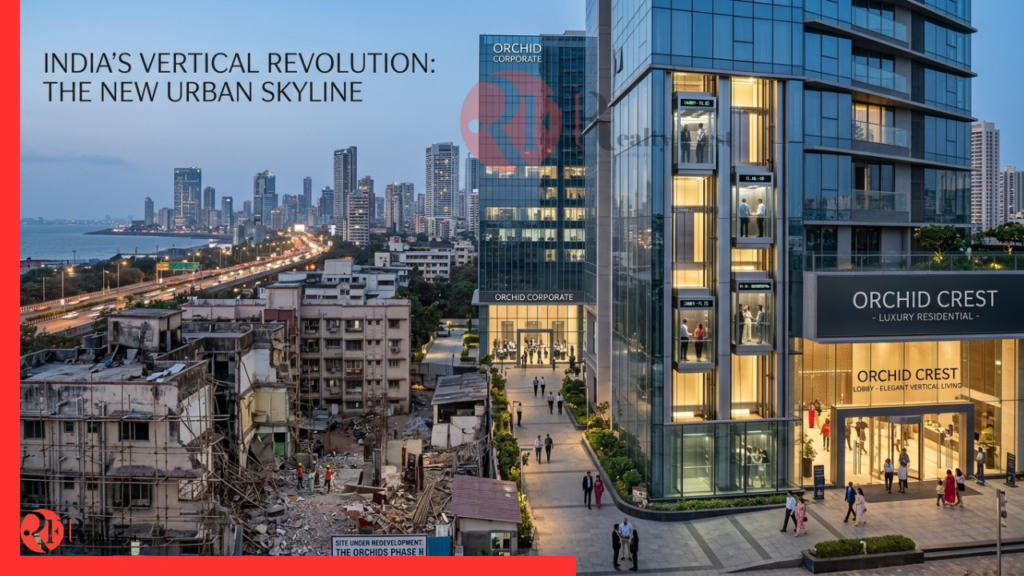
India’s urban redevelopment cycle is transforming not only the skyline but also the infrastructure that supports modern city living. As redevelopment gains momentum across cities such as Mumbai, Pune, Thane, and Delhi NCR, the demand for advanced vertical mobility solutions is rising alongside it. The replacement of ageing residential societies, outdated commercial buildings, and densely built urban clusters with contemporary high-rise developments is creating significant opportunities for the elevator and vertical transportation industry.
Also Read: Lloyds Realty Unveils New Brand Identity as It Targets Next Phase of Growth Across Mumbai
Redevelopment typically replaces older, low-rise structures with taller buildings that accommodate a greater number of residents while offering upgraded amenities, improved infrastructure, and stronger safety standards. This vertical expansion places elevators at the centre of building design and functionality. Today’s redevelopment projects require high-performance elevator systems that can manage higher passenger volumes without compromising speed, comfort, or operational efficiency. Increasingly, elevators are viewed not simply as essential infrastructure but as a defining element of the overall building experience and its long-term operational performance.
Mumbai has emerged as one of India’s most active markets for redevelopment-driven elevator demand. Limited land availability, a large stock of ageing buildings, and sustained housing demand have encouraged developers to undertake large-scale society redevelopment projects across both suburban and central parts of the city. Redeveloped towers are often significantly taller than the structures they replace, resulting in greater demand for multiple high-speed elevators, intelligent traffic management systems, and enhanced safety technologies. The growing preference for premium residential developments is also driving the adoption of aesthetically designed elevators equipped with touchless controls, destination dispatch systems, and energy-efficient features.
Space optimisation remains one of the key challenges in redevelopment projects. Developers increasingly require elevator systems that deliver higher capacity while occupying a smaller footprint, enabling more efficient core planning without affecting passenger movement. In response, elevator manufacturers are offering solutions tailored to redevelopment requirements, including machine room-less elevators, energy-efficient technologies, and smart dispatch systems that minimise waiting times and improve traffic flow. These innovations allow developers to maximise usable floor space while enhancing building efficiency and supporting sustainability objectives.
Redevelopment is also accelerating demand for elevator modernisation services. In phased or partially redeveloped projects, existing elevator infrastructure often needs to be upgraded to meet current safety regulations and modern building standards. As a result, there is growing demand for retrofitting, controller replacements, cabin refurbishments, and technology integration. At the same time, stricter regulatory requirements and increased awareness of passenger safety are encouraging the modernisation of elevator systems across older residential and commercial buildings.
The impact extends well beyond the residential segment. Commercial redevelopment and mixed-use projects are also increasing the need for sophisticated vertical mobility solutions. Premium office towers, retail developments, and integrated townships require elevators that combine speed, efficiency, aesthetics, and intelligent technology. As Indian cities continue to build upward through redevelopment-led growth, the need for future-ready vertical mobility infrastructure is expected to strengthen, making elevators an increasingly critical component of the country’s evolving urban landscape.