By Mr. Parthh K. Mehta, CMD, Paradigm Realty
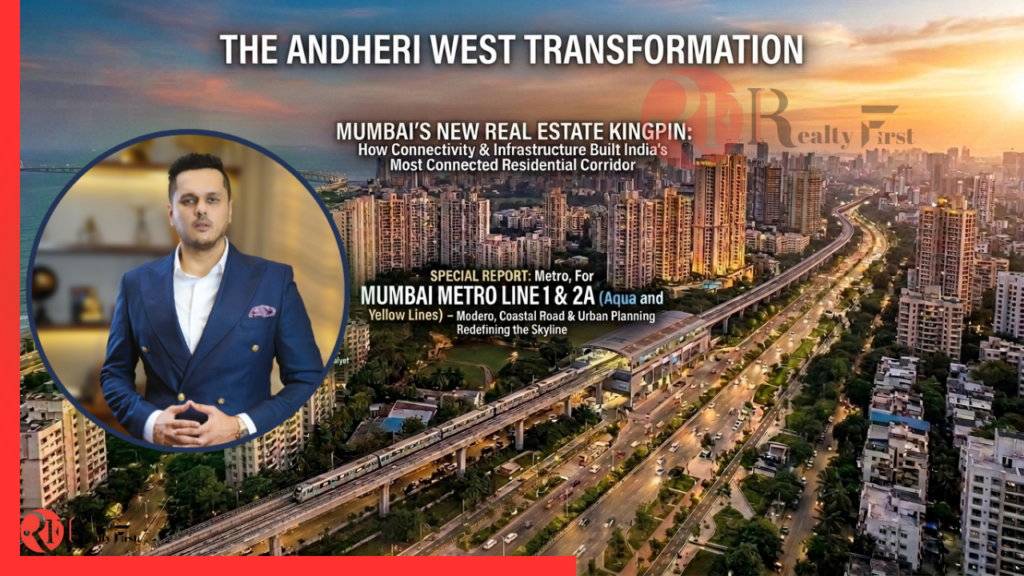
Andheri West has long been one of Mumbai’s defining urban destinations, but its latest phase of transformation is being shaped by a different set of growth drivers. According to Mr. Parthh K. Mehta, CMD, Paradigm Realty, the suburb is evolving from a collection of distinct residential pockets into a seamlessly connected urban ecosystem, supported by major infrastructure upgrades, improved mobility, and a maturing residential market.
Its strategic location, proximity to key commercial districts, extensive public transport network, and well-developed social infrastructure have already established Andheri West as a preferred destination for professionals, entrepreneurs, families, and investors. As large-scale infrastructure projects continue to progress, the locality is entering another chapter of its development, with connectivity and integrated urban planning expected to play a central role in its future growth.
Also Read: Lloyds Realty Unveils New Brand Identity as It Targets Premium Growth Across Mumbai
From Independent Micro-Markets to a Unified Residential Ecosystem
For years, Andheri West was viewed as a collection of separate neighbourhoods, including Lokhandwala, Four Bungalows, Versova, Oshiwara, DN Nagar, and Seven Bungalows. Each functioned as an independent residential micro-market with its own accessibility advantages and pricing dynamics.
That perception is steadily changing. Improved road networks and expanding Metro connectivity have helped transform these individual pockets into a more integrated residential ecosystem. Instead of operating as disconnected neighbourhoods, the area increasingly functions as a single urban destination with stronger internal connectivity.
Among the most significant contributors to this shift is Mrinal Tai Gore Road, which has emerged as a major east-west connector across the western suburbs. The corridor links important residential catchments such as Lokhandwala, Oshiwara, Four Bungalows, and DN Nagar, while also improving access to Link Road and SV Road. By distributing traffic away from narrower internal streets and reducing dependence on the often-congested Link Road, the connector has substantially improved mobility across the locality.
As a result, journeys that previously took 20–30 minutes during peak hours have become considerably faster and more predictable. Wider roads, flyovers, and enhanced traffic dispersal infrastructure have also made movement between residential clusters significantly more efficient.
Infrastructure Driving Liveability and Long-Term Value
Improved connectivity has enhanced more than just commuting times. Residents now enjoy easier access to Metro stations, employment hubs in Andheri East, Bandra Kurla Complex (BKC), and Goregaon, along with schools, retail destinations, and entertainment districts. According to the author, these improvements have strengthened the area’s overall liveability while increasing its residential appeal.
From an investment perspective, infrastructure-led development has remained a key catalyst for sustained property value appreciation. Projects such as Metro Line 1, Metro Line 2A, Link Road improvements, internal flyovers, and strategic connectors have already contributed to market growth. The upcoming Coastal Road and Bandra-Versova Sea Link are also expected to further enhance connectivity and support long-term demand.
The author notes that infrastructure-backed growth has historically proven more sustainable than speculative market cycles. Across Mumbai, neighbourhoods benefiting from Metro connectivity and major transport upgrades have consistently outperformed the broader market in both demand and capital appreciation.
Current residential prices across Andheri West reflect strong buyer interest across multiple micro-markets. Property values are estimated at ₹32,000–44,000 per sq. ft. in Oshiwara, ₹35,000–48,000 per sq. ft. in Four Bungalows, ₹40,000–52,000 per sq. ft. in Lokhandwala, and ₹49,000–55,000 per sq. ft. in Versova.
The author argues that accessibility continues to create a lasting competitive advantage in Mumbai’s property market, where well-connected locations typically command stronger long-term value than peripheral alternatives.
Infrastructure projects currently under development are expected to further strengthen this advantage. Reports suggest that the Bandra-Versova Sea Link could reduce travel time between Bandra and Versova to approximately 10–15 minutes. Meanwhile, the northern extension of the Coastal Road towards Bhayander is expected to improve connectivity between Andheri West and both South Mumbai and the city’s northern residential and commercial hubs.
Neighbourhoods such as Versova, Lokhandwala, Four Bungalows, and Oshiwara are therefore expected to become part of an even larger and more efficiently connected urban corridor, making commuting easier for both residents and businesses.
A Mature Market Positioned for Long-Term Growth
According to Mr. Mehta, Andheri West has consistently demonstrated resilience through multiple real estate cycles, with well-located developments recording steady appreciation supported by infrastructure improvements and constrained land availability.
Looking ahead, the suburb is expected to benefit from infrastructure projects scheduled for completion over the next five years, while redevelopment activity is likely to reshape neighbourhoods and gradually address supply constraints over the next seven to ten years.
The locality already offers a combination of established social infrastructure, strong employment connectivity, a premium lifestyle ecosystem, and sustained housing demand. These characteristics position Andheri West as one of Mumbai’s most mature residential markets, supported by healthy transaction volumes, a vibrant rental market, and limited vacant land.
Unlike emerging residential destinations that depend on future infrastructure to unlock demand, the author believes Andheri West already possesses the essential fundamentals of a well-established market. Future infrastructure projects are therefore expected to accelerate existing strengths rather than create them, reinforcing the suburb’s position as one of Mumbai’s most resilient and attractive residential investment destinations.