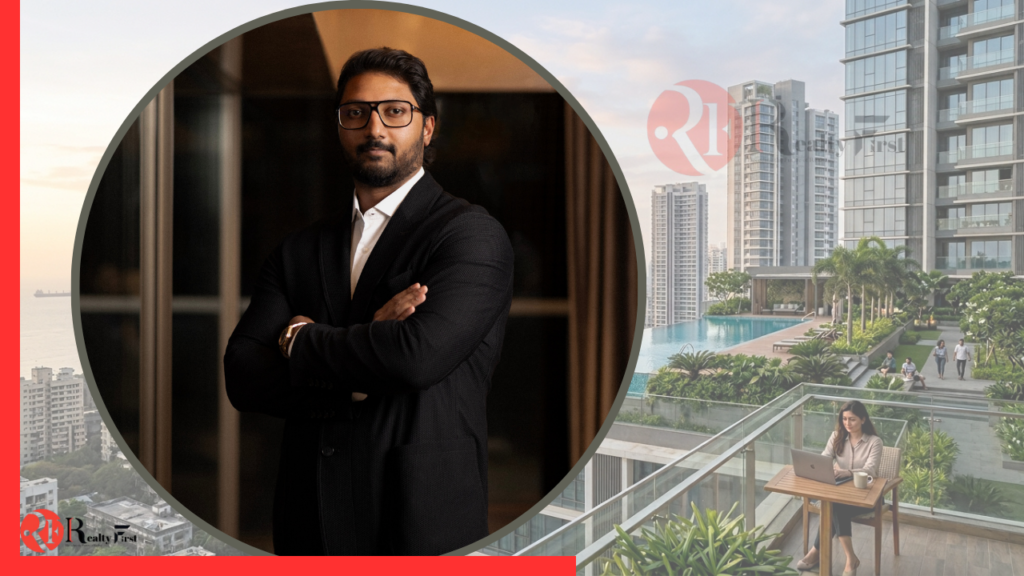
By Suhan Shetty, Industrialist and Founder of Rubics Group
There is a subtle but meaningful shift underway in Mumbai’s housing market—one that may not always dominate headlines but is increasingly visible in the way the city is evolving and, more importantly, in how its younger residents are choosing to live.
This shift is evident not only in the types of homes people are gravitating toward, but also in the neighbourhoods that are regaining relevance and the expectations that new-age buyers are bringing into what was once a purely price- and location-driven decision-making process.
For decades, homeownership in Mumbai was largely defined by pragmatism. Buyers focused on securing a foothold in the city, often prioritizing affordability and long-term value appreciation over immediate comfort or lifestyle. The underlying belief was simple: buy what you can, where you can, and allow time to do the rest.
That equation, however, is no longer as straightforward.
A growing segment of buyers—young professionals, entrepreneurs, and second-generation business leaders—is approaching real estate with a markedly different mindset. For them, a home is not merely a financial asset; it is an extension of their daily lives, one that must align with their routines, aspirations, and expectations of convenience.
Instead of asking whether a property will appreciate over time, they are increasingly asking how it enhances their quality of life in the present—how it reduces friction in their daily schedules, supports productivity, and creates space for both work and leisure within the same environment.
It is this shift in perspective that is quietly reshaping Mumbai’s real estate landscape.
Also Read: How Future-Ready Infrastructure Impacts Residential Choices Today
From Square Footage to Lifestyle Value
Conversations with buyers in their late twenties and thirties reveal a consistent pattern: a reduced willingness to compromise.
Where earlier generations often had to choose between central locations and modern amenities, today’s buyers are less inclined to accept that trade-off. The expectation now is to have both—proximity to key business districts and access to well-designed living environments that integrate multiple aspects of daily life.
This includes not only physical infrastructure such as larger layouts or better construction quality, but also shared spaces and amenities that support evolving lifestyles. Fitness centres, co-working lounges, landscaped leisure areas, and wellness-focused design elements are no longer viewed as luxuries reserved for a select segment; they are increasingly becoming baseline expectations.
In this context, a home is no longer perceived as an isolated unit, but as part of a broader residential ecosystem.
And it is precisely this shift that has elevated the role of redevelopment in the city.
Redevelopment: From Functional Upgrade to Strategic Transformation
In a land-constrained market like Mumbai, redevelopment has always been a practical necessity. Ageing buildings, coupled with limited availability of new land, made renewal inevitable.
What is changing today, however, is the scale and intent of redevelopment.
It is no longer limited to replacing outdated structures with newer ones. Instead, it is being approached as an opportunity to reimagine urban living—transforming underutilized or ageing spaces into integrated, future-ready residential environments.
Developers are increasingly focusing on creating self-sustained ecosystems where everyday needs—work, fitness, social interaction, and recreation—can be addressed within the residential complex itself. This approach reflects a deeper understanding of how urban lifestyles have evolved, particularly in a city where time and accessibility are critical constraints.
This transformation is especially visible in central Mumbai.
Why Central Mumbai Is Regaining Prominence
While the western suburbs have historically dominated redevelopment activity, there is a noticeable shift in attention toward central Mumbai’s key corridors, including Sion, Sewree-Wadala, Parel-Lalbaug, and Worli.
These locations are not new entrants to Mumbai’s urban narrative. On the contrary, they have long been integral to the city’s identity, shaped by industrial activity, mill lands, and dense residential communities.
What has changed is how these areas are being repositioned.
Former industrial zones and ageing residential clusters are being redeveloped into modern housing projects that align with contemporary expectations. Their inherent advantage lies in their geography—these are centrally located areas with established connectivity and proximity to major commercial hubs.
For instance, Parel and Worli offer direct access to South Mumbai’s business districts, while Sion and Wadala serve as strategic connectors between the eastern and western parts of the city. This makes them particularly appealing to professionals who prioritize reduced commute times without compromising on location.
The role of infrastructure in this shift cannot be overstated.
Metro expansion, road upgrades, and large-scale projects such as the coastal road are gradually reducing travel inefficiencies, making these areas more accessible and, consequently, more desirable. Locations that were once considered transitional are now emerging as strong residential destinations in their own right.
Redefining Luxury: The Value of Time and Convenience
One of the most significant changes in the market is how luxury itself is being defined.
It is no longer limited to aesthetics, finishes, or scale. Instead, it is increasingly linked to convenience and time efficiency—two factors that hold immense value in a city like Mumbai.
A shorter commute, access to essential services within the building, and the ability to manage work and leisure without extensive travel are all becoming indicators of a premium lifestyle.
This is why features such as co-working spaces, wellness zones, smart home integration, and curated community areas are moving from optional additions to essential components of residential design.
Developers, in turn, are adapting to these expectations by incorporating global design sensibilities while tailoring them to Mumbai’s unique urban constraints.
In established locations such as Worli and Parel, this has translated into high-end developments that combine location advantage with lifestyle offerings. Meanwhile, emerging corridors like Sewree and Wadala are positioning themselves as relatively more accessible alternatives without significantly compromising on amenities.
Preserving Identity While Building for the Future
An important aspect of redevelopment in central Mumbai is its ability to retain the character of existing neighbourhoods.
Unlike greenfield developments on the city’s outskirts, these projects are embedded within areas that already possess a strong social and cultural fabric. Local markets, long-standing communities, and familiar urban rhythms continue to coexist alongside new developments.
For many buyers, this continuity is a key factor.
It allows them to experience modern living without feeling disconnected from the city’s identity. The appeal lies not just in the apartment itself, but in the environment it is part of—an environment that feels lived-in, dynamic, and authentic.
Striking this balance between modernity and continuity is what distinguishes successful redevelopment projects from purely transactional real estate offerings.
Beyond Housing: The Broader Economic Impact
The implications of redevelopment extend beyond residential upgrades.
As projects take shape, they generate employment, stimulate local economies, and contribute to the overall renewal of urban infrastructure. Improved connectivity further attracts businesses, creating a cycle of growth that benefits both residents and investors.
Over time, this leads to the emergence of micro-markets that are more vibrant, better connected, and economically active.
For investors, this represents an opportunity to participate in areas that are undergoing structural transformation. For end-users, it provides access to neighbourhoods that are evolving in tandem with the city’s broader growth trajectory.
Also Read: Smart Property Decision Engine
Looking Ahead
Mumbai has always been defined by its ability to adapt, often under constraints that would challenge most global cities.
What is unfolding today is another phase in that evolution—driven by changing buyer expectations, infrastructure development, and the strategic use of redevelopment as a tool for urban renewal.
For today’s homebuyers, the notion of luxury is becoming less about exclusivity and more about integration—how seamlessly a home fits into their lives, how effectively it reduces daily friction, and how well it supports a balanced, efficient lifestyle.
In that sense, redevelopment is doing more than reshaping skylines.
It is redefining what it means to live well in Mumbai.