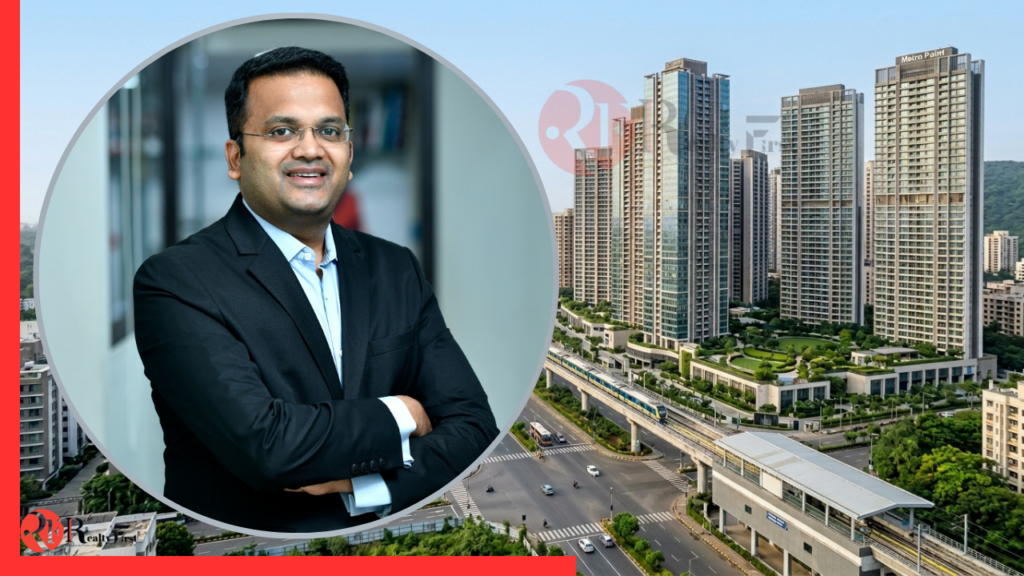
By Rohit Garodia, Founder and Managing Partner Pecan Reams
Borivali, a western suburb of Mumbai, is witnessing a structural shift in its residential real estate landscape, supported by infrastructure upgrades, redevelopment momentum, and sustained end-user demand, according to industry observations.
Traditionally known as a stable suburban housing market with strong community networks, Borivali is now entering a new phase of urban evolution. Over the past two years, the suburb has attracted large, branded developers, leading to a visible transformation in both housing supply and skyline.
Branded Developers Reshape The Skyline
The entry of established developers such as Lodha Group, Godrej Properties, and Oberoi Realty signals growing confidence in Borivali’s long-term potential. Projects like Oberoi Sky City have introduced large-scale, high-rise developments, a format previously associated with prime western suburbs.
With residential towers rising above 50 storeys and integrated gated communities becoming more common, the suburb’s built environment is undergoing a significant upgrade.
Also Read: Dubai Property Market Shows Resilience, Enters Strategic Pause
Pricing Trends Reflect Changing Positioning
The shift in development quality is also reflected in pricing benchmarks. Premium residential projects in Borivali are increasingly being compared with established micro-markets such as Juhu, Bandra, and Lokhandwala.
Market participants indicate that demand remains largely end-user driven, supported by improved connectivity, access to social infrastructure, and the availability of relatively larger homes compared to central locations.
Infrastructure Emerges As A Key Growth Driver
Connectivity improvements continue to play a central role in Borivali’s evolution. The operational Metro Line 2A has reduced travel time between Borivali and Andheri, significantly improving commute efficiency.
Its integration with Metro Line 7 has strengthened north–south connectivity along the Western Express Highway corridor.
Upcoming infrastructure projects are expected to further enhance accessibility. The proposed Thane–Borivali twin tube tunnel is likely to improve east–west connectivity, potentially reducing travel time between the two regions to around 15 minutes.
In addition, projects such as the Goregaon–Mulund Link Road and planned connectivity to the Mumbai Coastal Road are expected to integrate Borivali more closely with the city’s wider transport network.
Railway infrastructure upgrades, including additional suburban lines between Borivali and Virar, are also aimed at improving commuter capacity and reducing congestion.
Redevelopment Driving Housing Transformation
While infrastructure improves accessibility, redevelopment remains the primary force reshaping Borivali’s housing stock. More than 200 housing society redevelopment projects are currently underway across the suburb.
Older residential buildings are being replaced with modern towers offering amenities such as landscaped podiums, co-working spaces, wellness zones, and smart home features.
This transition reflects a broader shift in homebuyer preferences towards lifestyle-oriented living environments within established neighbourhoods.
Market estimates indicate that Borivali and nearby micro-markets recorded residential transactions exceeding ₹40,000 crore in FY 2024–25, highlighting strong buyer activity and sustained market confidence.
Entrepreneurial Base And Retail Ecosystem Add Strength
Borivali’s residential demand has historically been supported by its connectivity to industrial clusters in Gujarat and northern Maharashtra, including Vapi, Valsad, Boisar, and Palghar.
The suburb continues to serve as a residential base for business families operating in these regions, benefiting from rail and road connectivity.
At the same time, the Kandivali–Borivali belt has developed into a prominent retail corridor. Localities such as LT Road and Chandavarkar Road host dense clusters of jewellery businesses, reflecting strong consumer demand and local purchasing power.
Also Read: PropTech Startups Changing Realty: How Technology Is Transforming the Real Estate Industry
Balancing Growth With Liveability
Despite ongoing transformation, Borivali retains key liveability advantages. Its proximity to Sanjay Gandhi National Park provides access to green space, while established schools, healthcare facilities, and community infrastructure continue to support residential demand.
Outlook
Industry experts suggest that redevelopment-led supply will remain a defining trend across the Mumbai Metropolitan Region over the coming decade. Borivali is expected to remain a key contributor to this shift.
As infrastructure projects progress and large-scale developments continue, the suburb is gradually evolving from a peripheral residential location into a strategically connected urban hub.