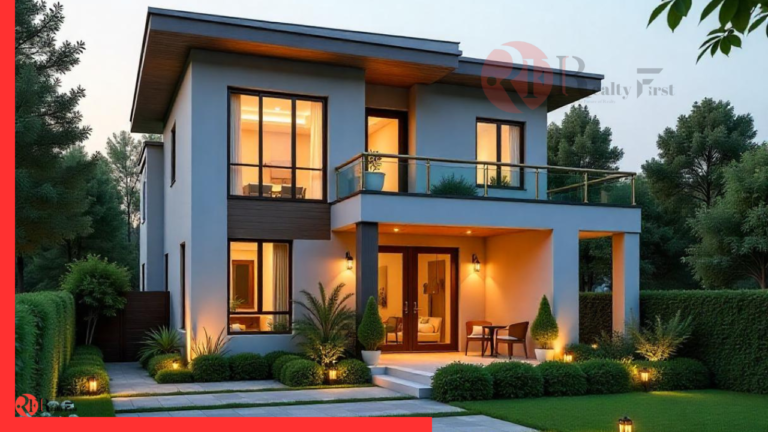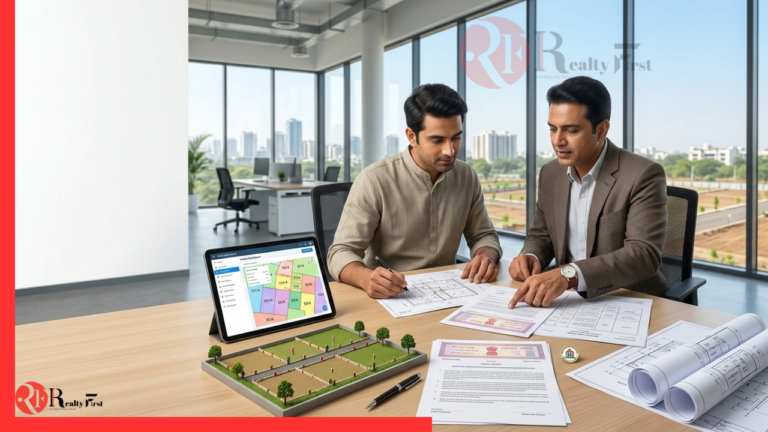
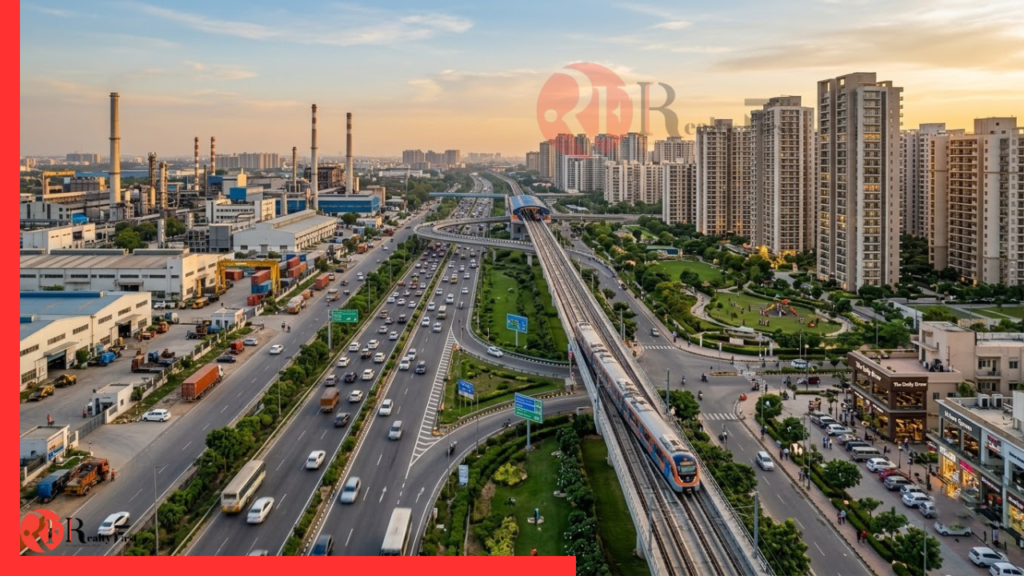
Faridabad, long recognised as one of North India’s key industrial centres, is steadily reshaping its identity as an emerging residential market within the National Capital Region (NCR). While manufacturing remains central to the city’s economic foundation, improvements in connectivity, civic infrastructure and organised housing have significantly broadened its appeal among homebuyers in recent years.
Also Read: Lashkaria Indrasukh Nears Completion in Andheri West, Targets Luxury Housing Segment
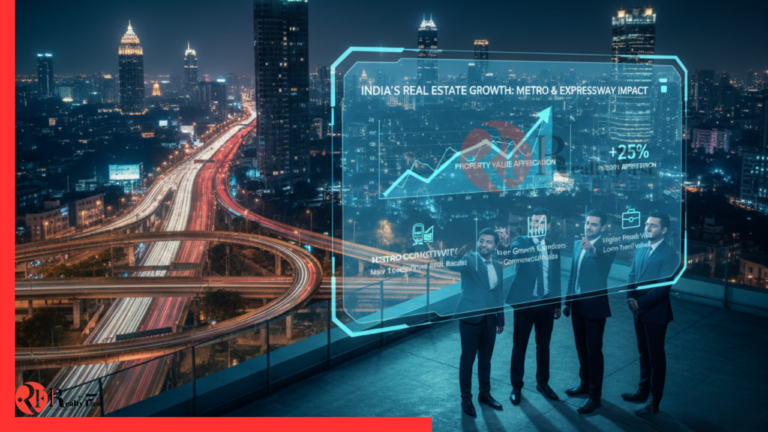
This transition has been driven by a combination of structural developments rather than a single catalyst. Infrastructure projects, including the Delhi-Mumbai Expressway, expanded metro connectivity and improved road networks, have strengthened access to other parts of NCR. At the same time, the city’s urban ecosystem has evolved through better educational institutions, healthcare facilities, retail infrastructure and the expansion of organised residential developments. Collectively, these factors have transformed Faridabad into a more viable residential destination than it was five or six years ago.
The changing market dynamics are also reflected in recent housing data. According to ANAROCK’s NCR Residential Market Viewpoints for Q1 2026, Faridabad contributed nearly 10 per cent of the region’s residential sales during the quarter, while housing absorption increased 133 per cent year-on-year. Pricing trends indicate continued momentum. JLL reported a 1.5 per cent quarter-on-quarter rise in residential capital values during Q1 2026, while ANAROCK’s 2025 annual report estimated the city’s average residential prices at around Rs. 9,300 per sq. ft. Despite this appreciation, Faridabad continues to offer relatively better value than several established residential markets across NCR.
Commenting on the city’s evolving real estate landscape, Mohit Goel, Managing Director, Omaxe Group, said, “Faridabad is no longer just an industrial town; it is witnessing a profound structural re-rating to become one of NCR’s most dynamic real estate destinations. The convergence of mega-infrastructure, like the Delhi-Mumbai Expressway, the FNG corridor, and the direct link to Jewar Airport, has completely shifted the city’s economic center of gravity. As property prices in Gurugram and Noida reach historic highs, Faridabad has emerged as the most compelling, value-driven market in the entire region. It offers homebuyers and investors a distinct price advantage without compromising on connectivity, open spaces, or overall liveability. In micro-markets like Greater Faridabad, we are seeing this reflected in double-digit year-on-year sales growth, with end-users actively upgrading to spacious, premium communities.”
Goel further added, “Alongside this residential boom, Faridabad’s commercial and retail landscape is undergoing a parallel evolution. The city is rapidly moving away from basic neighborhood shops toward modern high-street retail like World Street in Sector 79, experiential dining, and organized commercial hubs. As new residential sectors mature, the demand for high-quality retail and workspace is soaring—solidifying Faridabad not as a suburban alternative, but as a primary, high-yield destination for capital deployment.”
Also Read: Lashkaria Indrasukh Nears Completion in Andheri West, Targets Luxury Housing Segment
Although Faridabad’s industrial character remains firmly intact, the city is increasingly developing into a more diversified urban centre. Its manufacturing base continues to support economic activity, while sustained infrastructure investment and comparatively affordable residential pricing are expanding its housing market. The growing participation of end-users, rather than purely speculative buyers, further reflects the city’s gradual evolution into a stronger residential destination within NCR.