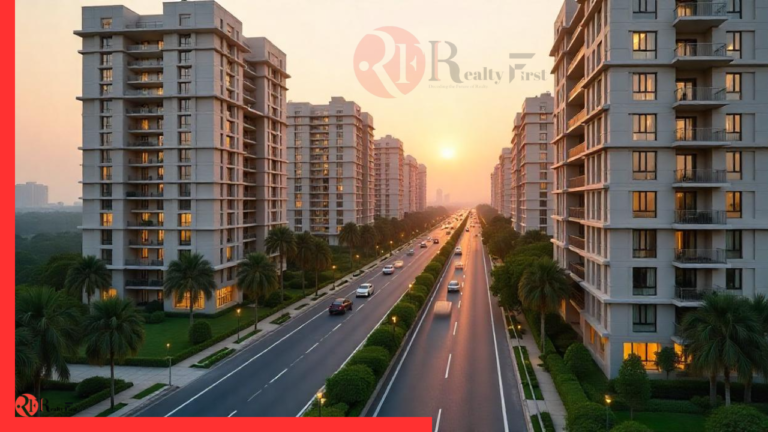
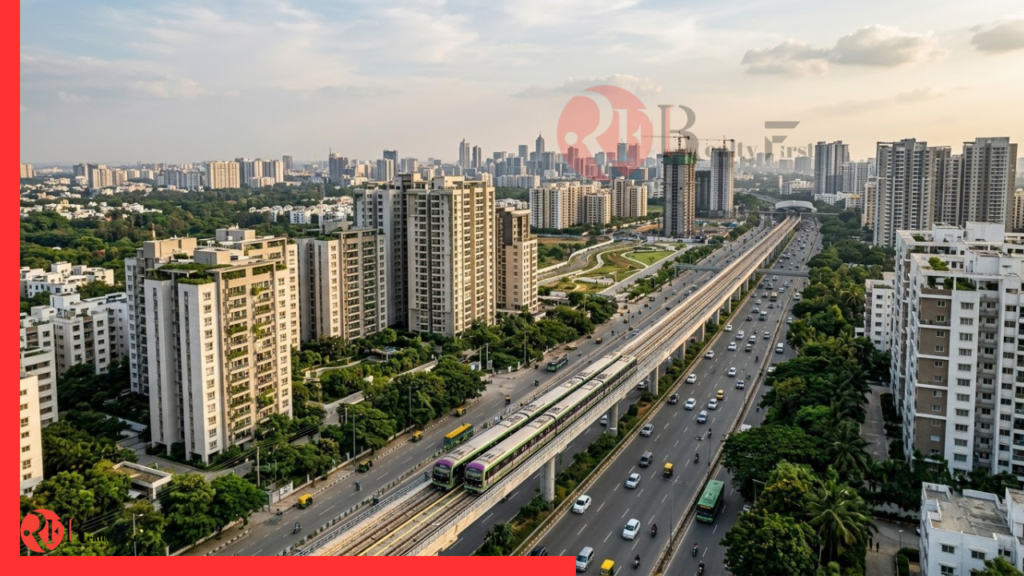
Bengaluru’s residential real estate market has maintained its growth momentum in 2026, supported by continued infrastructure investment, the resilience of its technology-driven economy and expanding commercial activity. Major connectivity projects, including the Namma Metro expansion, Peripheral Ring Road and Satellite Town Ring Road, are opening up new residential corridors and accelerating housing development across East, South and North Bengaluru.
The city’s housing market has also continued to demonstrate resilience despite moderating conditions. According to Knight Frank India, Bengaluru registered 27,968 residential sales in H1 2026, marking a 5% year-on-year increase and making it the fastest-growing residential market among India’s eight largest cities. During the same period, new residential launches rose 4% year-on-year to 34,749 units, highlighting sustained developer confidence. Average residential prices climbed to ₹9,354 per sq. ft., supported by consistent demand for well-connected residential projects and lifestyle-oriented developments.
Infrastructure-led growth continues to shape residential demand across the city. South Bengaluru accounted for 36% of new launches and 34% of residential sales during H1 2026, reinforcing its position as the city’s most active housing market. East Bengaluru contributed 31% of new launches, while North Bengaluru emerged as the fastest-growing residential corridor, recording double-digit growth in both new project launches and home sales.
These emerging micro-markets continue to benefit from improved metro connectivity, proximity to established IT parks, expanding social infrastructure and sustained demand from end-users seeking well-connected residential communities.
Against this backdrop, a new generation of residential developers is steadily expanding its presence across Bengaluru’s high-growth corridors. By aligning new projects with infrastructure-driven urban expansion and evolving homebuyer preferences, these developers are contributing to the city’s changing residential landscape and reinforcing Bengaluru’s position as one of India’s most active housing markets.
Also Read: Rethinking FSI: As Mumbai Densifies, Mulund Offers a Blueprint for Thoughtfully Planned Living