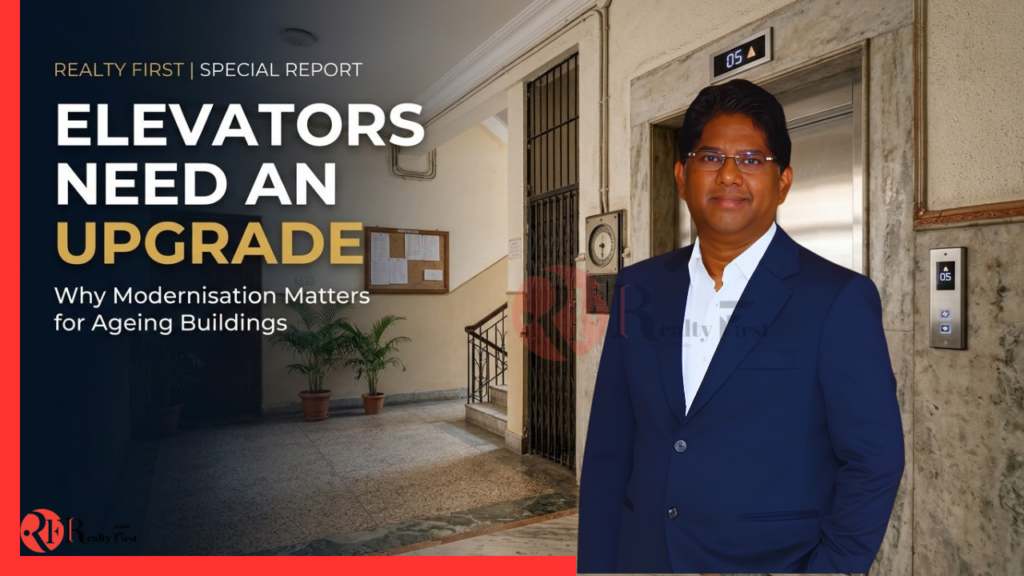
By Mr. Navin Rajagopalan, Director, City Lifts India Limited
India’s expanding urban landscape has brought vertical living to the forefront of residential development. However, as housing societies and commercial buildings constructed decades ago continue to accommodate growing populations, the condition of their existing elevator infrastructure is emerging as an important concern. Ageing elevator systems, often characterised by recurring breakdowns, rising maintenance requirements and outdated safety features, are making modernisation an increasingly important consideration for building owners and facility managers.
In metropolitan markets such as Mumbai, Pune, Delhi and Kolkata, several residential and commercial properties continue to depend on elevators installed 15 to 25 years ago. Although many of these systems remain operational, their performance may no longer meet the demands of present-day building occupancy. Slower movement, inconsistent ride quality and frequent service interruptions can affect everyday convenience. In high-density residential complexes, where elevators are used extensively throughout the day, even relatively short periods of downtime can create considerable inconvenience for residents.
Also Read: From Affordability to Premiumisation: Noida’s Housing Market Moves Up the Value Chain
Safety is another critical consideration in the case of ageing elevator infrastructure. Components including controllers, motors, door operators and electrical wiring are subject to deterioration over years of operation. As these systems age, the possibility of technical failures increases, placing greater importance on regular inspections, timely maintenance and the replacement of outdated components. Recent regulatory discussions concerning elevator safety in Maharashtra have also brought attention to the need for stronger inspection practices and maintenance standards across the sector.
Elevator modernisation offers a way to address these concerns without necessarily undertaking a complete replacement of the existing installation. The process involves upgrading essential mechanical, electrical and control systems with contemporary technologies. Depending on the condition of the elevator, replacing outdated components can improve operational reliability, passenger safety, ride comfort and energy performance. Such upgrades can also help existing buildings adapt to changing safety regulations and accessibility requirements.
The benefits extend beyond the immediate improvement in elevator performance. Contemporary systems incorporate intelligent traffic management, more efficient door mechanisms and energy-saving components. These technologies can help optimise elevator operations, reduce electricity consumption and lower long-term maintenance requirements. For residential societies and commercial establishments, improvements in operational efficiency can translate into a better passenger experience while contributing to the overall upkeep and attractiveness of the property.
The financial considerations associated with elevator upgrades are also influencing decisions among property owners. Replacing an entire elevator installation can involve substantial expenditure and extended project timelines. Modernisation, by comparison, provides the option of upgrading critical components in phases, potentially reducing disruption to residents and building occupants. This approach is increasingly being considered by developers and facility managers seeking to extend the service life of existing elevator systems while addressing performance and safety concerns.
Also Read: How Vadhavan Port Could Shape Vasai’s Residential Real Estate Market
As urban buildings age and residential density increases, the pressure on existing vertical transportation infrastructure is likely to become more pronounced. Elevator modernisation will therefore be an important part of maintaining the functionality, safety and efficiency of India’s ageing residential and commercial building stock. For housing societies and property managers, timely upgrades can help ensure that existing infrastructure remains better equipped to meet the demands of modern urban living.