By Mr. Ashish Majithia, Founder & CEO of Nextkraft Parking Technologies
India’s rapidly urbanising cities are expanding upwards, but the challenge of providing adequate parking continues to intensify. Metropolitan centres including Mumbai, Bengaluru, Pune, Delhi and Hyderabad are experiencing steady growth in vehicle ownership, even as the availability of land becomes increasingly constrained. The outcome is evident in everyday urban life—traffic congestion, unauthorized roadside parking, longer travel times and mounting inconvenience for both residents and businesses.
In Mumbai, where land commands a significant premium, conventional parking infrastructure is struggling to meet evolving urban requirements. According to Mr. Ashish Majithia, Founder & CEO of Nextkraft Parking Technologies, Automated Parking Systems (APS) are emerging as a practical and scalable approach for addressing the city’s growing parking constraints. He believes developers, urban planners and infrastructure stakeholders are increasingly evaluating these technology-driven systems as part of future-ready urban development.
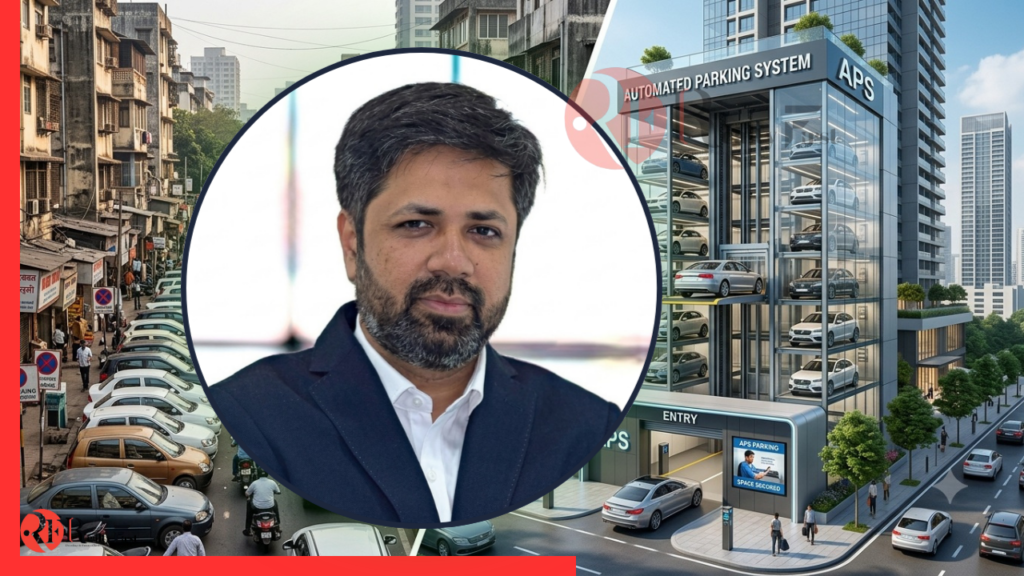
Automated Parking Systems use mechanised technology to park and retrieve vehicles without requiring motorists to drive through ramps or multiple basement levels. Instead, vehicles are handled using lifts, pallets, conveyors and other automated mechanisms designed to maximise both vertical and horizontal utilisation of available space.
Mr. Majithia notes that one of the strongest advantages of automated parking lies in its ability to improve space efficiency. Compared with conventional parking layouts, APS can accommodate a significantly higher number of vehicles within the same footprint. This makes the technology particularly relevant for redevelopment projects, mixed-use developments, commercial districts and high-density residential developments where land availability is limited.
The growing pace of redevelopment across Mumbai is also contributing to demand for automated parking solutions. Older residential buildings and housing societies undergoing redevelopment often face challenges in meeting present-day parking requirements. In such cases, APS enables developers to create additional parking capacity while retaining valuable space for amenities, landscaped areas and recreational facilities.
Beyond optimising land use, Automated Parking Systems can also improve internal traffic circulation within buildings. Since drivers are not required to search across multiple parking levels for available spaces, vehicle movement inside the premises is reduced, easing congestion. The lower amount of idle driving also contributes to reduced fuel consumption and lower carbon emissions.
Safety and user convenience are additional factors supporting the adoption of automated parking technology. With limited human intervention during the parking process, the likelihood of vehicle scratches, theft or accidental damage is considerably reduced. Mr. Majithia observes that premium residential and commercial developments are increasingly positioning automated parking as a smart infrastructure feature that complements modern urban lifestyles.
He further points out that several global cities, including Tokyo, Singapore and Dubai, have already adopted advanced parking technologies to address the challenges associated with high urban density. India, he believes, is gradually moving in the same direction as developers and city planners place greater emphasis on smart mobility infrastructure.
Also Read: Why Mumbai’s Quiet Residential Enclaves Are Emerging as Redevelopment Hotspots
According to Mr. Majithia, automated parking systems could become a standard component of future high-density developments, particularly across metro cities where efficient land utilisation remains a critical planning priority. As urban populations continue to expand alongside rising vehicle ownership, he believes the future of parking is likely to shift away from expansive basement parking towards intelligent, technology-driven vertical systems.