
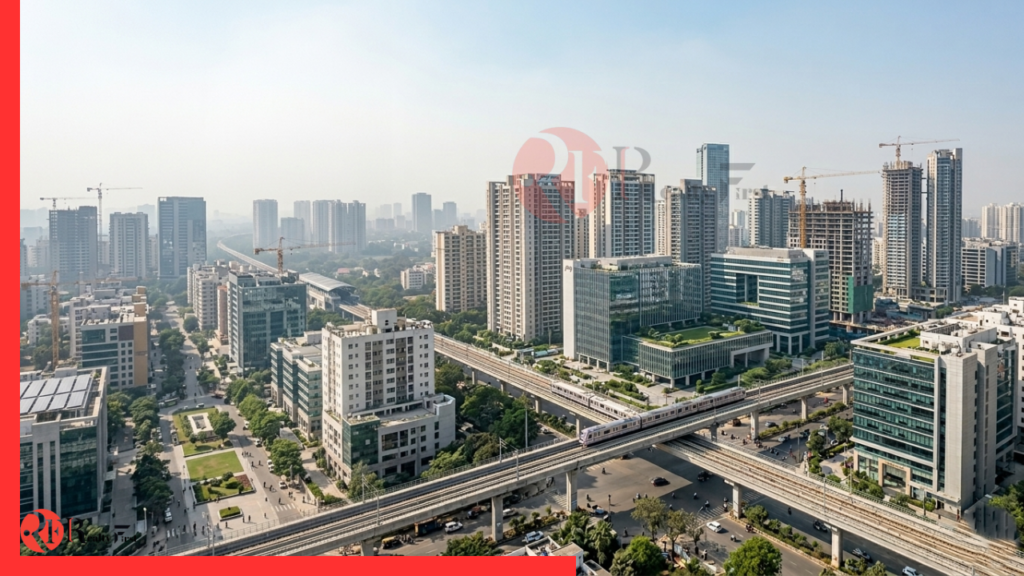
New Delhi: The Union Budget is expected to have a gradual but significant impact on India’s property market, with industry experts pointing to higher infrastructure spending and continued support for housing schemes as key drivers for the real estate sector.
The budget presented by Finance Minister Nirmala Sitharaman has focused heavily on capital expenditure and urban development, a move that analysts say could strengthen long-term demand across residential, commercial and logistics real estate.
Real estate consultants say infrastructure investments have historically played a major role in shaping property growth in India. Increased allocations for highways, metro rail projects and industrial corridors are expected to open new development corridors around major cities and emerging urban clusters.
Also Read: How NVT Group is Designing Trust-Driven Real Estate Communities
According to industry observers, improved connectivity often leads to the development of new residential hubs as commuting times fall and land becomes more accessible for large scale housing projects. Developers typically respond to such infrastructure expansion by launching townships and mixed-use developments in areas expected to benefit from future growth.
Cities such as Pune, Ahmedabad and Lucknow have already witnessed strong real estate momentum over the past decade as improved connectivity and economic activity attracted homebuyers and investors.
Industry analysts said the government’s continued focus on housing programs is also expected to support demand in the affordable housing segment. The flagship housing initiative Pradhan Mantri Awas Yojana continues to remain central to the government’s strategy for expanding housing access across urban and rural regions.
Higher allocations under housing schemes could encourage developers to participate in affordable housing projects, although industry experts say rising land prices and construction costs continue to create challenges for this segment.
Over the past few years, several developers have shifted their focus toward mid-income and premium housing projects, particularly in major metropolitan markets where demand has remained strong.
Market observers also pointed to the growing role of institutional capital in the sector. Real Estate Investment Trusts, or REITs, have emerged as an important investment platform that allows investors to participate in income-generating commercial real estate assets without directly owning property.
Analysts say continued policy support for such investment structures could attract greater domestic and international capital into India’s commercial property market, particularly in office spaces, logistics parks and retail assets.
However, some industry stakeholders had expected additional tax relief measures for homebuyers in the budget, including higher deductions on home loan interest payments or new incentives for first-time buyers.
Despite the absence of major direct incentives, experts remain optimistic about the sector’s long-term outlook. Rapid urbanisation, infrastructure expansion and rising household incomes are expected to sustain housing demand across India’s major cities and emerging urban centres.
Also Read: Realty First March 2026 – Leaders Speak Edition
India’s real estate sector currently contributes significantly to the country’s economic output and is projected to expand further as infrastructure development and urban growth continue in the coming years.