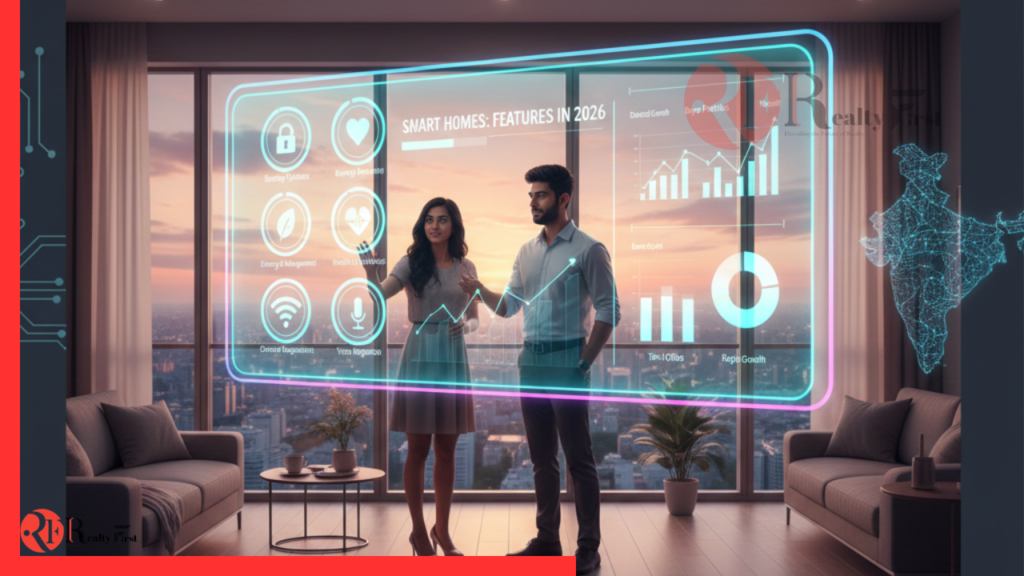
The smart home revolution is no longer confined to luxury penthouses or high-end apartments in metropolitan cities. Across India, homebuyers increasingly view technology integration as a key determinant of property value. Modern residential buyers evaluate properties not only based on location or size but also on the seamless integration of automation, security, and energy-efficient solutions. Developers, marketers, and investors are taking note: homes that offer intelligent features are outperforming traditional properties in terms of demand, resale value, and buyer engagement.
Recent market trends indicate a surge in interest for smart homes among millennials and tech-savvy professionals. These buyers prioritize convenience, safety, and energy efficiency, seeking homes that simplify daily routines while providing measurable cost savings. According to industry analysts, properties equipped with smart lighting, climate control, voice-activated assistants, and IoT-enabled appliances sell faster and often command a premium over conventional homes, highlighting a shift in consumer expectations.
Why Smart Home Features Are Driving Buyer Decisions
Smart home adoption is growing at an unprecedented pace in both metropolitan and emerging urban markets. For developers, understanding the features buyers prioritize is critical. Security remains the foremost concern, with smart locks, surveillance cameras, and motion detection systems increasingly viewed as essential rather than optional. Buyers also expect homes to be adaptable, offering voice-controlled lighting, integrated climate systems, and app-based management of appliances.
Energy efficiency has emerged as another key driver. Smart thermostats, automated lighting schedules, and IoT-enabled appliances reduce electricity bills while promoting sustainable living. Developers in cities like Bengaluru, Gurugram, and Pune are marketing green smart homes as both cost-saving and environmentally responsible, aligning with growing consumer awareness around sustainability.
Moreover, connectivity infrastructure—high-speed internet, mesh Wi-Fi networks, and pre-installed smart appliance hubs—has become a prerequisite for tech-oriented buyers. Homes without these capabilities often struggle to attract premium buyers, underscoring the importance of forward-looking infrastructure investment.
Also Read: “From Square Feet to Quality of Life”: Preksha Singh on the New Purpose of Real Estate
Core Features Buyers Demand
1. Home Automation and Voice Integration
Automation lies at the heart of the modern smart home. Buyers seek residences where lighting, temperature control, and appliances can be managed effortlessly through mobile apps or voice commands. Companies such as Control4 and Crestron have set benchmarks for fully integrated systems, offering homeowners the ability to personalize routines, monitor usage remotely, and optimize comfort. In urban India, automation has evolved from a luxury to an expected feature in mid-tier and premium housing projects.
2. Security Systems and Surveillance
Safety is non-negotiable for today’s homeowners. Smart locks, CCTV systems with remote access, and motion detection sensors provide peace of mind. Real estate surveys indicate that buyers are willing to pay a premium for properties equipped with real-time security alerts and mobile monitoring capabilities. In Tier-1 cities, security-integrated homes are increasingly the standard, while Tier-2 and Tier-3 cities are witnessing accelerated adoption, driven by a growing desire for convenience and control.
3. Energy Management and Sustainability
Sustainability is a central concern in property investment decisions. Smart energy management systems, including programmable thermostats, intelligent lighting, and appliance scheduling, reduce operational costs and environmental impact. Developers are marketing these homes as long-term investments that offer both financial and ecological benefits, appealing to the environmentally conscious urban buyer.
4. Health and Wellness Features
Post-pandemic, health-centric smart home features have gained prominence. Buyers now evaluate indoor air quality, water filtration systems, and automated humidity control. Homes capable of maintaining optimal environmental conditions and integrating wellness technology are increasingly perceived as premium offerings. Health-oriented devices, combined with smart automation, enhance comfort and safety, reinforcing the home’s value proposition.
5. Connected Appliances and Entertainment
Smart homes extend beyond basic automation to include IoT-enabled appliances and entertainment systems. Refrigerators, ovens, washing machines, and home entertainment setups that can be controlled remotely are highly sought after. Integration with AI assistants such as Amazon Alexa or Google Assistant allows for seamless management, creating an ecosystem that enhances lifestyle convenience and functional efficiency.
Regional Insights and Market Trends
While metro cities continue to dominate the smart home market, Tier-2 cities such as Jaipur, Kochi, and Ahmedabad are witnessing rapid growth. Developers in these regions are introducing technology-driven residential projects that combine affordability with advanced features. Smart homes in Tier-2 cities often focus on connectivity, security, and energy efficiency, enabling buyers to access premium technology without the higher costs typical of metropolitan markets.
Analysts note that the rise of tech-savvy professionals in smaller cities, combined with improved digital infrastructure, is driving adoption. Real estate projects that integrate smart solutions are achieving faster sales cycles and better customer satisfaction, positioning technology as a key differentiator in competitive markets.
Challenges in Adoption
Despite growing demand, challenges remain. Integrating devices from multiple brands can lead to interoperability issues, while cybersecurity concerns pose potential risks. Developers mitigate these by standardizing platforms, offering user-friendly interfaces, and employing robust encryption for data security. Cost considerations also remain relevant; while smart homes reduce long-term expenses, initial investments can be higher. Educating buyers on the benefits and ROI of integrated solutions is essential for widespread adoption.
The Future of Smart Homes
The next phase of smart homes will be defined by AI-driven automation, predictive analytics, and full ecosystem integration. Homes will anticipate user behavior, optimize energy usage automatically, and provide real-time maintenance alerts. Integration with renewable energy systems, electric vehicles, and urban smart grids is expected to become standard. Voice-controlled AI assistants will evolve from simple command devices to intelligent home managers, offering proactive support, security monitoring, and personalized convenience.
Also Read: BPTP enters joint development for 11-acre residential project in Surajkund, Faridabad
Conclusion
Smart homes are rapidly becoming the new standard in residential real estate. Security, automation, energy efficiency, connectivity, and health-focused features are shaping buyer expectations. For developers and homeowners, investing in intelligent technology is no longer optional but a strategic imperative. As smart home technology evolves, properties that seamlessly integrate convenience, sustainability, and intelligence will define the future of modern living in India.