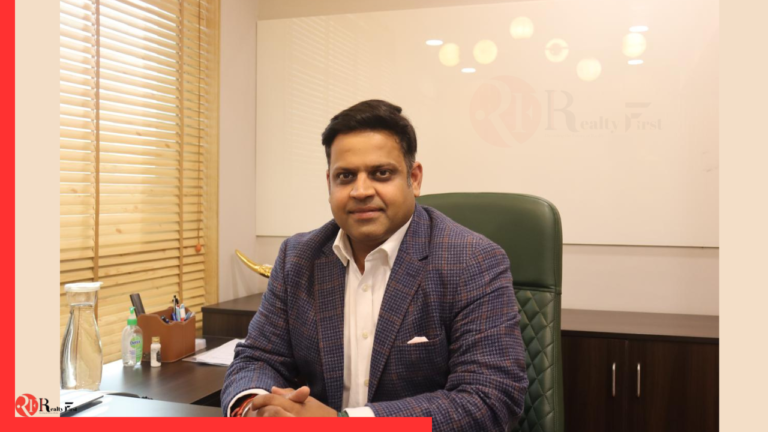
By Mitul Jain, Managing Director, SPJ Group
Changing consumer preferences are driving demand for experience-led retail formats across Gurugram’s commercial real estate market
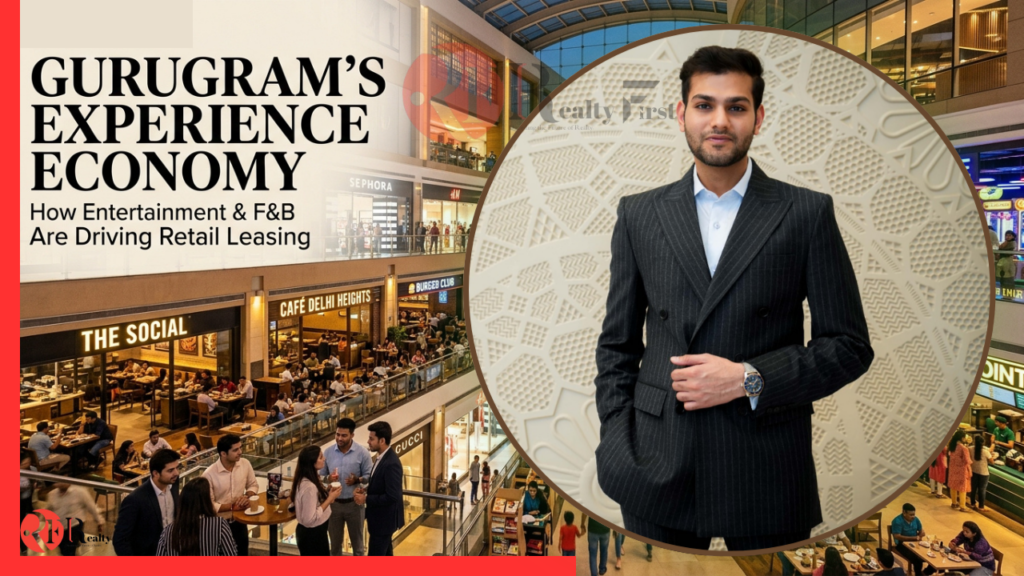
A few years ago, Gurugram’s leading retail destinations were largely anchored by fashion brands. Today, the city’s retail landscape is undergoing a broader transformation, with entertainment venues, food and beverage concepts, gaming zones, and community-focused spaces increasingly becoming central to consumer engagement.
Retail remains an important component of the ecosystem. However, the role of experiences surrounding retail has expanded significantly, influencing how consumers interact with physical destinations.
Also Read: TRG Group Completes 11 Years, Strengthening Its Presence in NCR’s Real Estate Sector
According to Cushman & Wakefield’s Delhi NCR Retail MarketBeat Q1 2026 report, retail leasing across Delhi-NCR reached 0.6 million sq. ft., representing a 45 per cent year-on-year increase. Gurugram accounted for 54 per cent of total leasing activity during the quarter. Entertainment formats contributed 16 per cent of total retail space absorption.
The analysis suggests that retail leasing in Gurugram is increasingly being influenced by categories that were previously viewed as supporting elements within retail projects. Food and beverage operators, entertainment concepts, experiential venues, and community-driven formats are now playing a more prominent role in attracting visitors.
As digital commerce continues to expand, physical retail destinations are increasingly competing with convenience-driven alternatives. As a result, developers are placing greater emphasis on visitor engagement and dwell time rather than relying solely on footfall volumes.
The article notes that a consumer who spends a longer period within a retail destination typically engages with multiple offerings, creating additional opportunities for spending and interaction. Longer visits may also contribute to stronger connections between consumers and retail destinations.
This trend is particularly evident in Gurugram, where consumer behaviour is influenced by a relatively young population, higher income levels, significant professional employment, and global exposure.
According to Cushman & Wakefield data cited in the analysis, Gurugram accounted for 68 per cent of total retail leasing activity across Delhi-NCR during Q3 2025 and nearly 80 per cent of all main-street transactions.
During the same period, food and beverage emerged as the largest leasing category, accounting for 40 per cent of total space absorption. The category recorded growth of 1.7 times compared to the previous year.
The article also highlights changes occurring within Old Gurugram, where consumption patterns have historically been centred around daily necessities. According to the analysis, this trend is evolving as operators introduce artisanal dining concepts, immersive entertainment offerings, and curated experience-led formats.
Supporting this shift, CBRE’s India Retail Figures H2 2025 report found that food and beverage accounted for approximately 13 per cent of total retail absorption across India, while entertainment contributed close to 8 per cent. The report also pointed to growing expansion by brands into high-street retail locations to maintain visibility throughout the day.
The analysis suggests that many successful retail destinations no longer operate according to conventional shopping schedules. Coffee outlets, dining establishments, entertainment venues, and social spaces contribute to activity throughout different parts of the day, creating multiple consumer engagement cycles.
However, experience-led retail also raises consumer expectations. Visitors increasingly evaluate factors such as design quality, public spaces, parking convenience, event programming, and operational standards alongside traditional retail offerings.
Also Read: Home Loan Balance Transfer Guide: How to Reduce Your EMI and Save Money on Interest
According to the article, these changing expectations are influencing how retail destinations are planned and managed across Gurugram.
The analysis concludes that Gurugram’s retail market is transitioning from a product-focused model to an experience-driven ecosystem. Entertainment and food and beverage formats are emerging as significant drivers of retail leasing activity and footfall generation.
As consumer preferences continue to evolve, retail destinations are increasingly being designed to encourage longer dwell times, repeat visits, and greater social interaction, reflecting broader changes in the role of physical retail within urban environments.