Prayagraj, long recognised for its religious, cultural and educational significance, is entering a new phase of urban expansion driven by infrastructure development and government-backed initiatives. While the city has traditionally been associated with pilgrimage and heritage, ongoing improvements in connectivity, transportation and civic infrastructure are gradually reshaping its economic landscape and creating new opportunities for real estate development.
The evolving urban ecosystem is expanding prospects across residential projects, plotted developments, mixed-use communities and hospitality assets, positioning Prayagraj among the emerging real estate markets in eastern Uttar Pradesh. According to Square Yards, land values in high-growth Tier-2 and Tier-3 locations, particularly around airports, logistics hubs and expressway corridors, could appreciate between 25% and 100% over the next two to four years.
Also Read: India’s Infrastructure Boom Needs a Capital Strategy, Not Just Execution
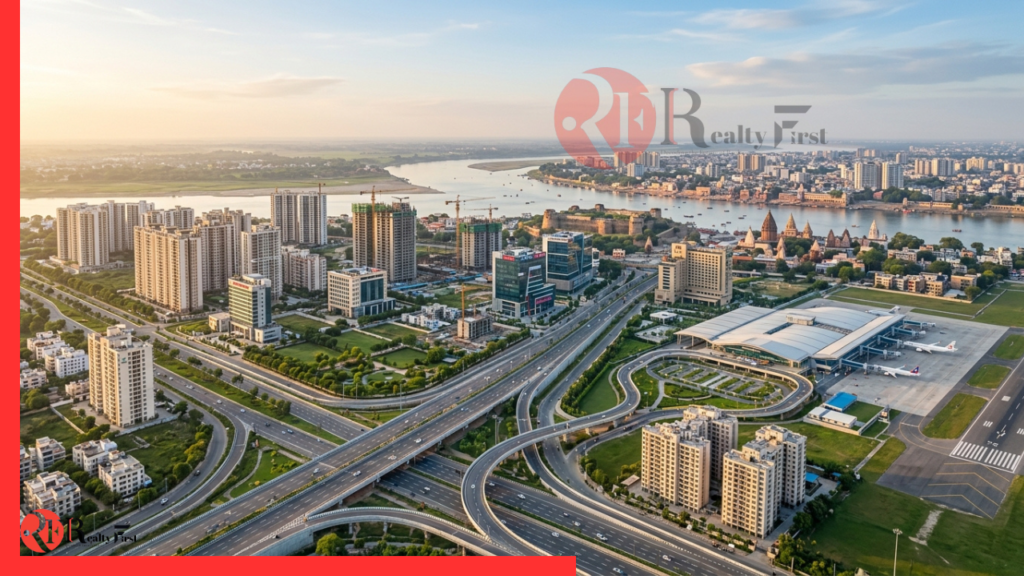
A series of major infrastructure projects is playing a central role in accelerating the city’s transformation. The Ganga Expressway, which connects Meerut to Prayagraj, is expected to significantly strengthen connectivity between western Uttar Pradesh, the National Capital Region (NCR) and eastern parts of the state. At the same time, the Ring Road and Bypass projects are helping ease urban congestion while opening new corridors for residential development and more efficient utilisation of peripheral land parcels.
The ongoing modernisation of Prayagraj Airport has further enhanced the city’s accessibility. Increased visitor traffic during the Mahakumbh has also strengthened its profile as a destination for business and investment.
In parallel, upgrades to railway infrastructure and improvements in multimodal transport connectivity are enhancing regional mobility. Collectively, these infrastructure initiatives are gradually repositioning Prayagraj from a historically significant city into a more connected and future-ready urban centre.
Beyond physical infrastructure, Prayagraj’s enduring spiritual importance is emerging as another major catalyst for economic growth. As one of India’s most prominent pilgrimage destinations, the city is expected to benefit from the government’s proposed ₹5,000 crore investment over five years towards temple-town development and tourism infrastructure. Planned improvements covering ghats, roads and visitor amenities are expected to enhance the city’s urban environment while strengthening its tourism ecosystem.
The increased focus on religious tourism is also creating fresh opportunities across the real estate sector. Demand is expected to grow for hotels, serviced apartments, second homes and retail developments that cater to a rising number of visitors.
Mohit Goel, Managing Director, Omaxe Group, said, “Prayagraj is at a stage where long-term infrastructure investments are beginning to translate into a much broader urban and real estate opportunity. The impact extends well beyond improved mobility. Projects such as the Ganga Expressway are strengthening the city’s linkages with larger economic centres and unlocking new growth corridors across eastern Uttar Pradesh. Equally significant is Prayagraj’s stature as one of India’s foremost spiritual destinations. The proposed Rs. 5,000 crore investment towards temple-town development is expected to further enhance civic infrastructure, tourism facilities and last-mile connectivity. Currently, residential values in the city are averaging around Rs. 7,900-8,000 per sq. ft., and as these connectivity upgrades become fully operational, we believe the market has the potential to witness 20-30% appreciation over the next three to five years. Taken together, these structural drivers are steadily positioning Prayagraj as one of the most promising real estate destinations in the region.”
The legacy of Mahakumbh 2025 is also expected to have a lasting impact on the city’s development trajectory. Infrastructure investments exceeding Rs. 7,000 crore, spanning roads, flyovers, beautification projects, sewerage systems and other civic works, accelerated Prayagraj’s urban modernisation. The event, which attracted more than 450 million pilgrims, demonstrated the city’s tourism potential while leaving behind infrastructure assets that are expected to benefit residents for years to come.
Kapil Chugh, VP-Sales, Rise Infraventures, said, “The transformation happening in Prayagraj reflects a broader shift taking place across emerging Indian cities. Urban growth today is being driven by connectivity, infrastructure and quality of life, and Prayagraj is beginning to tick all three boxes. The legacy infrastructure created around Mahakumbh, combined with projects such as the Ganga Expressway and continued government investment, is giving the city a stronger economic foundation. We believe this is encouraging a more mature real estate ecosystem where demand is becoming increasingly end-user-led. Over the next few years, Prayagraj has the potential to evolve into a well-rounded urban destination with sustained real estate momentum.”
Also Read: Mayfair Housing Partners with Autodesk to Build Unified Digital Project Ecosystem
As infrastructure projects gain momentum and public investment continues, Prayagraj’s growth story is extending well beyond its spiritual and cultural identity. Strengthened connectivity, sustained government spending and a gradually expanding economic base are laying the foundation for a more organised urban ecosystem, positioning the city among the emerging real estate destinations expected to shape the next phase of growth in eastern Uttar Pradesh.