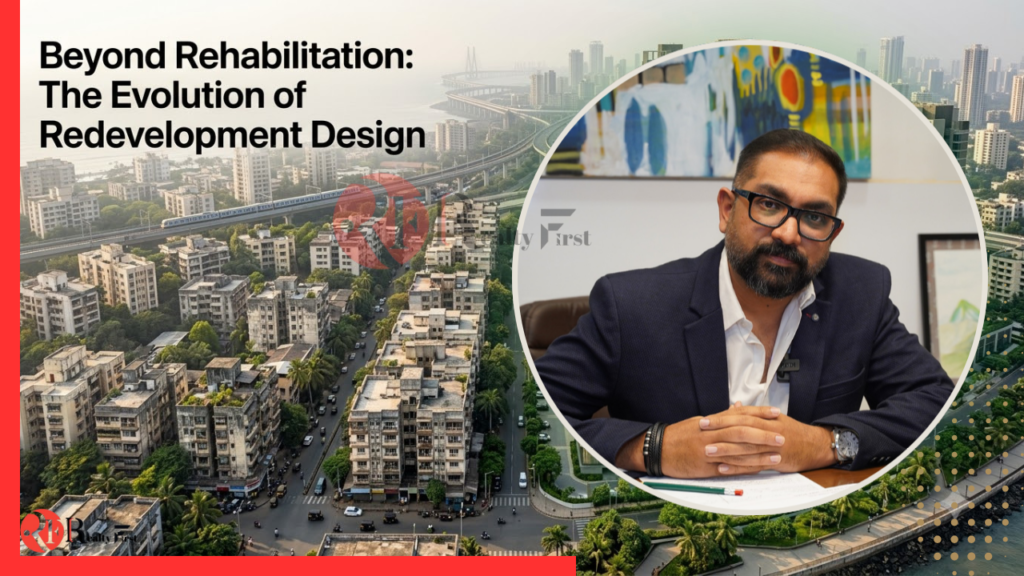
Rahul Mehta, Co-founder & Principal Architect, RM Architects
Mumbai has long been a city defined by its ability to reinvent itself, and redevelopment has emerged as one of the principal forces reshaping its ageing urban fabric. What began largely as a process of replacing old buildings is now evolving into a broader exercise in neighbourhood design—one that places liveability, resilience and sustainability alongside the creation of new homes.
The changing nature of redevelopment reflects a fundamental shift in how urban spaces are being planned. The objective is no longer simply to accommodate more homes on a constrained parcel of land. Increasingly, redevelopment is being viewed as an opportunity to improve everyday living while strengthening the long-term resilience of the city. The quality of spaces, the strength of communities and the experience of daily life are becoming as important as the number of homes delivered.
This transition is visible across Mumbai and has gathered pace in recent years. Since 2020, more than 910 housing societies, spread across nearly 327 acres, have undergone redevelopment. While these figures demonstrate the scale of the activity, they do not fully capture the evolution taking place within individual projects.
Also Read: Saya Group Launches ‘Great Grand Property Carnival’ With Properties Worth Over ₹700 Crore
Earlier redevelopment schemes were often driven primarily by the need to maximise permissible floor space while fulfilling rehabilitation obligations. The emphasis is now moving towards a more balanced approach, where density is considered alongside design quality, environmental performance and community well-being. The success of a redevelopment project is increasingly being judged not just by how many apartments it creates, but by the quality of life it enables.
For Mumbai, where land availability is finite and opportunities for large-scale greenfield development are becoming increasingly constrained, redevelopment has become a defining component of urban transformation. Developers are relying less on acquiring new land and more on making considered use of existing urban parcels. This gives redevelopment projects the potential to go beyond replacing ageing structures and instead rethink the neighbourhoods in which those structures are located.
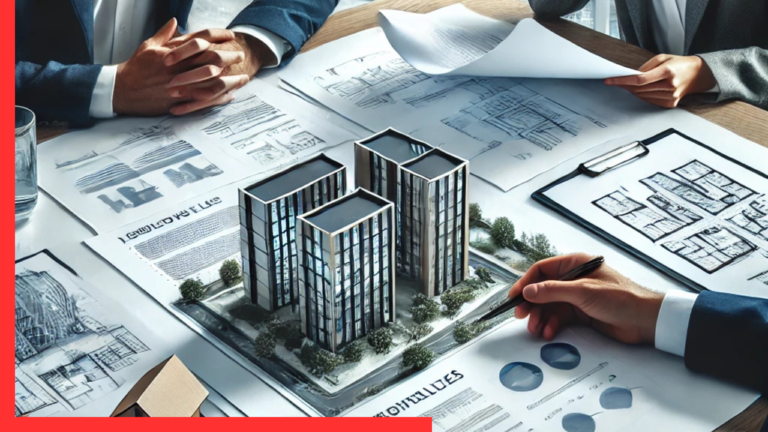
Architecture has a critical role to play in this process. Working within established urban precincts requires architects to balance several competing priorities. Existing communities must be respected, regulatory requirements must be addressed, infrastructure limitations need to be considered and new homes must be designed to remain relevant for decades. The challenge extends beyond the building itself to the social and environmental setting in which it will operate.
One of the clearest changes has been the growing importance of liveability in redevelopment design. Residents and homebuyers increasingly recognise the value of natural light, cross ventilation, efficient floor plans, larger balconies, adaptable spaces for hybrid working and well-planned common areas. These elements are no longer viewed simply as premium additions. They are becoming essential components of how residents experience their homes every day.
The emphasis on community is also becoming more pronounced. Successful neighbourhoods are shaped not only by private residences but also by the opportunities they create for shared experiences. Landscaped gardens, children’s play areas, spaces for senior citizens, wellness facilities, walking tracks and multipurpose community areas can encourage interaction and help build stronger social connections.
As lifestyle expectations have evolved, amenities that were once largely associated with premium developments in South Mumbai are increasingly appearing in redevelopment projects across the suburbs. Landscaped sky gardens, wellness centres, private theatres, infinity pools and curated recreational spaces are among the features being incorporated into newer developments.
Redevelopment also creates an opportunity to replace outdated building systems with more efficient alternatives. Rainwater harvesting, wastewater recycling, energy-efficient lighting, solar-powered common areas, EV-ready infrastructure and environmentally responsible building materials are increasingly being incorporated into contemporary projects. Sustainability is therefore becoming part of the design process itself rather than remaining an additional feature considered after the core planning decisions have been made.
Such interventions can also improve the resilience of buildings while helping reduce long-term operating costs. Mumbai is facing heavier rainfall, rising temperatures and increasing pressure on civic infrastructure, making climate-responsive design an increasingly important consideration. Better stormwater management, durable construction materials, climate-responsive facades and carefully planned landscapes are becoming important elements of responsible redevelopment.
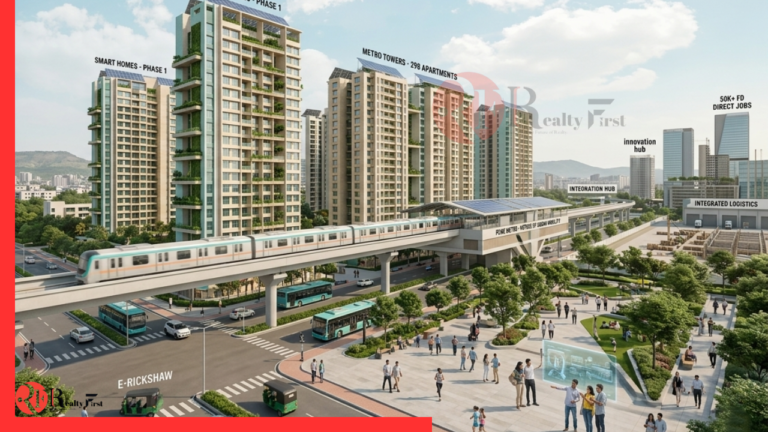
Infrastructure investment across the metropolitan region is adding another dimension to this transformation. Metro corridors, the Mumbai Coastal Road, the Mumbai Trans Harbour Link and several new road tunnel projects are changing connectivity patterns across the city. As commuting patterns evolve, redevelopment is no longer restricted to traditionally established prime locations. Older residential precincts that may previously have been overlooked could emerge as increasingly attractive urban centres as improved accessibility strengthens their connections with the wider metropolitan region.
Mumbai’s redevelopment cycle has been supported by a combination of infrastructure investment, policy reforms and sustained housing demand. At the same time, changing lifestyles are influencing what residents expect from their homes. Hybrid work, increased awareness of health and well-being, and growing interest in sustainable living have encouraged people to look for residences that can accommodate multiple aspects of everyday life rather than simply provide shelter.
Redevelopment offers an opportunity to respond to these expectations from the earliest stages of planning. Design decisions made at the outset can determine how homes function, how residents interact with shared spaces and how buildings perform over the long term.
Technology is also changing the way redevelopment projects are designed and delivered. Increasingly complex developments are being managed with greater precision through digital modelling, Building Information Modelling (BIM), advanced engineering analysis and integrated design processes. These tools allow architects and consultants to coordinate more effectively, improve construction quality, reduce execution risks and create developments that can operate more efficiently throughout their lifecycle.
Yet perhaps the most significant evolution is taking place in the role of residents themselves. Redevelopment is fundamentally a collaborative process, and existing occupants are increasingly moving beyond the role of passive beneficiaries to become active participants in shaping the outcome. Their aspirations can influence planning decisions, amenity selection and design priorities.
Also Read: Mumbai Property Registrations Hit 14-Year July High, Reflecting Resilient Housing Demand
Those expectations are also becoming broader. Residents are seeking more than larger apartments. Safety, accessibility, sustainability, community spaces and a sense of neighbourhood identity are increasingly part of the conversation around redevelopment.
As Mumbai’s redevelopment journey enters a more mature phase, the measure of success is likely to extend beyond the number of buildings completed or the height of the city’s skyline. Its more enduring measure will be whether redevelopment produces neighbourhoods that are liveable, sustainable and resilient.
The opportunity lies in creating places where architecture addresses present needs while anticipating the aspirations of future generations. Approached with that long-term perspective, redevelopment can deliver lasting value for residents, reinforce neighbourhoods and contribute to a more inclusive and resilient Mumbai.