
Introduction
Infrastructure has always played a central role in the development of economies. From highways and airports to railways, ports, power networks, and digital connectivity, infrastructure projects create the foundation upon which businesses operate and communities grow. In recent years, the term “Government Infrastructure Pipeline” has become increasingly important in policy discussions, business planning, and investment strategies.
A Government Infrastructure Pipeline refers to a structured roadmap of planned public infrastructure projects that are expected to be developed over a specific period. These projects often span transportation, urban development, energy, water management, healthcare, education, and digital infrastructure. By creating a pipeline of projects, governments aim to improve transparency, attract private investment, generate employment, and accelerate economic growth.
Understanding how infrastructure pipelines work is important for investors, developers, contractors, policymakers, and citizens alike. These projects influence real estate markets, industrial development, job creation, and long-term economic competitiveness. This article explains the concept of a government infrastructure pipeline, its importance, key sectors involved, economic impact, challenges, and future outlook.
Also Read: Godrej Properties Sells Homes Worth Over ₹2,000 Crore at Godrej Vanantara Launch in Bengaluru
What Is a Government Infrastructure Pipeline?
A Government Infrastructure Pipeline is a comprehensive list of planned infrastructure projects identified for development over a defined period. It serves as a strategic framework that helps governments prioritize investments and allocate resources efficiently.
Rather than approving projects individually without a long-term vision, governments create a structured pipeline that outlines project timelines, estimated investments, implementation agencies, and funding mechanisms. This approach allows stakeholders to understand upcoming opportunities and prepare accordingly.
Infrastructure pipelines often include projects at different stages. Some may be in the planning phase, while others are under construction or awaiting financial approval. By bringing these projects together under a unified framework, governments can monitor progress more effectively and improve accountability.
The concept has gained global attention because countries increasingly recognize infrastructure as a key driver of economic competitiveness. Strong infrastructure improves productivity, reduces logistics costs, enhances connectivity, and supports sustainable development goals.
Why Infrastructure Pipelines Matter
Infrastructure pipelines are not simply lists of projects. They are economic growth strategies designed to support long-term national development.
When governments announce large infrastructure pipelines, businesses gain visibility into future opportunities. Construction companies can plan resources, investors can evaluate projects, and suppliers can prepare for increased demand.
A well-designed infrastructure pipeline also creates confidence among domestic and international investors. Predictability is a critical factor in investment decisions. Investors prefer markets where future development plans are transparent and supported by clear policy frameworks.
Additionally, infrastructure pipelines help governments coordinate activities across multiple sectors. Transportation networks can be aligned with industrial corridors, urban expansion plans, and logistics hubs. This integrated approach maximizes economic benefits and improves resource utilization.
Key Sectors Covered Under Infrastructure Pipelines
Transportation Infrastructure
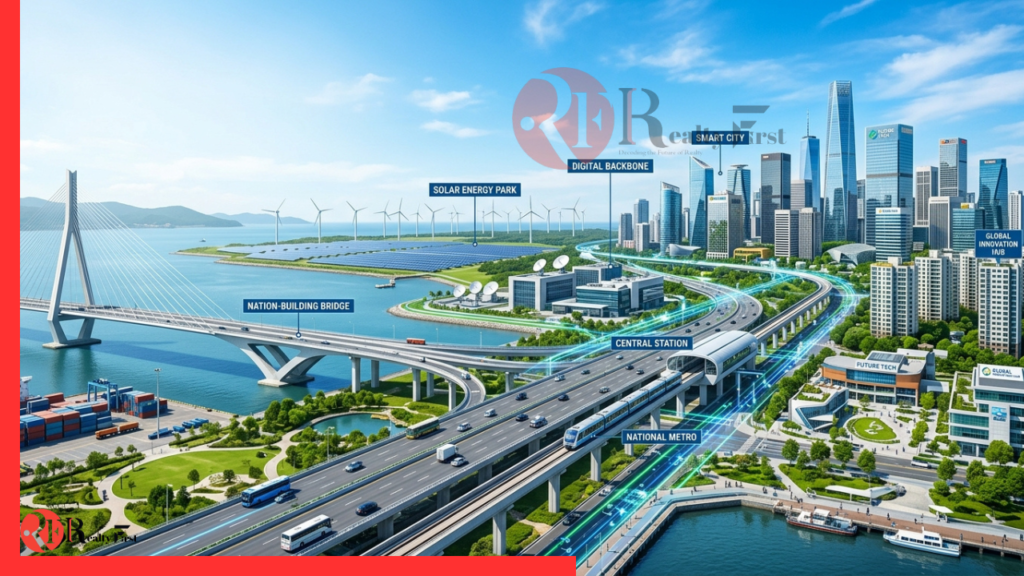
Transportation projects typically form the largest component of government infrastructure pipelines. These include highways, expressways, railway networks, metro systems, airports, inland waterways, and ports.
Improved transportation infrastructure reduces travel time, lowers logistics costs, and enhances connectivity between economic centers. Efficient transportation systems support trade, tourism, manufacturing, and regional development.
For example, new expressways often stimulate industrial activity and increase demand for residential and commercial real estate in surrounding areas. Improved airport infrastructure can transform cities into major business and tourism destinations.
Urban Infrastructure
Urban infrastructure projects focus on improving the quality of life in cities and towns. These projects include affordable housing, water supply systems, sewage treatment plants, waste management facilities, smart city initiatives, and urban mobility solutions.
As urban populations continue to grow, governments face increasing pressure to improve city infrastructure. Investments in urban development help create sustainable and livable communities while supporting economic activity.
Smart city technologies, integrated transportation systems, and digital governance platforms are becoming important components of modern urban infrastructure strategies.
Energy Infrastructure
Reliable energy infrastructure is essential for economic growth. Infrastructure pipelines often include investments in power generation, renewable energy projects, transmission networks, energy storage systems, and grid modernization.
Many countries are increasing investments in solar, wind, and clean energy infrastructure to support sustainability goals. These projects not only improve energy security but also attract significant private investment.
Modern energy infrastructure supports industrial growth, technological innovation, and environmental sustainability.
Digital Infrastructure
Digital infrastructure has emerged as a critical component of national development strategies. Investments in broadband connectivity, data centers, telecommunications networks, and digital public services are increasingly included in infrastructure pipelines.
Strong digital infrastructure supports economic productivity, innovation, remote work, digital education, and financial inclusion. It also strengthens a country’s competitiveness in the global digital economy.
The rapid growth of artificial intelligence, cloud computing, and digital services is further increasing demand for advanced digital infrastructure.
Economic Impact of Government Infrastructure Pipelines
One of the primary objectives of infrastructure investment is economic growth. Large-scale infrastructure projects generate direct, indirect, and induced economic benefits.
Direct benefits arise from construction activities, including employment generation and demand for materials. Indirect benefits occur through supply chain activities involving manufacturers, logistics providers, and service companies.
Long-term economic gains result from improved productivity and efficiency. Businesses can transport goods faster, access larger markets, and reduce operational costs. Improved infrastructure also enhances the attractiveness of regions for investment and development.
Many economic studies indicate that infrastructure investment has a multiplier effect. Every investment in infrastructure can generate additional economic activity across multiple sectors, making it one of the most effective tools for stimulating growth.
Impact on Real Estate and Property Markets
Infrastructure development and real estate growth are closely connected. New roads, metro lines, airports, and commercial corridors often increase property values in surrounding areas.
Residential demand typically rises when connectivity improves. Homebuyers prefer locations with easy access to employment centers, educational institutions, healthcare facilities, and transportation networks.
Commercial real estate also benefits from infrastructure improvements. Office developments, retail centers, logistics parks, and industrial facilities often emerge near major infrastructure projects.
Investors frequently monitor government infrastructure pipelines to identify emerging growth corridors before development activity accelerates.
Job Creation and Employment Opportunities
Infrastructure projects are significant sources of employment. Large-scale developments require engineers, architects, project managers, construction workers, equipment operators, and numerous support services.
Beyond direct employment, infrastructure projects create opportunities for suppliers, contractors, consultants, and technology providers. The resulting economic activity supports job creation across multiple industries.
Infrastructure investment is particularly valuable during economic slowdowns because it stimulates demand and supports workforce participation. Governments often use infrastructure spending as part of economic recovery strategies.
The employment benefits extend beyond project completion. Improved infrastructure attracts businesses and investments that create long-term job opportunities.
Challenges in Infrastructure Development
Despite their benefits, infrastructure projects face several challenges. Land acquisition remains one of the most common obstacles, particularly in densely populated regions.
Project financing can also be complex. Infrastructure developments often require substantial capital investment and long implementation periods. Securing funding from public and private sources requires careful planning.
Regulatory approvals, environmental clearances, and coordination among multiple stakeholders can further delay project execution. Cost overruns and schedule delays are common challenges that affect project outcomes.
Governments continue to explore innovative financing models, digital monitoring systems, and public-private partnerships to address these challenges and improve project delivery.
Role of Private Sector Participation
Private sector participation has become increasingly important in infrastructure development. Public-private partnerships allow governments to leverage private capital, expertise, and innovation.
Through these arrangements, private companies may finance, build, operate, or maintain infrastructure assets under agreed contractual frameworks.
Private participation can accelerate project implementation and improve operational efficiency. It also helps governments manage fiscal constraints while maintaining infrastructure investment momentum.
Successful partnerships require transparent policies, balanced risk allocation, and clear regulatory frameworks.
Future of Government Infrastructure Pipelines
The future of infrastructure development is expected to be shaped by technology, sustainability, and resilience. Governments worldwide are prioritizing projects that support environmental goals and climate adaptation strategies.
Smart infrastructure solutions that use sensors, artificial intelligence, and real-time data analytics are becoming increasingly common. These technologies improve operational efficiency and enhance user experiences.
Sustainable infrastructure investments are also gaining momentum. Green buildings, renewable energy systems, electric vehicle charging networks, and climate-resilient infrastructure are expected to attract significant funding in the coming years.
As economies become more interconnected, infrastructure pipelines will continue to play a critical role in driving investment, competitiveness, and long-term growth.
Also Read: Leasing Tips for SMEs & Startups: How Smart Workspace Decisions Can Shape Business Growth
Conclusion
Government Infrastructure Pipelines are far more than planning documents. They represent long-term development strategies that shape economic growth, urban transformation, business investment, and quality of life. By providing visibility into future projects, these pipelines create opportunities for investors, developers, businesses, and communities.
As governments continue investing in transportation, digital connectivity, energy systems, and sustainable urban development, infrastructure pipelines will remain central to national growth agendas. Understanding these initiatives can help businesses and individuals identify emerging opportunities and prepare for the future with greater confidence.