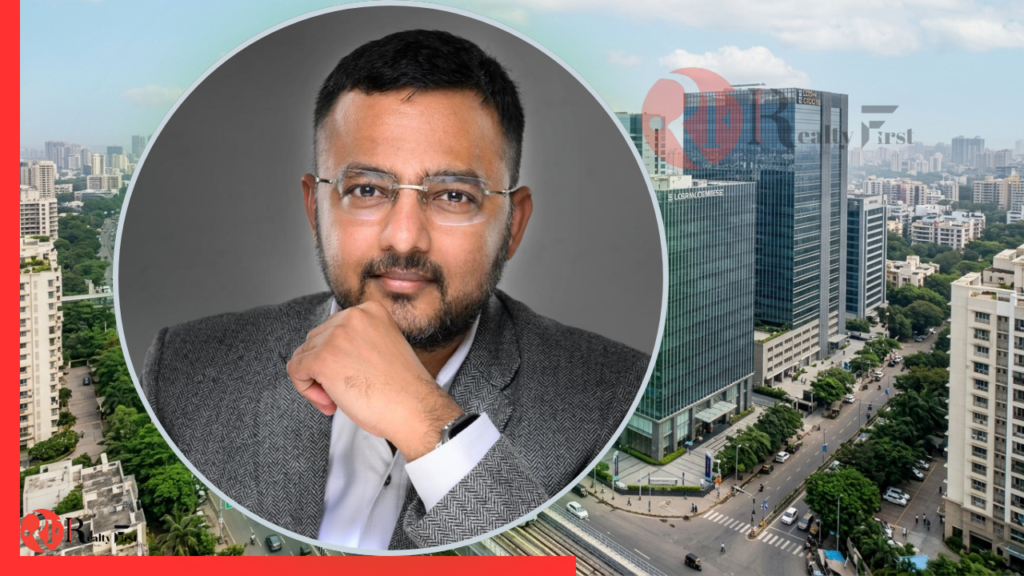
By Vikash Kawar, Director of AGM Vijaylaxmi Group
Mumbai’s commercial landscape is undergoing a gradual shift as emerging micro-markets with strong connectivity, quality infrastructure and integrated urban ecosystems begin to challenge the dominance of established business districts. Among these evolving locations, Goregaon East has emerged as one of the more significant growth corridors in the Mumbai Metropolitan Region (MMR), drawing interest from corporates, investors and new-age enterprises.
Over the past decade, Goregaon East has undergone a notable transformation. Once viewed primarily as a residential locality, the micro-market has developed into a mixed-use destination supported by a growing presence of commercial spaces, retail developments, hospitality and residential projects.
Read More: Marathon Enters Mumbai Society Redevelopment with ₹450+ Crore Versova Residential Project
The appeal of Goregaon East lies in the balance it offers. Unlike conventional business districts built predominantly around office stock, the area is developing as an ecosystem where people can work, live, shop and socialise in close proximity. For businesses, such an integrated environment is becoming increasingly relevant as employee convenience, productivity and quality of life gain greater importance in location decisions.
Connectivity has been central to Goregaon East’s transformation. Located along the Western Express Highway, the micro-market provides access to several key business hubs across Mumbai. The operational Metro Lines 2A and 7 have strengthened east-west and north-south mobility, while the suburban railway network remains an important mode of transport for daily commuters.
Recent infrastructure improvements have added further momentum. The operationalisation of the Mrunal Tai Gore Flyover has helped ease traffic congestion and improve travel efficiency along important routes, strengthening the area’s overall accessibility.
For businesses, such infrastructure development extends beyond improvements in transportation. Better connectivity can influence location decisions, employee accessibility and the effective reach of a commercial hub. This momentum is expected to continue with major infrastructure projects, including the Goregaon-Mulund Link Road with its twin tunnels and planned coastal road extensions.
As connectivity between Mumbai’s eastern and western suburbs improves, these infrastructure initiatives are expected to create faster access to important commercial centres while expanding the catchment area for businesses operating from Goregaon East.
At the same time, the micro-market’s expanding business ecosystem is becoming an important contributor to its growth. Established commercial destinations such as NESCO IT Park serve as major employment hubs, attracting multinational corporations, technology firms and service-sector companies. Goregaon East is also home to Film City, which continues to support the media, entertainment and creative industries.
Together, these employment centres are contributing to demand for both commercial and residential real estate, creating a cycle in which economic activity supports real estate demand and, in turn, further strengthens the broader urban ecosystem.
The residential market has responded to this economic activity, with demand extending across a broad spectrum. Goregaon East has emerged as a location with offices and commercial spaces catering to professionals, entrepreneurs and high-net-worth individuals. Industry estimates suggest that rental yields in Goregaon East command considerably higher value than several central suburban locations, adding to its appeal among investors looking for stable returns alongside long-term capital appreciation.
Another factor distinguishing Goregaon East from several other emerging locations is its approach to urban planning. The development trajectory is not focused solely on vertical expansion but increasingly on creating sustainable and human-centric environments.
Integrated developments bringing together office spaces, retail centres, hospitality offerings and residences are contributing to the creation of neighbourhoods designed around mobility, accessibility and liveability. This planning-led approach could help the micro-market remain resilient and adaptable as Mumbai continues to navigate the pressures associated with high-density urbanisation.
From an investment standpoint, Goregaon East appears to have moved into a more mature stage of its growth cycle. Market confidence is increasingly being supported by tangible infrastructure delivery and demonstrated demand rather than being driven primarily by speculative future potential.
This shift is also attracting a more discerning class of investors, with greater emphasis on long-term value creation, capital preservation and steady appreciation.
As Mumbai’s real estate landscape continues to evolve, Goregaon East is emerging as a commercial destination that aligns with the changing requirements of modern enterprises. With strong infrastructure, multimodal connectivity and an expanding mixed-use ecosystem supporting its growth, the micro-market is positioned for sustained activity in Grade-A office leasing and investment.
Also Read: Why Andheri West Is Emerging as Mumbai’s Most Complete Western Suburb Growth Story
For businesses, occupiers and investors, Goregaon East is increasingly moving beyond the status of an emerging opportunity to become one of Mumbai’s important growth stories.