
As 2025 draws to a close, India’s real estate sector reflects a year of decisive transformation rather than cyclical momentum. From corridor-led luxury demand in Gurugram to the independent rise of Tier-II cities and a sharper focus on livability, infrastructure, and long-term value, developers agree that buyer behaviour has become more informed and selective. The year marked a shift away from speculative demand towards quality-driven absorption, supported by visible infrastructure upgrades, policy stability, and improved financing conditions.
Delhi-NCR recorded sales of 5,168 luxury homes in H1, marking an 8.5% year-on-year increase. Demand was sharply concentrated along the SPR and Dwarka Expressway, which together contributed 61% of Gurugram’s luxury housing sales. Established corridors such as Golf Course Road continued to see steady interest, gaining prominence as the new centres of luxury housing activity in NCR.
Sandeep Chhillar, Founder & Chairman, Landmark Group, says, “2025 has been a remarkable year for the real estate sector, registering impressive growth numbers across the residential and commercial markets in key cities. Within NCR, Gurugram led the growth, particularly in the luxury housing and Grade-A office segments, benefiting from corridor-led developments along Golf Course Road, Golf Course Extension Road, Dwarka Expressway, and SPR. The city witnessed a steep hike in price appreciation alongside healthy leasing activity for Grade A office space, primarily led by GCCs. The coming year outlook remains positive for the market with sustained demand expected in well-planned micro-markets, continued institutional interest, and infrastructure-led expansion.”
Umang Jindal, CEO, Homeland Group, says, “We see Gurugram benefiting from a rare combination — strong luxury housing demand, global connectivity, and visible infrastructure progress across key corridors. Buyer conversations this year were far more mature; families and investors are thinking long-term, evaluating livability, access and community planning rather than just pricing. But the real driver has been sustained wealth creation and employment growth. Looking ahead to 2026, we see Gurugram offering a scalable opportunity, not just for individual projects, but for thoughtfully planned residential developments that can grow with the city.”
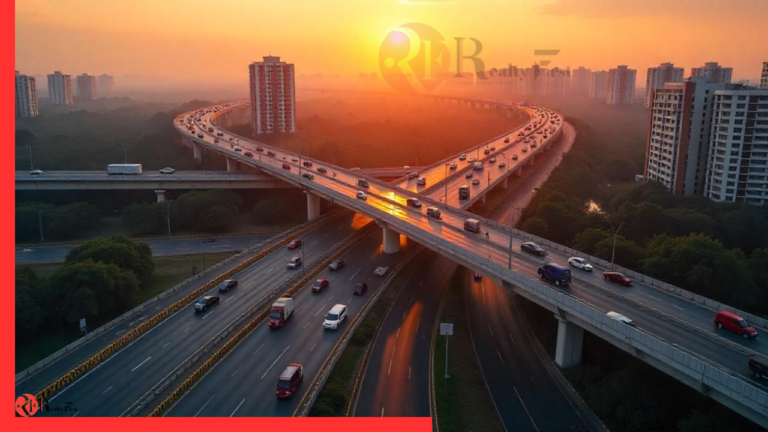
B.K. Malagi, Vice Chairman, Experion Developers, says, “What really stood out in 2025 was how decisively Gurugram pulled ahead within NCR’s luxury housing market. Home prices in the Delhi-NCR region rose by 19% year-on-year during the July-September quarter of 2025, with Gurugram contributing significantly. While Gurugram remained the primary magnet for HNIs, NRIs and UHNIs, we also saw growing confidence in Noida, particularly along infrastructure-led corridors. Projects like Jewar Airport and UER II have already started influencing buyer confidence across NCR. Hence, we believe this momentum will continue in 2026, supported by infrastructure, confidence and long-term intent.”
Dr Gautam Kanodia, Founder, KREEVA and Kanodia Group, says, “One of the clearest shifts we noticed in 2025 was how focused luxury buyers became about location within Gurugram. Instead of broad preferences, attention narrowed to specific micro-markets like SPR, New Gurugram, Golf Course Road, and Golf Course Extension Road. These corridors are benefiting from tangible infrastructure upgrades, better connectivity, and the availability of larger, low-density luxury developments. That change in mindset has driven steady absorption in these pockets. Hence, luxury housing in Gurugram is becoming increasingly corridor-led. Going ahead, demand will continue to concentrate in these micro-markets, offering both lifestyle depth and long-term appreciation.”
Yash Miglani, Managing Director, Migsun Group, says, “As the year 2025 comes to a close, the Indian real estate industry has shown signs of remarkable resilience and a hold on demand, especially in the NCR and its peripheries. The middle, aspirational, and mixed-use projects have shown good numbers because of the enhancement in the infrastructure, stability in policies, and end-user sentiments. With the interest rates going favourable and the urban spending on the rise, 2026 will see a well-balanced performance in both the residential and commercial sectors, making the real estate sector a choice asset for end-users and investors alike,” said a spokesperson.”
Sauarbh Saharan, Group Managing Director, HCBS Developments, says, The demand for luxury housing reached a new peak across NCR, making 2025 an exceptional year for the real estate sector. Improved infrastructure visibility and better access to Delhi played a critical role in this confidence, and corridors like Dwarka Expressway clearly benefited from that shift. The RBI’s cumulative 125 basis points rate cut further eased EMI pressure. The quality of enquiries also improved markedly this year. Heading into 2026, with wealth creation continuing and social infrastructure maturing, we expect these well-connected luxury corridors to remain stable, resilient and strongly preferred.
Moreover, where Gurugram dominated luxury sales, Noida–Greater Noida delivered scale-led growth, supported by visible Noida International Airport’s progress, metro expansion and industrial-IT ecosystems, reinforcing volume-driven, balanced real estate momentum across residential and commercial segments.
Karan Malik, Regional Director, Realistic Realtors, says, “Gurugram remains the benchmark for luxury living, but it no longer operates in isolation. Noida–Greater Noida has stepped into its own, with infrastructure like the Noida International Airport materially reshaping residential choices and buyer confidence. At the same time, Faridabad is no longer a peripheral afterthought; steady end-user demand and the rise of township-led developments have given it a clear residential identity. Buyers today are far more decisive; their choices are based on readiness, connectivity and long-term livability, not just price appreciation. Heading into 2026, NCR’s housing growth will be selective and layered, rewarding markets that offer genuine infrastructure depth and livable ecosystems.”
Viren Mehta, Founder & Director- Elite PRO Infra, says, “In 2025, Indian real estate shifted from reactive moves to a more structured and strategic approach. Buyers and occupiers became increasingly selective, focusing on location, long-term value, and operational efficiency. This shift led to certain micro-markets and asset classes outperforming others. Overall, the sector is showing signs of maturity, with greater stability and clearer opportunities for sustainable growth moving into 2026. Demand is now driven by quality and practicality rather than speculation, and stakeholders are making decisions with a long-term perspective. This evolution points to a healthier market where informed choices shape outcomes across segments.”
Beyond core NCR, tier-II cities such as Mohali, Chandigarh, Dehradun and Jaipur, also gained traction on the back of better infrastructure, affordability and job growth. Anarock data showed land transactions in H1 2025 surpassing full-year 2024 levels, while PropEquity reported a year-on-year rise in residential sales value, positioning these cities as complementary growth engines rather than spillover markets.
Preksha Singh, CEO of Agrasheel Infratech, says, “One of the most important shifts in 2025 was how Tier-II cities began writing their own housing growth stories, rather than borrowing momentum from metros. Lucknow is a strong example. The city defies the trend with a 25% jump in the sale of residential units, led by the end-users, local businessmen, and professionals moving back to the city owing to the better quality of life on offer. This has ensured a balanced and healthy real estate cycle. Going into 2026, Tier-II cities are set for more growth, due to the economic stability, better connectivity, and the need for lifestyle-driven living options, away from the muddled traffic conditions of the metro cities.”
Piyush Kansal, Executive Director of Royale Estate Group, says, “In 2025, the Punjab real estate market demonstrated both resilience and maturity. Strong infrastructure momentum from enhanced connectivity around Mohali to expanding urbanisation in Tier-2 cities has underpinned steady residential and commercial demand, particularly in well-planned townships and mixed-use zones. NRI investments in cities like Amritsar surged significantly, reflecting growing confidence in premium and lifestyle properties. Although selective price corrections, such as those seen in Mohali’s industrial land auctions, indicate a more calibrated investment landscape, overall fundamentals remain solid.”
Besides, the year marked a decisive shift in NCR’s commercial real estate market. Office absorption regained stability, organised retail leasing gathered pace, and investor confidence translated into actual deal closures rather than intent alone. Gurugram continued to set the pace, anchored by sustained demand for Grade A offices and mature retail formats. While Noida–Greater Noida’s performance was anchored in volumes, underpinned by its dual residential–commercial ecosystem.
Harinder Singh Hora, Founder Chairman, Reach Group, says, “2025 marked a strong phase of expansion for India’s retail real estate, with Q3 reflecting an estimated 64% year-on-year growth, led largely by markets such as Delhi NCR and Hyderabad. Both high-street and enclosed retail formats performed well. Alongside, apparel and F&B continued to anchor this momentum, together accounting for around 55% of leasing in H1 2025. The year also saw growing traction for mixed-use developments, where the integration of retail with office, residential, and hospitality components. Overall, retail performance is increasingly being defined by catchment depth, location advantage, and visibility, positioning quality retail and mixed-use assets for structurally resilient growth into 2026.”
Pankaj Jain, Founder and Chairman, SPJ Group, says, “2025 sharpened the industry’s focus on where commercial retail demand is forming in Gurugram. Beyond established corridors, retail space demand gained traction in micro-markets where residential catchments have matured, but organized retail supply remains limited. Notably, pockets of Old Gurugram re-emerged as strong consumption hubs as infrastructure upgrades, improved road connectivity, and renewed developer interest unlocked latent demand. These locations showed stronger leasing traction and rental stability because consumption was daily-need and lifestyle-led. The year reaffirmed that well-connected, infrastructure-ready micro-markets will drive Gurugram’s next wave of retail real estate expansion.”
Sanchit Bhutani, Managing Director, Group 108, said, “2025 marks a clear inflection point for retail growth in the Noida–Greater Noida region. We saw strong interest from both global and domestic brands across well-performing and emerging retail destinations, with many actively establishing and expanding their presence—particularly along the Noida Expressway. The upcoming Noida International Airport is acting as a significant catalyst, reshaping brand perspectives on catchment strength, connectivity, and long-term footfall potential. Consequently, we are seeing rising demand for strategically located, high-quality retail developments.”
Taken together, the voices from across the sector point to a maturing real estate market entering 2026 on a stronger footing. As the market moves forward, growth is expected to be steadier, more corridor- and city-specific, and driven by fundamentals rather than hype.