By Mr. Chintan Sheth, Chairman & Managing Director of Sheth Realty
When it comes to Mumbai’s rapid pace of infrastructure-led transformation, redevelopment has become both inevitable and central to the city’s long-term urban evolution. With limited land availability across the metropolitan region, vertical expansion continues to redefine Mumbai’s skyline. Yet, amid this fast-paced construction cycle, a fundamental question continues to emerge: are developers building in a way that respects the character and identity of the neighborhoods they transform?
The northeastern suburb of Mulund, often referred to as the ‘Prince of Mumbai’, offers a compelling answer. Even as redevelopment activity accelerates, the locality has managed to retain its greenery, community structure, and measured pace of life. Its proximity to Sanjay Gandhi National Park and its predominantly mid-rise urban fabric have played a key role in preserving its identity despite increasing urban pressure.
Mulund stands today as a rare example in Mumbai where development and preservation coexist, demonstrating that infrastructure growth does not necessarily have to come at the cost of neighborhood character.
Also Read: Ghaziabad’s Luxury Leap: How Siddharth Vihar Is Rewriting Its Housing Story
Start by understanding the local ecosystem
Responsible redevelopment begins with a deep understanding of the local ecosystem in which it takes place. Micro-markets are not shaped by land alone; they are defined by demographic patterns, lifestyle choices, social behavior, and emotional attachment to place.
In Mulund, this translates into a family-oriented residential environment where stability, accessibility, and community living remain central to daily life. These factors define the expectations of homebuyers and residents alike.
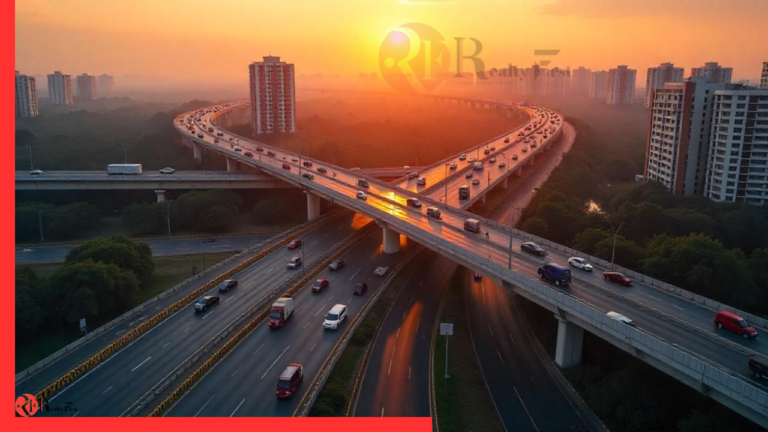
From a market perspective, Mulund has emerged as one of Mumbai’s strong-performing suburban micro-markets. It commands a 15–25% price premium over comparable locations in Thane, with property values ranging between Rs 20,000 and Rs 37,000 per sq ft. This premium is not driven only by municipal boundaries but also by connectivity advantages through the Central Line and the Eastern Express Highway.
Institutions such as VPM and infrastructure connectors like the Mulund–Goregaon Link Road further shape the lived experience of residents. Any redevelopment that ignores these contextual elements risks disconnecting new development from the established social fabric of the area.
Design must reflect local lifestyle
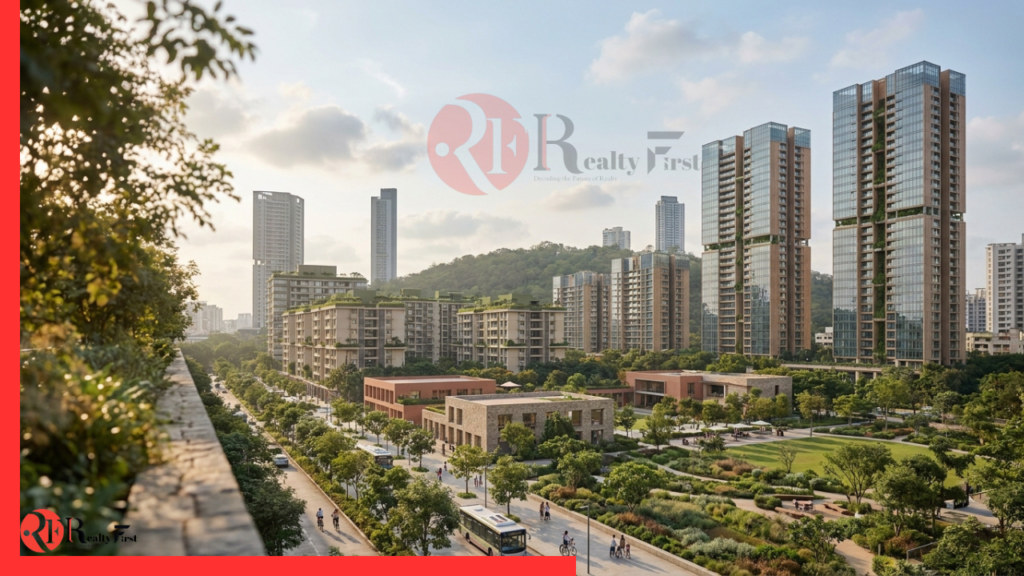
Every neighborhood has its own rhythm, and Mulund is no exception. Green spaces, public parks, outdoor activity zones, and informal community interactions form an essential part of everyday life here. This lifestyle is best supported by balanced density and thoughtful urban planning.
Mulund also holds significant redevelopment potential under Mumbai’s planning framework, with base FSI ranging from 1.35 to 2.0, and increasing up to 4.0–5.0 in transit-oriented corridors under DCPR 2034. This regulatory structure allows for vertical growth while still enabling context-sensitive planning.
The key challenge for developers lies in ensuring that increased density does not disrupt the lifestyle equilibrium that defines the suburb.
Respecting existing residents and surroundings
Redevelopment is not limited to future buyers; it directly impacts existing residents who continue to live in these neighborhoods during construction phases. Issues such as noise, dust, congestion, and temporary loss of privacy often affect quality of life in densely populated pockets.
This makes execution discipline critical. Developers must ensure that construction practices minimize disruption, while also maintaining safety and livability for current occupants.
Equally important is the long-term impact. Completed developments must avoid overcrowding, excessive shadowing, and loss of privacy for adjoining buildings, ensuring that redevelopment enhances rather than strains the existing environment.
Enhancing, not replacing, neighborhood value
The purpose of redevelopment is not to erase what exists but to enhance its intrinsic value. Mulund’s defining strengths—its green cover, safety levels, and strong community ecosystem—remain central to its long-term appeal.
Over the past decade, the suburb has recorded approximately 21% appreciation in property values, with Mulund West averaging around Rs 21,674 per sq ft. Demand continues to remain strong for 2 BHK units in the Rs 1.4–2.3 crore range and 3 BHK homes between Rs 2.2–4.0 crore, consistently outperforming several neighboring micro-markets.
This demonstrates that well-planned redevelopment can strengthen market value without diluting neighborhood identity.
Build with community at the core
What distinguishes Mulund from many other urban pockets is its strong sense of community. Local festivals, everyday social interactions, and shared public spaces form the backbone of its residential identity.
Redevelopment that ignores these aspects risks creating isolated and impersonal environments that weaken social cohesion. Therefore, modern planning must integrate open spaces, pedestrian-friendly layouts, and community-centric infrastructure.
These elements ensure that even as density increases, the social structure of the neighborhood remains intact.
Prioritizing space, light, and balance
In the race to maximize built-up potential, fundamental principles of livability are often overlooked. True quality in residential development is not defined by height alone, but by access to natural light, ventilation, privacy, and spatial balance.
In a suburb like Mulund, which is known for its structured and balanced urban form, preserving these elements is essential. Thoughtful architectural design and human-centric planning significantly improve long-term livability and resident satisfaction.
Also Read: How NVT Group is Designing Trust-Driven Real Estate Communities
A blueprint for urban India
Mulund’s redevelopment journey offers a broader lesson for Mumbai and other metropolitan cities: redevelopment must be rooted in context, not just scale.
Upcoming infrastructure projects such as Mumbai Metro Line 4, connecting Wadala to Kasarvadavali, are expected to significantly enhance east–west connectivity and unlock further redevelopment potential along key transit corridors. Combined with existing arterial routes and proximity to employment hubs, this strengthens Mulund’s position as a self-sustaining residential destination.
Compared to nearby Vikhroli, which is also evolving due to the LBS Road corridor expansion, Mulund stands out for its balanced combination of green infrastructure, connectivity, and residential stability, making it attractive for both end-users and long-term investors.
As urban India continues to expand, success will not be measured by how much is built, but by how responsibly it is built. Mulund demonstrates that when redevelopment respects neighborhood character, it creates not just infrastructure, but stronger and more resilient communities.