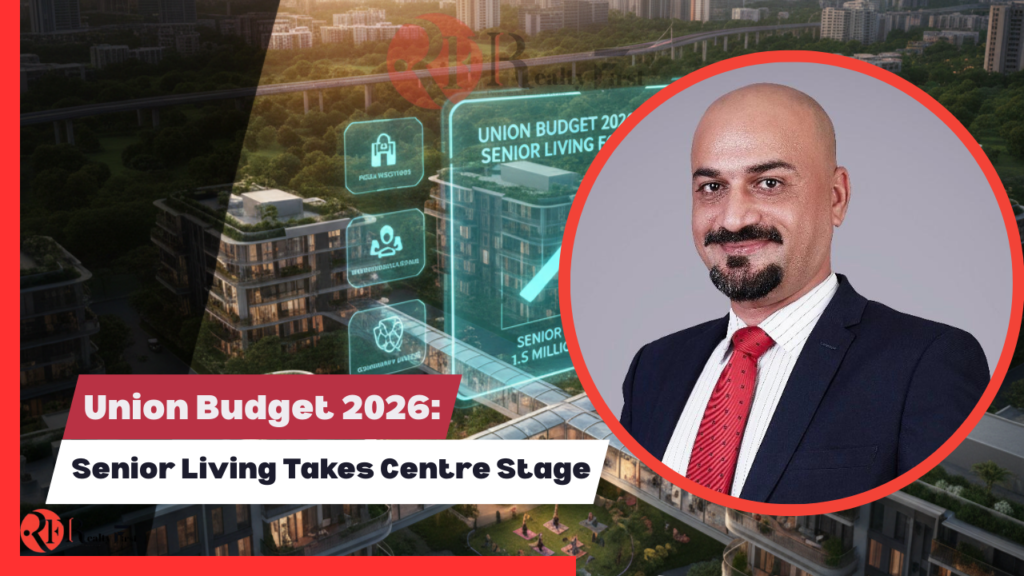
By Anil Godara, Founder and Managing Director, J Estates
With India heading into the Union Budget 2026, real estate is being viewed as a meaningful contributor to the broader vision of a “Viksit Bharat.” As policy priorities evolve, the discussion is expanding beyond conventional residential and commercial segments to address a demographic shift that has long remained underserved: the rise of the silver economy. In this context, senior living is emerging as a strategic social and economic necessity, rather than a niche housing format.
For the real estate sector to support India’s transition toward developed-nation outcomes, it must respond more deliberately to the needs of an ageing population. India’s senior living market, valued at over USD 11 billion in 2025, is projected to grow at close to 10 percent annually through 2033. This trajectory reflects structural changes in demography, household composition, and lifestyle preferences, not a short-term cycle. Against this backdrop, Budget 2026 presents an opportunity to formally recognise senior living as a scalable real estate asset class and enable its mainstream expansion.
Why Senior Living Matters
India is undergoing a demographic and social transition. The traditional joint family model is gradually giving way to smaller nuclear households. At the same time, a growing segment of seniors is financially independent, urban, and increasingly clear about what they want from their later years. This cohort is seeking housing that offers safety, healthcare access, autonomy, and a reliable sense of community.
Life expectancy is rising and healthcare outcomes are improving. As a result, the number of people aged 60 and above is increasing steadily, and this segment is expected to double over the coming decades. The housing implications are significant. Industry estimates India may require more than 1.5 million senior living units over the next ten years. While developers have begun to address this demand, the current supply remains materially below what will be required, underscoring the need for enabling policy support.
Demand is also being reinforced by heightened interest from non-resident Indians (NRIs). Senior living projects in regions such as Kerala, Hyderabad, Bengaluru, and Delhi-NCR are drawing growing attention from overseas investors, particularly in the United States, the United Kingdom, Canada, Australia, Singapore, and GCC countries. As younger family members relocate abroad and informal caregiving structures weaken, professionally managed senior living communities are increasingly being viewed as a practical necessity rather than a lifestyle upgrade.
Despite these tailwinds, the segment remains under-penetrated in India. Market penetration is still around one percent, significantly below global benchmarks. This demand–supply gap highlights an area where Budget 2026 could provide direction and support. As India advances toward its “Viksit Bharat” goals, ensuring dignity, safety, and quality of life for senior citizens should be positioned as a core development priority rather than a secondary concern.
At the same time, the senior living proposition has matured. Today’s communities are designed as active environments that support independence, wellness, and social engagement. Developers are offering formats across price points, ranging from affordable senior housing to premium retirement communities, and from standalone projects to integrated townships. This diversification has improved the relevance and scalability of senior housing, making it a viable investment opportunity across geographies and consumer segments.
Fiscal Measures to Catalyse Supply and Demand
From a broader real estate lens, expectations ahead of Budget 2026 include tax rationalisation, streamlined approvals, and incentives aligned to sustainable development. However, senior living presents distinct cost and design requirements that warrant more targeted policy treatment. Unlike conventional housing, senior living integrates healthcare support, assisted living services, emergency response systems, and accessibility-led design. These elements significantly increase capital expenditure and operating costs, yet current policy frameworks do not clearly distinguish senior living from standard residential development.
One of the most immediate concerns relates to the Goods and Services Tax (GST) structure. Several services that are integral to senior living communities such as medical support, specialised catering, and assisted living, are taxed in ways that raise monthly costs for residents. Stakeholders are therefore advocating for GST rationalisation or exemptions on essential senior-specific services to improve affordability and ensure that dignified ageing does not become accessible only to a limited segment.
Tax incentives are equally relevant on the supply side. Enhanced deductions for individuals purchasing senior living units, accelerated depreciation benefits, reduced stamp duties, and tax holidays for projects that include assisted care and medical infrastructure could help unlock faster private investment. Granting infrastructure status to senior living projects could further improve access to long-term, lower-cost financing, improving project viability and encouraging wider supply creation.
A Development Priority for Viksit Bharat
A “Viksit Bharat” cannot be measured only through GDP expansion. It must also be reflected in the quality of life delivered across generations. Senior living requires specialised planning and regulatory support, including wider corridors, non-slip flooring, emergency systems, universal accessibility, and proximity to advanced healthcare. Budget 2026 could encourage states to modernise building bylaws accordingly and support the creation of a comprehensive National Policy on Senior Living, potentially aligned with existing housing missions.
Beyond taxation, access to patient capital remains a binding constraint. As Budget 2026 approaches, the real estate sector is increasingly pivoting from short-term stimulus expectations to long-term structural reform. For senior living, this is an inflection point: a shift from fragmented, pilot-led projects to a nationally recognised and institutionally funded asset class. Through clear policy recognition, targeted fiscal incentives, dedicated financing pathways, and potential REIT eligibility, the government can position senior living as a meaningful pillar of India’s development agenda.
A developed nation is not defined only by its economic output, but by the dignity, security, and quality of life it ensures for citizens at every stage. Viewed through this lens, senior living is not merely a Budget expectation. It is a test of India’s commitment to inclusive and forward-looking development.