Introduction
Choosing a home is one of the most important decisions in a person’s life. Beyond the financial commitment, a home influences lifestyle, comfort, security, and long-term wealth creation. As India’s residential real estate market continues to evolve, homebuyers are increasingly faced with a common question: should they invest in a gated community or opt for an independent home?
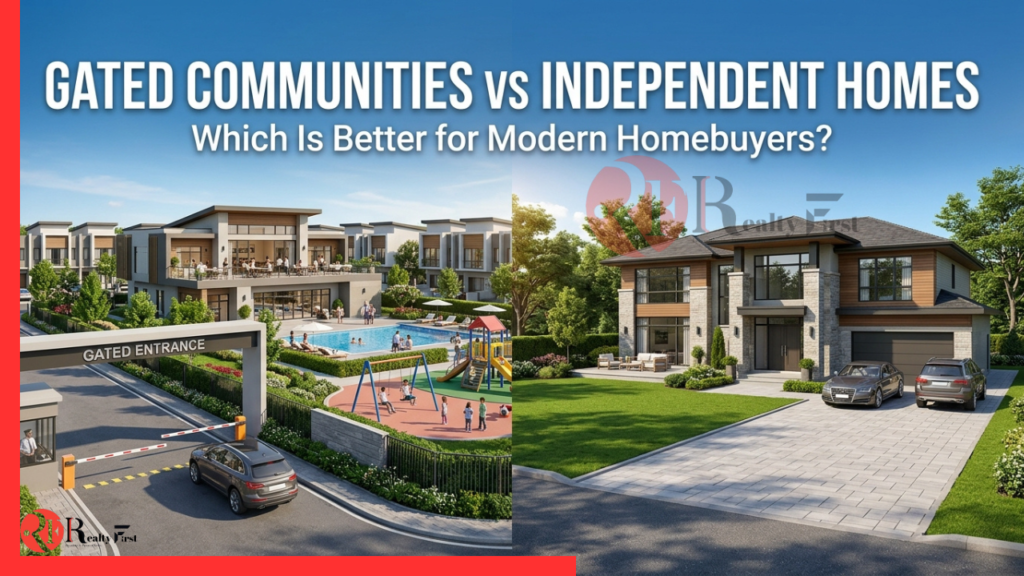
The debate around gated communities vs independent homes has become more relevant as buyer preferences shift toward lifestyle-driven living. While gated communities offer security, amenities, and a sense of community, independent homes provide privacy, freedom, and complete ownership control. Both options have distinct advantages, making the decision highly dependent on individual priorities and future goals.
Understanding the differences between these two housing formats can help buyers make informed choices that align with their financial plans and lifestyle expectations.
Also Read: Homeownership in India Shifts From Shelter to Lifestyle Asset, Says Industry Expert
Understanding Gated Community Living
Gated communities have become a defining feature of modern urban housing. These residential developments are designed to offer a secure and organized living environment with controlled access, professionally managed infrastructure, and a range of shared amenities.
One of the biggest attractions of gated community living is convenience. Residents typically enjoy access to facilities such as clubhouses, fitness centers, swimming pools, landscaped gardens, sports courts, children’s play areas, and community halls. Many modern developments also incorporate smart security systems, visitor management platforms, and sustainable infrastructure features.
For working professionals and families, these amenities can significantly improve daily living. Instead of traveling to separate locations for recreation, fitness, or social activities, residents can access everything within the community itself. This integrated lifestyle has made gated communities increasingly popular among urban homebuyers.
What Makes Independent Homes Attractive?
Independent homes continue to hold strong appeal for buyers who value privacy and autonomy. Unlike gated communities, independent houses provide complete ownership of both the structure and, in most cases, the land on which it is built.
Homeowners have the freedom to renovate, expand, redesign, or customize their property according to their preferences. Whether it involves adding an extra floor, creating a private garden, or redesigning interiors, independent house ownership offers flexibility that is often unavailable in managed residential developments.
For many families, an independent home represents a long-term asset that can be passed on to future generations. The emotional value associated with owning a standalone property remains a significant factor influencing buying decisions.
Security and Safety Considerations
Security is often one of the primary reasons why buyers choose gated communities.
Most gated residential developments feature multiple layers of protection, including security personnel, CCTV surveillance, controlled entry points, visitor tracking systems, and emergency response mechanisms. These measures provide peace of mind, particularly for families with children, senior citizens, and individuals who travel frequently.
Independent homes require homeowners to manage their own security arrangements. While modern technology has made surveillance systems more accessible, maintaining security often involves additional investment and personal oversight.
For buyers who prioritize convenience and collective security infrastructure, gated communities generally offer a stronger advantage.
Lifestyle and Social Environment
The lifestyle experience offered by gated communities and independent homes differs significantly.
Gated communities encourage social interaction through shared spaces and organized activities. Children have access to safe recreational areas where they can build friendships, while adults benefit from fitness facilities, community events, and social engagement opportunities. This sense of belonging often appeals to young families and professionals relocating to new cities.
Independent homes provide a quieter and more private lifestyle. Homeowners are not bound by community regulations or shared infrastructure management. Individuals who prefer greater personal space and minimal interaction with neighbors often find independent homes more suitable.
Ultimately, the choice depends on whether buyers prioritize community engagement or personal privacy.
Maintenance and Long-Term Costs
Maintenance responsibilities vary considerably between the two options.
In gated communities, maintenance is handled collectively through resident associations or professional management teams. Common services include landscaping, security, infrastructure upkeep, waste management, and facility maintenance. While residents pay monthly maintenance charges, they benefit from professionally managed services.
Independent homeowners are solely responsible for property upkeep. This includes repairs, security systems, landscaping, structural maintenance, and utility management. Although there are no recurring community maintenance fees, unexpected repair costs can sometimes be substantial.
Buyers should carefully evaluate long-term maintenance requirements before making a decision.
Investment Potential and Property Appreciation
From an investment perspective, both gated communities and independent homes can offer strong returns when located in desirable areas.
Properties within well-planned gated communities often benefit from growing demand due to their amenities, security features, and organized infrastructure. These factors can support steady appreciation and attract both end-users and tenants.
Independent homes possess a unique advantage through land ownership. Since land availability continues to decline in many urban centers, properties with larger land components often experience significant long-term appreciation. In rapidly developing regions, land value growth can become a major contributor to overall returns.
Location remains the most important factor influencing investment performance, regardless of property type.
Which Option Is Better for Families?
Families with children often prefer gated communities because of the secure environment and availability of recreational facilities. The presence of parks, sports areas, and community spaces creates opportunities for social development and outdoor activities.
However, larger families may find independent homes more suitable due to additional living space and greater flexibility. Multi-generational households, in particular, often benefit from the ability to customize and expand independent properties according to changing needs.
The ideal choice depends on family size, lifestyle preferences, and long-term residential plans.
Future Housing Trends
The future of residential real estate is likely to witness demand for both gated communities and independent homes. Urbanization, rising incomes, and changing lifestyle preferences are driving interest in organized residential developments. At the same time, the desire for privacy and land ownership continues to support demand for independent homes.
Hybrid work models have also influenced housing choices. Many buyers now seek larger spaces, home offices, and better living environments. As a result, both property formats are evolving to meet the expectations of modern homebuyers.
Rather than one option replacing the other, the market is increasingly offering diverse housing solutions tailored to different lifestyles and budgets.
Also Read: How Infrastructure Upgrades Are Driving Commercial Real Estate in Andheri
Conclusion
The choice between gated communities and independent homes ultimately depends on personal priorities, financial goals, and lifestyle preferences. Gated communities offer convenience, security, and a community-oriented lifestyle, making them attractive for urban families and professionals. Independent homes provide privacy, flexibility, and land ownership, appealing to buyers seeking greater control over their living environment.
There is no universal answer in the gated communities vs independent homes debate. The best decision is the one that aligns with your long-term needs, investment objectives, and vision of an ideal home. As residential real estate continues to evolve, informed decision-making remains the key to finding a property that delivers both comfort and value.