NEW DELHI: The Confederation of Real Estate Developers’ Associations of India (CREDAI) has outlined its priorities for FY 2026–27, with sustainability, skill development, technology adoption, urban planning and policy reforms emerging as key areas of focus for the real estate sector.
CREDAI held its first General Body Meeting for FY 2026–27 in Mamallapuram, Tamil Nadu, bringing together National Office Bearers, State Presidents, Committee Conveners and over 125 members from across the country. The meeting reviewed progress across sustainability, urban development, research, skill development, legal affairs, finance, technology and policy advocacy, while setting priorities for the year ahead.
The real estate industry body reiterated its commitment to contributing to nation building and supporting the vision of Viksit Bharat 2047 articulated by Prime Minister Narendra Modi. CREDAI also reaffirmed its engagement with governments on reforms concerning approvals, planning, taxation and ease of doing business, while continuing to advocate the development of affordable housing.
Also Read: JLL Business Services inaugurates 120,000 sq. ft. Global Capability Centre in Hyderabad
Sustainability featured prominently in the organisation’s agenda. Under its Green Bharat Mission and wider commitment to environmental sustainability and community welfare, CREDAI has completed plantation and conservation work across 6,000 acres in the Western Ghats region of Maharashtra, near Nashik district.
The initiative is being complemented by CREDAI NCR’s 150-acre Matri Van ecological restoration project. CREDAI Chapters across the country are also undertaking plantation, conservation and ecological restoration activities in collaboration with state governments, local authorities and municipal bodies.
Skill development was another key area discussed at the meeting, with CREDAI highlighting the role of construction workers in the real estate sector. Through expanded partnerships and focused training programmes, the organisation is seeking to strengthen workforce capabilities and improve employability.
During this financial year, over 2,500 construction workers received skill training, while more than 37,600 workers benefited from Labour Day and Gratitude Week initiatives.
“The role of the real estate sector has expanded significantly in recent years. While catalysing urban growth, the industry is contributing to skill development, sustainability, technology adoption and community welfare. As the apex body representing the sector, CREDAI will continue to encourage these initiatives, facilitate collaboration and work with governments to support planned urbanisation and sustainable city development,” said Shekhar Patel, President, CREDAI.
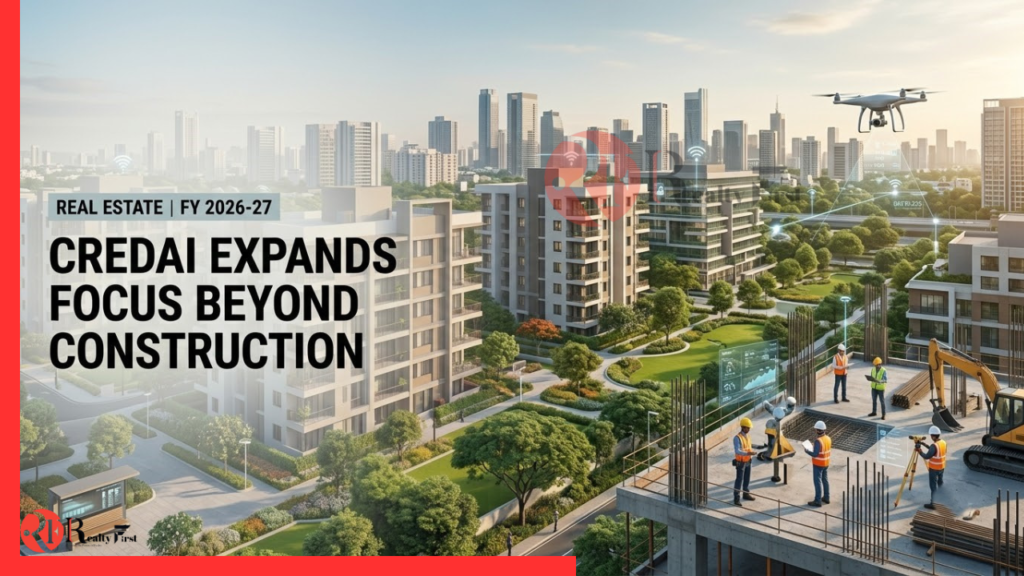
Technology adoption is also being explored as part of CREDAI’s response to the requirements of rapidly growing cities. The organisation has partnered with the state government and academic institutions to explore AI-enabled drone technology for fire safety, along with other digital solutions aimed at improving construction safety, enabling faster approvals and supporting smart city development.
The initiatives discussed at the General Body Meeting reflect CREDAI’s broader focus on expanding the role of real estate beyond construction, with greater emphasis on sustainability, workforce development, technology and planned urbanisation.
Also Read: Mumbai Property Registrations Hit 14-Year July High, Reflecting Resilient Housing Demand
Through its FY 2026–27 priorities, CREDAI aims to strengthen collaboration with governments and other stakeholders while aligning real estate development with the country’s broader development objectives and the creation of sustainable, inclusive and future-ready cities.