Mumbai: Chief Minister Devendra Fadnavis outlines plans for large-scale redevelopment, a third airport in the Virar region, new investment corridors and AI-led governance; MSRTC to invite tenders for 140 modern bus ports within three months.
MUMBAI, September 3, 2026: Maharashtra is looking to reshape its urban and economic landscape through large-scale redevelopment, new transport infrastructure, emerging technology corridors and digital governance, with the Mumbai Metropolitan Region (MMR) targeted to become a $1.5 trillion economy by 2047.
Chief Minister Devendra Fadnavis outlined the State’s long-term development priorities at the 6th Edition of the Real Estate & Infrastructure Investors’ Summit – REIIS 2026, held in Mumbai on September 3. He called on the real estate and infrastructure sectors to participate in the execution of projects spanning Mumbai, Pune, Nagpur and other parts of Maharashtra.
The roadmap includes redevelopment of ageing urban settlements, expanded airport and port infrastructure, new economic centres, a proposed quantum technology corridor between Mumbai and Pune, and the use of artificial intelligence in government processes.
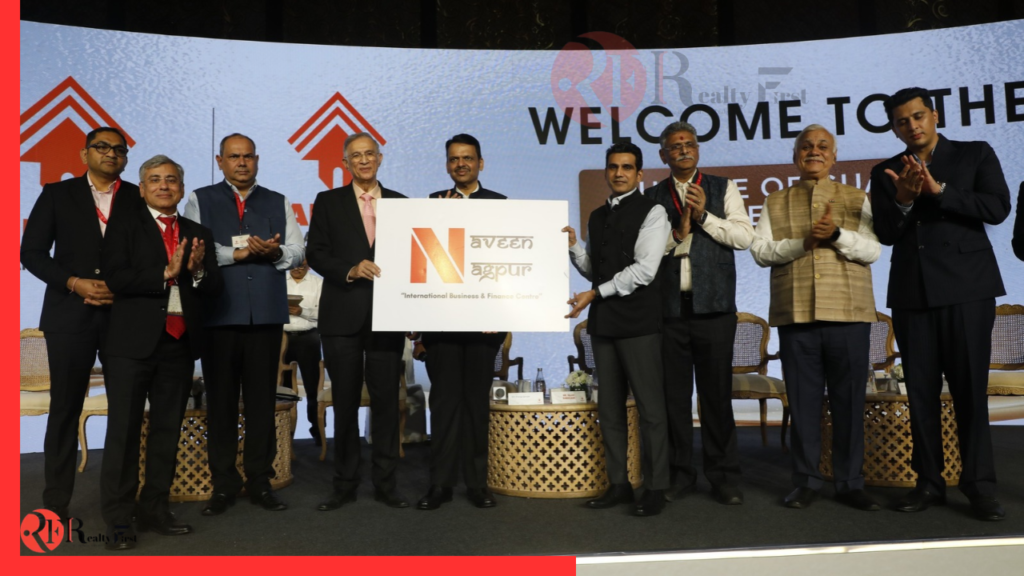
Fadnavis also unveiled the logo of Naveen Nagpur (New Nagpur), an initiative of the Nagpur Metropolitan Regional Development Authority (NMRDA). At the event, NAREDCO Maharashtra signed a Memorandum of Understanding (MoU) with NMRDA in the presence of Sanjay Meena, IAS, Metropolitan Commissioner, NMRDA.
Maharashtra records 8.8% growth as real estate supports economic expansion
Fadnavis highlighted Maharashtra’s economic performance, noting that the State recorded 8.8% growth, compared with India’s 7.6% growth in the first quarter.
He identified real estate as an important contributor to sustaining the State’s growth momentum and pointed to Mumbai’s property registration figures as an indicator of market activity.
According to the figures cited by the Chief Minister, Mumbai recorded around 12,500 property registrations in August 2026, the highest monthly number, taking cumulative registrations beyond 1.06 lakh. These transactions generated approximately ₹9,355 crore in government revenue, also described as a record performance.
“The real estate industry in MMR is growing at a fast pace. It is now time to give the entire Mumbai a new look,” he said.
Fadnavis also discussed the evolution of the State’s real estate regulatory framework and its relationship with the development community.
“Maharashtra was the first State to have a regulator. The Government worked with the developers’ fraternity and today Maharashtra has the most successful regulator in India. The trade has been cleaned up and a level playing field has been created,” he said.
He added that industry bodies such as NAREDCO were increasingly considering the interests of the wider sector and its long-term development.
Cluster redevelopment at the centre of Mumbai’s transformation
Redevelopment is expected to play a central role in the next phase of Mumbai’s urban development, particularly in older settlements and areas where land can be reorganised through a cluster-based approach.
Fadnavis said the State Government had prepared a roadmap for redevelopment and had begun work on the ground.
“With the Government’s cluster approach, in the next 10 years Mumbai will be slum-free. The roadmap is ready and efforts have started on the ground,” he said.
Dharavi is among the key areas identified in the redevelopment programme. The Chief Minister said the Government aims to have 10,000 rehabilitation homes ready by January 2029, with keys to be handed over to eligible residents.
The cluster approach is also expected to create opportunities in older Maharashtra Housing and Area Development Authority (MHADA) layouts and other ageing settlements developed several decades ago.
“This opens up a huge scope for optimum utilisation of available land,” Fadnavis said.
The proposed redevelopment strategy places land utilisation and the renewal of established urban areas at the centre of Mumbai’s future development plans.
BEST depot redevelopment to combine transport and mixed-use development
The State Government is also considering the redevelopment of BEST depot land in Mumbai, with plans to integrate public transport infrastructure with residential, commercial and public-use facilities.
The proposed developments could include housing, commercial spaces, museums, recreational areas and other public destinations.
According to Fadnavis, the model could create an additional revenue stream for BEST while supporting improvements to the city’s public transport system. He also encouraged developers to explore participation in the proposed projects.
The approach reflects a wider effort to combine transport facilities with the use of valuable urban land for multiple purposes.
MMR growth plan targets a $1.5 trillion economy by 2047
The MMR Growth Plan has set an ambitious target of taking the Mumbai Metropolitan Region’s economy to $1.5 trillion by 2047, according to the Chief Minister.
Fadnavis linked the target to planned urbanisation across the Mumbai, Pune and Nagpur metropolitan regions, which he described as important centres of future economic activity.
He said these metropolitan regions would become centres for 60% of India’s data-centre capacity and smart manufacturing.
Over the coming decade, the State’s vision is to develop these regions into more comprehensively planned urban and economic ecosystems. For the real estate sector, the proposed expansion could create development opportunities associated with industrial activity, commercial demand and new urban centres.
The scale of the target will depend on how infrastructure, land development and economic activity progress across the three metropolitan regions.
Mumbai 3.0 moves from long-term vision towards execution
Fadnavis said several infrastructure projects that once formed part of Mumbai’s long-term development vision—including the coastal road, metro network and airport infrastructure—had moved beyond planning and into delivery.
“Mumbai 3.0 is not a future. It has already begun,” he said.
The next stage of development is expected to include new urban centres built around specialised economic and social infrastructure. The Chief Minister referred to proposed Education Cities, Medi-cities and Innovation Cities as components of the emerging development landscape.
These centres are intended to support a broader economic ecosystem rather than rely solely on conventional urban expansion.
Uttan–Virar sea link and proposed third airport to expand northern connectivity
Plans to improve connectivity towards northern Mumbai form another part of the State’s development agenda.
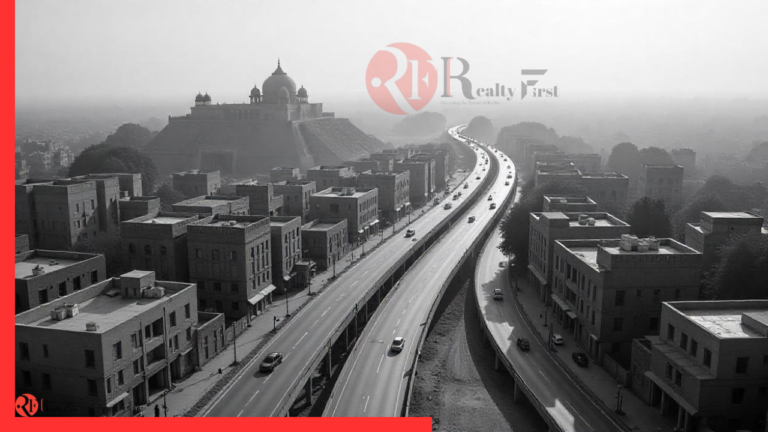
Fadnavis outlined a proposed 24-km sea link between Uttan and Virar, alongside a planned extension of the coastal road towards Virar. The envisaged connection is intended to provide signal-free travel between Nariman Point and Virar.
The Chief Minister also announced plans for a third airport for Mumbai in the Virar region. The detailed project report (DPR) is expected to be ready by the end of 2026.
“This will create a new ecosystem for Mumbai 4.0 with improved connectivity,” he said.
The proposed projects are intended to strengthen transport links towards the northern metropolitan region and support the development of new urban and economic centres.
Vadhavan Port to extend port-led development across Maharashtra
The proposed Vadhavan Port was another major infrastructure project highlighted by Fadnavis, who described it as significant to Maharashtra’s and India’s maritime ambitions.
He said JNPA currently handles around 75% of the relevant container traffic through the region. Vadhavan is being developed with the ambition of becoming one of the world’s leading deep-draft ports, with significantly greater handling capacity.
The port is expected to generate employment and stimulate economic activity in Palghar and Thane districts.
The Chief Minister also outlined a vision for freight connectivity extending inland from the port towards Nashik and further through the Samruddhi Mahamarg towards Jalna, Wardha and dry ports up to Gadchiroli.
“Our dream is to create port connectivity to every corner of Maharashtra and bring the blue economy to the entire State,” he said.
The proposed freight links would connect port infrastructure with locations across the State, extending the potential reach of port-related economic activity beyond the coastal districts.
New Nagpur and Pune airport plans expected to create investment opportunities
Fadnavis identified New Nagpur as an emerging area for development and urged real estate and infrastructure investors to examine the opportunities associated with the project.
He described Nagpur as the fastest-developing city in Maharashtra and said land acquisition and planning were underway for a modern economic ecosystem at New Nagpur.
For Pune, the Chief Minister announced that work towards a new airport would begin this year, with the tender expected to be floated soon.
He also pointed to the growth of Global Capability Centres (GCCs) in Pune, noting the demand these centres create for commercial real estate and supporting infrastructure.
The proposed airport and New Nagpur initiatives form part of a broader strategy to strengthen economic activity beyond Mumbai and expand development across Maharashtra’s metropolitan regions.
Mumbai–Pune corridor proposed as a quantum technology hub
The State’s development strategy also includes a greater focus on advanced technology and knowledge-driven economic activity.
Fadnavis proposed developing the Mumbai–Pune corridor as a “Quantum Corridor”, with the region envisioned as a technology-intensive and GCC-driven economic belt.
“The future is quantum and the region will be GCC-smart. The real estate sector will be a close partner in this development,” he said.
The proposal places technology infrastructure and corporate activity alongside conventional transport and urban development priorities. It also signals an intended role for the real estate sector in supporting emerging technology-led business ecosystems.
AI adoption could change 70% of jobs within 1,000 days, says Fadnavis
Artificial intelligence and its implications for the workforce featured prominently in the Chief Minister’s address.
Fadnavis said India has a young population, with 65% of the country’s population being young. He added that Maharashtra has around 3 crore people in the 18–28 age group, describing them as a generation familiar with technology and facing changing aspirations.
“The generation is born with technology and now it is time to adopt AI. In the next 1,000 days, the nature of 70% of jobs will change because of AI. This is an era of disruption,” he said.
The Chief Minister said the State Government was working towards incorporating AI into approval systems and government processes, with the aim of making administration faster, more efficient and technology-driven.
His remarks placed digital governance alongside infrastructure development as part of Maharashtra’s longer-term economic strategy.
Fadnavis urged the real estate and infrastructure sectors to look beyond conventional construction and participate in the development of the State’s future urban, economic and technology ecosystems.
“The opportunity before Maharashtra is not simply to build more. It is to build a completely new ecosystem for the future,” he said.
Also Read: Gunjur-Varthur Corridor Emerges as Bengaluru’s Next Major Real Estate Cluster
MSRTC to invite tenders for 140 modern bus ports within three months
In a separate session at REIIS 2026, Pratap Sarnaik, Transport Minister, Government of Maharashtra, announced that the Maharashtra State Road Transport Corporation (MSRTC) would invite tenders within the next three months to redevelop 140 ST bus depots into modern bus ports.
The announcement comes as the State seeks greater private-sector participation in infrastructure development. The Maharashtra Cabinet had approved the initiative on July 14, 2026.
Sarnaik called on private developers to participate in the programme, which aims to upgrade transport facilities while creating opportunities for commercial and allied development.
The larger initiative has the potential to unlock and develop approximately 13,000 to 14,000 acres of MSRTC land through private participation, the Minister said.
The proposed bus ports are expected to function as modern transport hubs, combining improved passenger infrastructure with commercial and related development. The programme could provide developers with opportunities to participate in the redevelopment of public transport assets across Maharashtra.
Sarnaik made the announcement while addressing the change-of-guard ceremony of NAREDCO Maharashtra Next Gen, where Raunak Bandelkar formally took charge as President from outgoing President Vikas Jain.
Together, the announcements at REIIS 2026 outlined a development agenda spanning urban redevelopment, transport infrastructure, new economic centres and technology-led growth. Their eventual impact will depend on the implementation of the proposed projects, the progress of approvals and the ability to translate long-term plans into completed infrastructure.